2-13 Gas System Operation | 53
2-13.1 LIQUEFIED PETROLEUM GAS
SYSTEM (LPG)
NOTE: In the interest of safety, it is
important that the properties of liqueed
petroleum gas (LPG) be understood, and
that safe practices for its use be followed.
It is also important that the difference in
properties between LPG and CNG be
compared to distinguish between these
two types of fuels and their respective
hazards.
LPGistwo-phased,i.e.,liquid/vapour,fuel
withahighercaloricvaluethanCNG,and
isstoredatalowercylinderpressurethan
CNG.
LPGisheavierthanairandwillfallorsettle
ifreleased.
LPG, in a natural state, is non-toxic and
invisible,butcandisplacetheairnecessary
tosustainlife.Bylaw,commerciallyavailable
LPGhasanodorousgasaddedtofacilitate
leakdetection.SinceLPGisatwo-phased
fuel, the odour concentration can vary
dependingonthevolumeoffuelremaining
inthecylinder.Followingareleaseofgas,
the delectability of the odorous gas can
dissipate,eventhoughtheconcentrationof
LPGgasmaybepresent.
ThepropertiesofLPGmustbeunderstood.
Itisagasatnormalroomtemperatureand
atmospheric pressure. Under moderate
pressureitliquees,vaporizingagainupon
release of the pressure. It is this property
thatpermitstheconvenienceoftransporting
and storing these hydrocarbons in
concentrated form, while normally using
theminavapourform.
Released from its liquid state, LPG gas
tendstosinktothebottomofanenclosed
compartment.Gasthatisdiffusedthroughout
thecompartmentisnotreadilydispelledby
overhead ventilation.
Thereisadrainventlocatedintheoorof
theCockpitGaslockertoallowanyLPGgas
that may have leaked from the cylinder to
owoutofthelocker.
UNDER NO CIRCUMSTANCES SHOULD
THIS DRAIN VENT BE BLOCKED OR
PLUGGED UP.
NEVER STORE ANY OTHER EQUIPMENT
IN THE GAS LOCKER
IF MIXED WITH AIR IN CERTAIN
PROPORTIONS, AND CONFINED, LPG
WILL EXPLODE IF IGNITED. IN ITS
GASEOUS FORM LPG PRESENTS A
FIRE AND EXPLOSION HAZARD.
DANGER
To avoid asphyxiation. Provide ventilation
when the stove is in use. Do not use for
space heating.
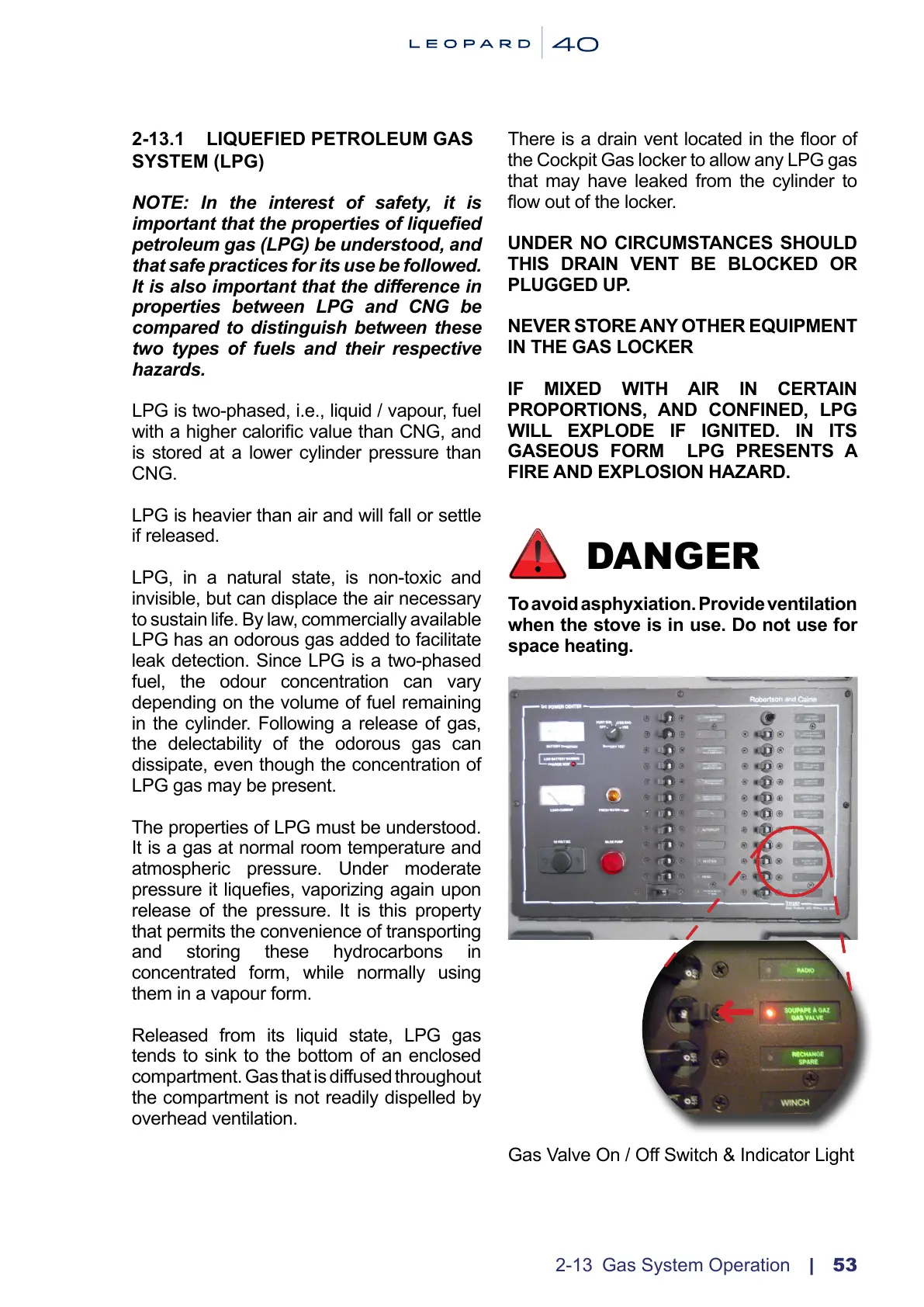
GasValveOn/OffSwitch&IndicatorLight



 To Next Page