Page 33
DIGITAL COMMUNICATOR
The Omni LTe digital communicator can use Contact ID, or Standard 4/2 or 3/1, (20 pps, 1800 Hz data, 2300 Hz
handshake), or (10 pps, 1900 Hz data, 1400 Hz handshake), dual round compared format. Any central station with
modern equipment can receive these formats. Compatible receivers are Ademco, Radionics, Osborne-Hoffman,
Linear, FBI, and Silent Knight. It is up to the installer to verify compatibility. At the time of installation, the installer is
required to verify compatibility and phone line seizure of the Digital Communicator.
If the digital dialer does not get a handshake signal from the central station 45 seconds after it begins dialing, it hangs
up and tries again. The dialer will try the FIRST PHONE NUMBER 5 times, then go to the SECOND PHONE
NUMBER and try that 5 times. After that, the system will indicate COMMUNICATIONS FAILURE on the console
display and the digital communicator will not try again until another reportable event occurs.
The digital communicator will not dial out until the DIAL OUT DELAY has expired. If the alarm is canceled prior to the
expiration of the DIAL OUT DELAY, no transmission will take place. After the DIAL OUT DELAY has expired, though,
all alarm trips will be transmitted followed by a CANCEL code.
When the digital communicator is used, all voice dial outs will be delayed for five minutes after the expiration of the
dial out delay to allow time for the central station to call the premises after an alarm code has been sent. If the digital
communicator is unable to successfully communicate with the central station, the user will be alerted to the trouble
condition. When the system status is requested using the voice, this condition is reported over the phone as
"SECURITY PHONE MESSAGE" trouble.
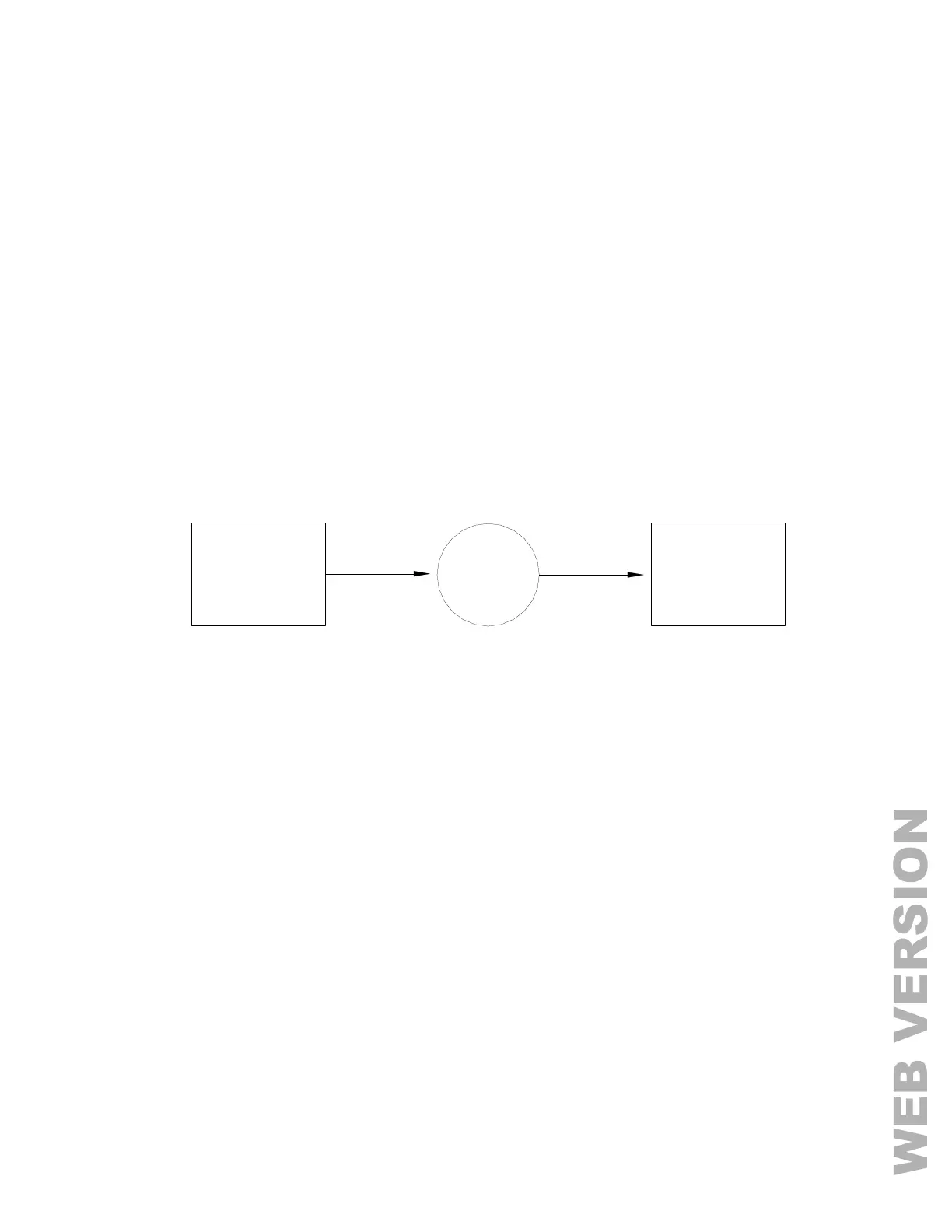
Single Line Transmission Signal System Configuration
DESCRIPTION OF CONTACT ID
Contact ID reporting allows very specific event codes to be sent to the central station. A complete report takes under
three seconds. Contact ID reporting uses predefined event codes that allow the central station to quickly identify the
condition being reported. The specific security zone or user code is identified as part of the report.
For each event code transmitted, the report also includes an event qualifier that identifies whether the report is for a
new event (such as a security zone trip), or a restoration of an event (such as a security zone no longer tripped).
Trouble conditions are reported, as well as restoration of these trouble conditions. For security arming and disarming,
this event qualifier is also used to identify whether the report is for an arm or disarm. The reporting format for Contact
ID is listed in Appendix A in this manual.
When using Contact ID, the alarm codes and/or reporting format cannot be changed. However, if the DCM code
(under the 4/2 and 3/1 Alarm Code Formats) is set to “0” or “00”, then Omni LTe will not make a call to the central
station to report that code when using Contact ID.


 To Next Page