EMERGENCY PROCEDURES
52
Battery charging
A high speed charger may only be used if the
battery has been completely disconnected from
the vehicle electrical system. Certain types of
low maintenance batteries, for example the lead
calcium type, can be damaged by high speed
chargers. If in doubt, consult your Dealer.
When charging a battery in the vehicle from a
trickle charger ensure that:
1. The charger output voltage is the same as
the nominal voltage as the battery fitted to the
vehicle (12V).
2. The charger + (positive) lead is connected to
the + (positive) terminal of the battery, and the
charger - (negative) lead is connected to the -
(negative) terminal of the battery.
OVERHEATING
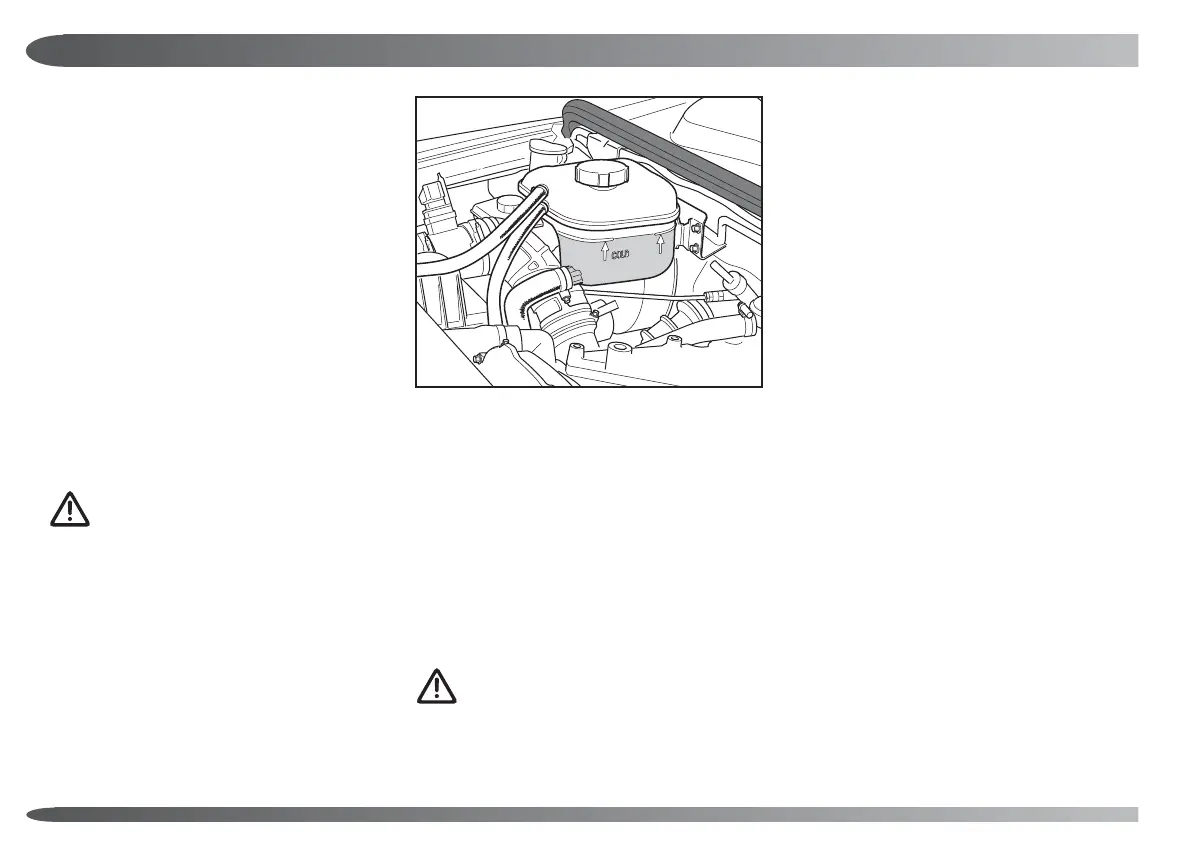
WARNING: To avoid injury from
escaping steam and scalding coolant,
the pressure relief cap of the
expansion tank must not be removed while
the system is hot. Particular care must be
taken to ensure no loose clothing (a tie, etc.)
can get caught in any rotating parts while
the bonnet is open.
Move the vehicle off the road, apply the
handbrake and hazard lights. Select neutral
gear or 'P' park (automatic), apply the
handbrake and keep the engine running for a
few minutes while you follow the procedure
below.
If the charging and brake warning indicator
lights are on, the probable cause of the
overheating condition will be a broken or loose
drive belt causing the alternator to stop rotating.
The engine should be stopped immediately and
you should seek assistance to recover the
vehicle.
WARNING: The vehicle should not be
driven in this condition as it could
cause severe loss of coolant from the
engine with further damage.
If the electrical system charge light remains off,
keep the engine running and open the windows.
Turn both heater blower motors to their
maximum speed, with the heater temperature
control to maximum heat and the air
conditioning system (where fitted) off.
Carefully open the bonnet (to avoid injury from
steam, boiling coolant and rotating parts) and
check whether there is an immediate sign of a
coolant leak. (burst hose or connection etc.)
Where the cooling fan is operating and there is
no apparent loss of coolant, allow the engine to
idle for a few moments and then stop the
engine.
Allow the engine to fully cool down with the
bonnet open. If clean water is available, top up
the coolant reservoir (see cooling system
maintenance) before proceeding to the nearest
garage so that the cause of the overheating can
be investigated.
If the cooling fan is not operating or there is a
serious loss of coolant due from a burst hose or
connection, turn off the engine and seek
assistance to recover the vehicle.


 To Next Page