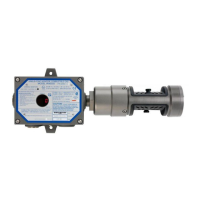
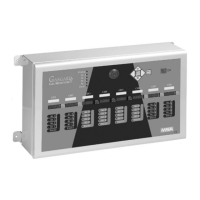
Wiring for all Models (except digital output models)
• For digital output models, see instruction manual P/N 710471.
In these installations, twisted-pair, instrument quality cable is
required. Shielded cable is recommended for cable runs where
interferences from radio frequency interference (RFI),
electromagnetic interference (EMI) or other noise sources exist
(such as motors, welding equipment, heaters, etc.).
NOTE: Installations using shielded wire should have the shield
drain wire grounded at only one end of the
connection. The preferred grounding point for the
drain wire is at the Controller and not at the sensor.
Conduit may also be needed in areas where large amounts of
electrical noise is expected.
Use caution when selecting a cable size. All of the following
tables express the maximum cable length when only using the
Ultima Gas Monitor. The Ultima options (e.g., Alarm Module,
Calibration Module, Multiplex Control Relay, etc.) take additional
power which requires a heavier cable or a short cable run. Refer
to the particular manual for precise cabling information.
When selecting cable size, consider future needs (i.e., addition of
sensors and/or options available with the Ultima Monitor). For all
models, ensure that there is at least 7 volts DC at the sensor for
proper operation.
NOTE: 10 VDC minimum required for Combustible IR models.
Ensure that water and dirt are not able to enter the unit via the
wire or conduit. If the unit is installed in a location known to be
wet or damp, it is good practice to loop or bend the entry into
the unit that prevents water incursion.
TABLES 1-1 through 1-7 do not apply to Ultima Gas Monitors
with Internal Relays. If Internal Relays exist, see Appendix C.
For Frequency Outputs
The Ultima Gas Monitor must be connected to an MSA controller
(Models 5000, 6000 or Toxgard monitors). All sensor power is
derived from the monitor. TABLES 1-1 through 1-3 show
appropriate cable length and wire size for proper installation.
For Multiplex Output
For multiplex outputs, consult MSA as wiring procedures vary
with applications.
Chapter 1, Set-up
1-12



 To Next Page