Chapter 2 - Introduction
2 Introduction
Welcome to your P200TxE User Guide.
2.1 Device description
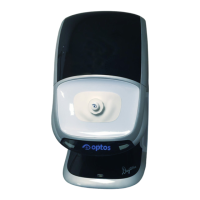
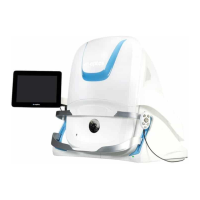
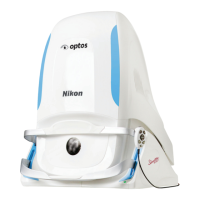
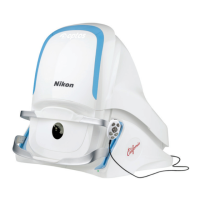
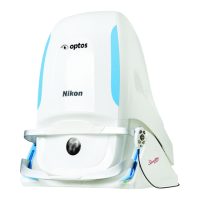
The P200TxE is a desktop, non-contact, high resolution ophthalmic imaging device that supports ultra-
widefield confocal SLO and deep OCT imaging of the retina and its structures. SLO modalities include fundus
imaging using color, auto-fluorescence, Fluorescein Angiography (FA) and Indocyanine Green Angiography
(ICG) techniques. OCT imaging capabilities enable deep, high-resolution OCT imaging of vitreous, retina,
choroid and sclera. The system outputs calibrated and position-correlated SLO fundus images, OCT line
scans and OCT volume scans, which are encoded as DICOM for display on compatible devices, where
OptosAdvance is provided as the viewing client. The device is offered in a number of configurations
depending on the needs of the end user.
Optos’ technology is designed to operate through a minimum pupil diameter of 2 mm. Although pupil dilation
is not required, the decision to dilate is a medical decision to be made by the eyecare professional.
Note
Depending on the features available on your device, you may have a subset of the features described in
this user guide.
2.2 Intended use
The P200TxE is a non-contact scanning laser ophthalmoscope and optical coherence tomographer intended
for in-vivodigital imaging of posterior ocular structures, including the vitro-retinal interface, retina, retinal
layers, optic disc, choroid and choroido-scleral interface. It is indicated for producing high-resolution, wide
field, en-face reflectance images, auto fluorescence images, fluorescein angiography images, indocyanine
green angiography images, and axialcross-sectional images of the posterior ocular structures.
The system enables practitioners to capture multi-modal images in support of detection, investigation and
monitoring of retinal conditions.
2.3 Intended users
The system is intended for use by ophthalmic and optometry health care professionals.
Note
l The system prevents the operator altering laser power or exposure times, therefore no specific pre-
requisite training is required prior to receiving Optos training. The review of images, as an assist to
diagnosis, may only be conducted by a healthcare professional qualified in optometry or
ophthalmology.
l The system shall be capable of being operated by a single operator.
2.4 Target environment
The device shall be operated in an ophthalmology clinic, hospital environment or in an optometrist's
commercial premises. Operation shall be conducted within a range of lighting conditions from 'dark indoor' to
Part Number: G110230/1ENG Page 21 of 72
Copyright 2019, Optos plc. All rights reserved. English



 To Next Page