EasyManua.ls Logo

Optos P200TxE - User Manual

Optos P200TxE
84 pages
Print Icon
To Next Page IconTo Next Page
Loading...
User Guide
Optos OCT Ophthalmoscope
P200TxE
G110230-003-ENG

Table of Contents

Questions and Answers

Summary

Warnings and Cautions

General Safety Guidelines

Guidance for safe use of the device, including precautions for patients with epilepsy.

Operator Day-to-Day Use Precautions

Precautions for operators during daily use of the device.

Patient Day-to-Day Use Precautions

Instructions for patients regarding safe daily use of the device.

Signal to Noise Ratio (SNR) for OCT Quality

Explains the impact of SNR on OCT image quality and interpretation.

Laser Safety Information

Details on laser hazards, Class 1 limits, and safety measures for the device.

Electrical Safety Precautions

Electrical safety requirements, including shock prevention and earthing.

Environmental Safety Guidelines

Safety precautions related to the operating environment.

Electromagnetic Compatibility (EMC) Safety

Information on EMC compliance and potential interference.

Device Failure Procedures

Actions to take in case of device malfunction or failure.

Cleaning Guidelines and Precautions

General guidelines and cautions for cleaning the device.

Main Mirror Cleaning Procedure

Specific instructions for cleaning the main mirror safely.

Cleaning Materials and Precautions

Information on recommended cleaning materials and related cautions.

Information Security Maintenance

Procedures for maintaining the security of system information and data.

Data Security Procedures

Guidelines for protecting patient data and ensuring data integrity.

Software Installation and Updates

Instructions for installing and updating software on Optos PCs.

Symbol and Label Information

Explanation of symbols and labels used on the device and in documentation.

Introduction to the P200 TxE System

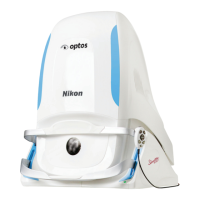
P200 TxE Device Description

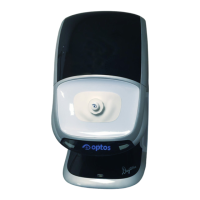
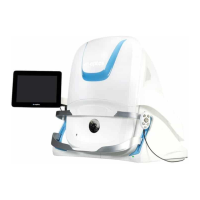
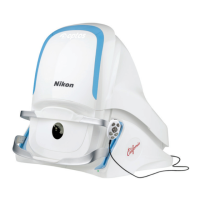
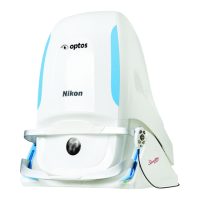
Detailed description of the P200TxE ophthalmic imaging device.

Clinical Benefits of the P200 TxE

Statement outlining the key clinical benefits offered by the device.

Intended Use of the P200 TxE

Specifies the intended purpose and application of the P200TxE device.

Intended Users of the P200 TxE

Identifies the qualified healthcare professionals who should use the system.

Target Operating Environment

Defines the recommended environments for operating the device.

Contraindications for the P200 TxE

Lists any known conditions or situations where the device should not be used.

System Configuration Overview

Describes the components and setup of the P200TxE system.

P200 TxE System Components

Lists and describes the main parts of the P200TxE device.

Network Specification and Characteristics

Recommended network settings for connecting the image server to a WAN.

Supported Image Modalities

Lists and describes the different imaging modes available on the system.

SLO Imaging Modalities

Details the various SLO imaging techniques supported by the device.

OCT Imaging Modalities

Describes the different OCT scan types and their applications.

Optos OCT Raster Scan

Explains the raster scan mode for OCT imaging.

Optos OCT Retina Scan

Details the retina scan mode for OCT imaging.

Optos OCT Optic Nerve Head Scan

Describes the OCT scan for the optic nerve head.

Optos OCT Ultra-Widefield Line Scan

Explains the ultra-widefield line scan capability for OCT.

Multi-Mode Workflow Assistance

Describes the multi-modal workflow feature for sequencing scans.

System Software Overview

Information about the software components that manage the system.

Understanding OptosAdvance Review Software

Details on how to use the OptosAdvance software for image review.

System Accessories and Detachable Parts

Lists and describes the accessories and detachable parts of the system.

Getting Started with the P200 TxE

Daily System Power-On Procedure

Instructions for powering on the image server and scan head daily.

Powering On the Image Server

Steps to power on the image server.

Powering On the Scan Head

Steps to power on the scan head.

Logging into Review Clients

How to access the system using browser-based review clients.

Using Standby Mode at Day End

Procedure for placing the scan head into standby mode.

Shutting Down the Scan Head

Steps to properly shut down the scan head.

Installing Software Updates

Guidance on installing software updates for the system.

Logging Off the Image Server Daily

Procedure for logging off the image server at the end of the day.

Weekly Image Server Restart

Instructions for restarting the image server weekly.

Using the P200 TxE System

General guidance on operating the system.

Using the Touch Screen Interface

How to interact with the system using the touch screen.

Using the Touch Screen Keyboard

Information on using the virtual keyboard on the touch screen.

Using the Hand Control Device

Instructions on operating the system using the hand control.

Using the Chin and Head Rests

Guidance on using the chin and head rests for patient positioning.

Capturing Ocular Images

Selecting and Managing Patient Details

How to search, select, and manage patient records for imaging.

Adding a New Patient Record

Steps for creating a new patient record in the system.

Selecting and Editing Existing Patients

How to find and modify details of existing patient records.

Selecting Patient Orders from MWL

How to select patient orders from a Modality Work List.

Working with the Modality Work List (MWL)

Information on using the MWL for patient data management.

Searching the Modality Work List (MWL)

Steps to search for patient data within the MWL.

Preparing for Image Capture

Steps to prepare the device and patient before capturing images.

Patient Alignment Procedures

Detailed instructions for aligning the patient for accurate imaging.

Patient Coaching During Alignment

Guidance on how to communicate with the patient during alignment.

Step-by-Step Patient Alignment

Detailed steps for physically aligning the patient with the device.

Capturing SLO Images

Procedure for capturing Still Light Ophthalmoscopy (SLO) images.

Post-Image Capture Actions

Steps to take after an image has been captured.

Capturing SLO Eye-Steered Images

Instructions for capturing SLO images with eye steering.

Capturing SLO Stereo Images

Procedure for capturing SLO stereo image pairs.

Capturing SLO Angiography Images

Steps for capturing SLO images using angiography techniques.

Controlling Image Contrast

How to adjust image contrast during angiography capture.

Capturing OCT Images

Step-by-step guide for capturing Optical Coherence Tomography (OCT) images.

Patients View During OCT Alignment

What the patient sees on the screen during OCT alignment.

Optimizing OCT Scan Quality

Advice and techniques to improve the quality of OCT scans.

Quick Scan Capture and Recapture

Strategy for efficient scan capture and when to recapture.

Utilizing Auto-Routines for OCT

How to use the automated routines for OCT positioning and focus.

Live OCT Positioning Adjustments

Techniques for precise live positioning of the OCT scan.

Minimizing Patient Eye Dryness

Tips to prevent and manage patient eye dryness during OCT imaging.

Capturing OCT Follow-up Scans

Procedure for capturing subsequent OCT scans for follow-up.

Checking OCT Scan Quality

Methods for reviewing and assessing the quality of captured OCT scans.

Assessing OCT Image Artifacts

How to identify and interpret common artifacts in OCT images.

Artifacts: Low Signal Strength

Explains artifacts caused by low signal strength in OCT scans.

Artifacts: Eye Movements

Describes artifacts resulting from patient eye movements during scanning.

Artifacts: Patient Blinks

Explains artifacts caused by patient blinks during image capture.

Artifacts: Image Clipping

Describes artifacts caused by clipping of the image data.

Artifacts: Alignment of Structures

Discusses artifacts related to the alignment of key anatomical structures.

Capturing Images Using Multi-Mode

Guide on performing sequential SLO and OCT captures with Multi-mode.

Managing Patient Imaging Sessions

Procedures for reviewing, editing, and finalizing patient imaging sessions.

Reviewing Captured Images

Starting the OptosAdvance Review Software

Steps to launch and log into the OptosAdvance review application.

Launching the OptosAdvance Application

Detailed instructions on how to start the review software.

Reviewing Patient Images and Scans

How to navigate and examine patient images and scans within the software.

Exiting the Review Software

Procedure for safely closing the OptosAdvance review software.

Managing the P200 TxE System

Managing User Accounts and Details

How to create and manage user accounts on the system.

Creating Scan Head User Accounts

Steps for creating user accounts specifically for the scan head.

Creating Image Server User Accounts

Steps for creating user accounts for the image server.

Changing Users on the System

Procedure for logging out and switching between system users.

Changing Scan Head Language Settings

How to select the display language for the scan head.

Changing Review Application Language

How to select the display language for the review software.

Storing and Archiving Images

Procedures for managing image storage and archiving.

Managing Network Connections

Information on managing network settings and troubleshooting connection issues.

Managing the Modality Work List (MWL)

Procedures related to managing the MWL for patient data.

System Quality Checks

Procedures for ensuring the system's operational quality.

Performing System Self-Tests

How the system performs automatic self-tests during startup.

Understanding the Status Indicator Lights

Explanation of the colored indicator lights on the scan head.

System Software Update Process

Information on how system software updates are handled.

Maintenance and Cleaning Procedures

Device Servicing Information

Information regarding authorized servicing of the device.

Warranty Information

Details about the product warranty.

General Cleaning Procedures

General guidelines and precautions for cleaning the device.

General Device Cleaning

Steps for routine cleaning of the device exterior.

Cleaning Before Each Patient

Procedures for cleaning patient contact surfaces between uses.

Removing Head and Chin Rests for Cleaning

Instructions on how to remove head and chin rests for cleaning.

Cleaning the Main Mirror

Specific instructions for safely cleaning the device's main mirror.

Device Disinfection Procedures

Guidelines for disinfecting the device, especially patient contact areas.

Battery Replacement Information

Information regarding the device's internal battery.

Cable Management and Safety

Guidelines for safe and proper management of device cables.

Troubleshooting Common Issues

Troubleshooting Login Issues

Solutions for problems preventing users from logging into the system.

Information Needed for Optos Support

Details required when contacting Optos for assistance.

Alignment System Not Recognizing Eye

Troubleshooting steps when the alignment system fails to detect the eye.

Restarting the Scan Head

Procedure for restarting the scan head to resolve temporary issues.

Restarting the Image Server

Procedure for restarting the image server to resolve software problems.

Image Server Drive Full Troubleshooting

Steps to take when the image server's hard drive is full.

Technical Specifications of the P200 TxE

Safety Designation (IEC 60601-1)

Safety classification according to IEC 60601-1 standards.

Scan Head Safety Designation Details

Specific safety details for the scan head component.

System Connections Overview

Description of the device's connection ports.

Scan Head Physical Dimensions

Physical measurements and weight of the scan head.

Review Client Properties

Specifications for browser-based review clients.

Touch Screen Specifications

Technical properties of the touch screen interface.

Table Requirements for Device Placement

Specifications for tables used to support the device.

Device Battery Information

Details about the internal battery of the device.

Environmental Considerations (Ambient)

Recommended ambient environmental conditions for operation.

Environmental Operating Ranges

Table detailing temperature, humidity, and pressure limits.

Laser Safety Designation (IEC 60825-1)

Laser safety classification according to IEC 60825-1.

External Laser Warning Information

Information on external laser warnings and their locations.

Internal Laser Warning Information

Details on internal laser warnings and their locations.

Electromagnetic Compatibility (EMC) Guidance

Information on the device's electromagnetic compatibility.

EMC Emissions Guidance and Declaration

Manufacturer declarations regarding electromagnetic emissions compliance.

EMC Immunity Guidance and Declaration

Manufacturer declarations regarding electromagnetic immunity compliance.

Recommended Separation Distances for EMC

Guidance on separation distances to prevent EMC interference.

Contact Information and Support

Optos Global Headquarters Contact

Contact information for Optos plc's main headquarters.

Optos Regional Office Directory

List of regional offices for Optos support.

Optos Contact: United States and Canada

Contact details for Optos in the US and Canada.

Optos Contact: Australia

Contact details for Optos in Australia.

Optos Contact: Denmark

Contact details for Optos in Denmark.

Optos Contact: France

Contact details for Optos in France.

Optos Contact: Germany and Austria

Contact details for Optos in Germany and Austria.

Optos Contact: Norway

Contact details for Optos in Norway.

Optos Contact: Spain

Contact details for Optos in Spain.

Optos Contact: Sweden

Contact details for Optos in Sweden.

Optos Contact: Switzerland

Contact details for Optos in Switzerland.

Optos Contact: UK and Other Europe

Contact details for Optos in the UK and other European countries.

European Authorized Representative

Information on the European Authorized Representative.

Patient Alignment Guide Visuals

Optos P200TxE Specifications

General IconGeneral
TypeUltra-widefield Retinal Imaging System
Imaging TechnologyScanning Laser Ophthalmoscope (SLO)
Imaging ModalitiesFA, ICG
Field of View200 degrees
ApplicationsRetinal imaging for diagnosis and management of retinal diseases
Data ManagementDICOM compliant
Laser Wavelengths532 nm
FixationInternal fixation target
Image CaptureSingle
Patient InterfaceChin rest and forehead support

Related product manuals