1. TRAILER SURFACE: Surface temperature should be
between 70°F and 90°F during decal application to
ensure proper adhesive bond.
2. ALCOHOL WIPE: Wipe the body surface with a
clean, lint-free cloth moistened with isopropyl
alcohol to remove contaminants.
3. LINER REMOVAL: Use tab on decal to remove the
liner exposing the adhesive.
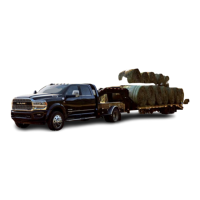
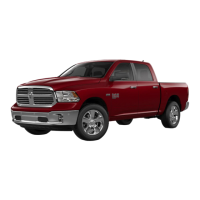
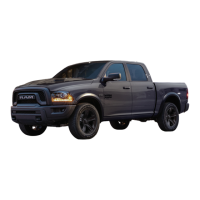
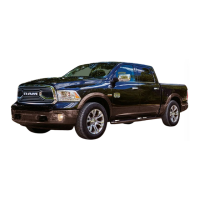
4. LOCATING THE DECALS: Use photos to determine
the style of trailer. Place one decal on both sides of
the trailer as shown. To get ideal functionality, place
decals at the same height of the camera and at
each vertical edge of the trailer without going over.
5. PRESSURIZING THE DECAL: Use firm hand pressure
over entire decal starting at the center and fanning
out to the edges trying not to trap air.
6. POST APPLICATION: Do not power wash decal area
for 72 hours.
TOWING REQUIREMENTS
To promote proper break-in of your new vehicle drive-
train components, the following guidelines are
recommended.
CAUTION!
•
Do not tow a trailer at all during the first 500 miles
(805 km) the new vehicle is driven. The engine,
axle or other parts could be damaged.
(Continued)
CAUTION!
•
Then, during the first 500 miles (805 km) that a
trailer is towed, do not drive over 50 mph
(80 km/h) and do not make starts at full throttle.
This helps the engine and other parts of the
vehicle wear in at the heavier loads.
Perform the maintenance listed in the “Service and
Warranty Handbook (Auto Biography)”. Refer to “Service
And Warranty Handbook (Auto Biography)” for the
proper maintenance intervals. When towing a trailer,
never exceed the GAWR or GCWR ratings.
WARNING!
Improper towing can lead to a collision. Follow these
guidelines to make your trailer towing as safe as pos-
sible:
•
Make certain that the load is secured in the trailer
and will not shift during travel. When trailering
cargo that is not fully secured, dynamic load shifts
can occur that may be difficult for the driver to con-
trol. You could lose control of your vehicle and have
a collision.
•
When hauling cargo or towing a trailer, do not over-
load your vehicle or trailer. Overloading can cause
a loss of control, poor performance or damage to
brakes, axle, engine, transmission, steering, sus-
pension, chassis structure or tires.
•
Safety chains must always be used between your
vehicle and trailer. Always connect the chains to
the hook retainers of the vehicle hitch. Cross the
chains under the trailer tongue and allow enough
slack for turning corners.
(Continued)
WARNING!
•
Vehicles with trailers should not be parked on a
grade. When parking, apply the parking brake on
the tow vehicle. Put the tow vehicle transmission in
PARK. For four-wheel drive vehicles, make sure the
transfer case is not in NEUTRAL. Always, block or
"chock" the trailer wheels.
•
GCWR must not be exceeded.
•
Total weight must be distributed between the tow
vehicle and the trailer such that the following four
ratings are not exceeded:
○ GVWR
○ GTW
○ GAWR
○ Tongue weight rating for the trailer hitch utilized
Towing Requirements — Tires
•
Do not attempt to tow a trailer while using a com-
pact spare tire.
•
Do not drive more than 50 mph (80 km/h) when
towing while using a full size spare tire.
•
Proper tire inflation pressures are essential to the
safe and satisfactory operation of your vehicle
page 290.
•
Check the trailer tires for proper tire inflation pres-
sures before trailer usage.
•
Check for signs of tire wear or visible tire damage
before towing a trailer
page 290.
•
For the proper tire replacement procedures
page 290. Replacing tires with a higher load
carrying capacity will not increase the vehicle's
GVWR and GAWR limits.
STARTING AND OPERATING 163
4



 To Next Page
 Loading...