page 35 of 91 USB-QFLCII-14804/0
Inspection and
maintenance
WARNING
The wear and tear sensor does not eliminate the need for inspection
and maintenance at regular intervals!
Preventive and thorough inspection and maintenance is essential for the
safety of personnel working within range of the inlet isolation device. In
addition, preventive and thorough maintenance ensures the proper
operation of the system. Please have only qualified staff perform the
inspection, maintenance and service work!
Information and specifications regarding maintenance work and its intervals
stated in the operating instructions
are only recommendations. The
manufacturer does not have practical, long-term data under the specific
operating conditions of each customer. The information stated in the operating
instructions is to be supplemented with your own practical experience.
4.3 Optional Level sensor (optional sensor for
Q-FlapCompact II or Q-FlapCompact II Plus)
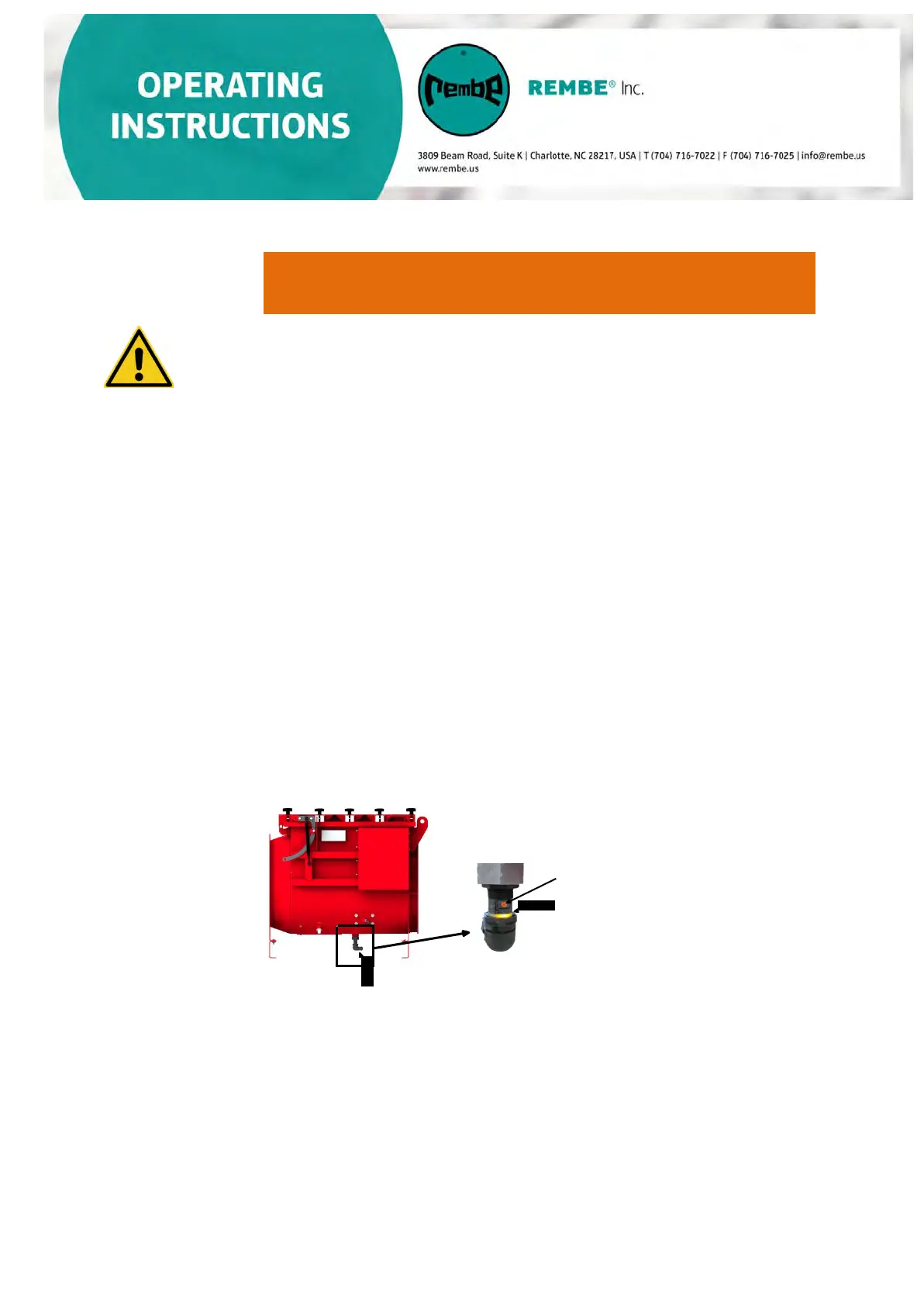
Level sensor Since deposits in the inlet isolation device cannot be excluded completely, there al-
ways exists a risk of fire and explosion in the flap. To reduce this risk, and to detect
deposits very early, the inlet isolation device may be equipped with a level sensor as
an option. The level sensor is attached below the flap blade and is active during
system operation.
Potentiometer
LED ring
Level sensor
The level sensor is a capacitive sensor which is able to detect deposits of
various process materials. The response behavior can be adjusted via a
potentiometer or individually with the process material (see Section 9.15 ,
Optional feature: adjusting the level sensor)
Response if sediments
detected
If the level sensor detects deposits, it will be indicated as a malfunction
message sent to the monitoring panel
. In addition, the LED ring will light
up, indicating the level sensor is detecting deposits. The system can
continue processing, without an emergency shutdown, but the system
must be shut down as soon as possible to determine the reason for the
deposits, correct any issues and to inspect/clean the inlet isolation device.


 To Next Page