page 32 of 91 USB-QFLCII-14804/0
In the event of an
Explosion When there is an explosion within a protected system, the flap blade closes
due to the spreading shock wave. The explosion flame and the pressure
cannot get back into the ductwork. Personnel working at the suction points or
at downstream system parts are protected against explosion consequences.
The locking mechanism prevents the
flap from opening following an explosion
because of decreased pressure.
Locking pin
Flap
Pressure wave in the event of
an explosion
Flap locked
4.1.3 Q-FlapCompact II/Plus closed-position sensor (Formerly known as
deposit sensor)
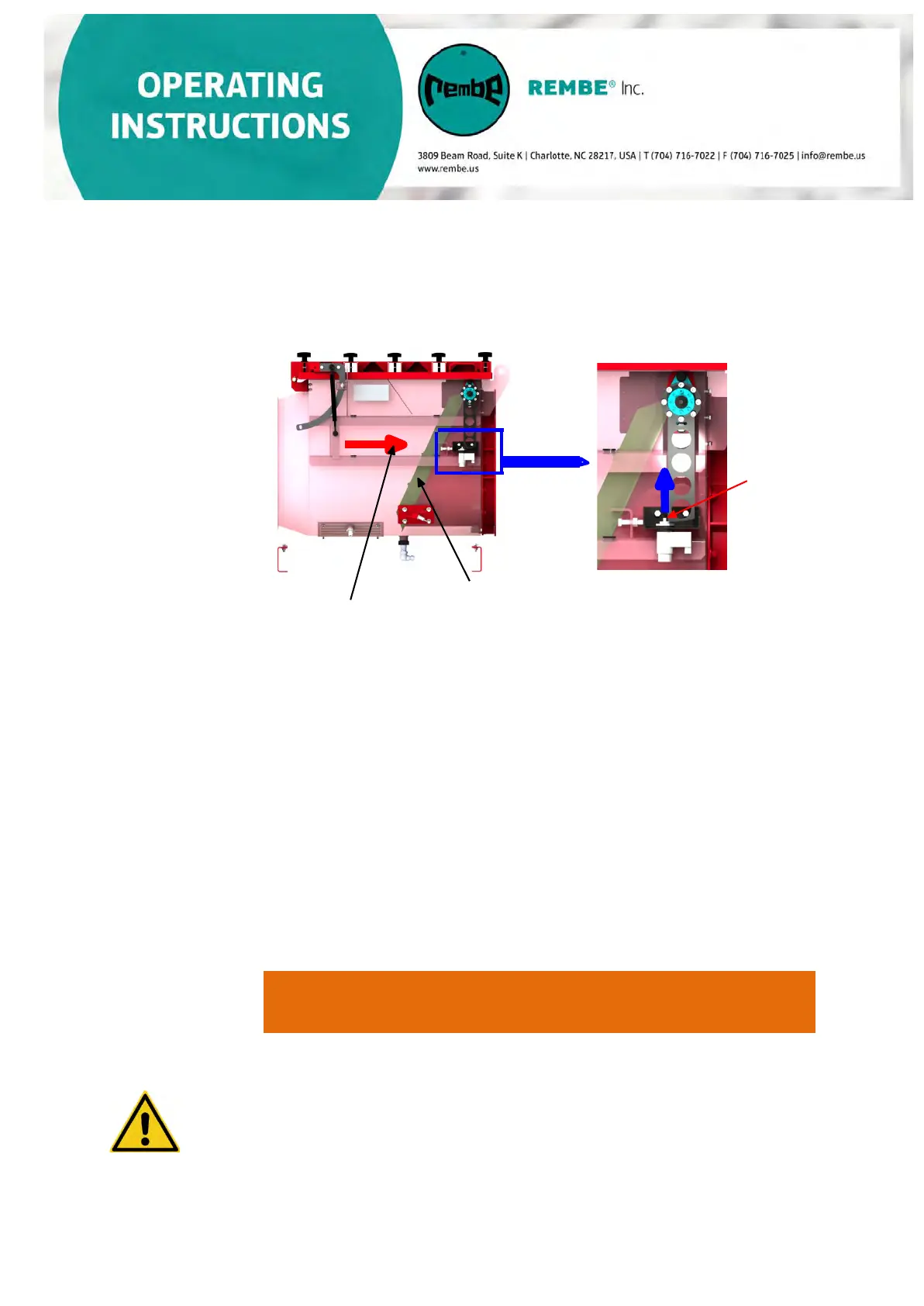
Closed-position sensor
The closed-position sensor is an inductive proximity switch that
detects
the
flap in the closing position on every inlet isolation device. By monitoring the
closing position, material deposits at the flap and the chamfered pipe
connection can be detected that may constrain safe closing of the flap in the
event of an explosion.
Monitoring during
sy
stem shutdown
The closed-position sensor detects that the flap blade has reached the closed final position
and passes a signal to the monitoring panel for evaluation. If the closed final position is not
detected through the closed-position sensor when the system is shutdown, this could
indicate material accumulation or wear at the flap blade. Material build-up at the flap blade or
slanted pipe socket could interfere with the safe closure of the inlet isolation device in the
event of an explosion.
WARNING
The closed-position sensor is only effective if the system is regularly shut
down!
The inlet isolation device closed-position sensor, which detects the flap in closed
position, will signal only when the system is shut down regularly.
Shutdown intervals should be chosen based upon your specific operating
conditions (depending on the risk of deposit accumulation and wear).
-----------------------------------------------------------------------------------------------------------


 To Next Page