IRD-2600 / IRD-2800
Integrated Receiver Decoders
P/N 2349-72784-00 Page 11
Appendix B. LNB Theory Of Operation
B.1 Why is an LNB needed?
A signal from a satellite is a very low power signal. The satellite reception dish does a first
amplification by reflecting and concentrating the signal received into one focus point. The
LNB, mounted exactly at this point in front of the parabolic dish, further amplifies this signal
because it is still very weak. This amplified satellite signal cannot be sent directly though a
coax cable. Due to the still very high frequency (10 to 13Ghz) sending this signal directly into
a coax cable would result in very high signal loss.
This is why the LNB also converts the signal into a lower frequency. The LNB Frequency
determines over how many Mhz the signal is converted downwards.
Example:
11929: Mhz Satellite frequency:
-10750: Mhz LNB frequency:
=1179: Mhz Signal frequency to IRD
The signal that is sent from the LNB to the IRD device has to be within the IRD input
frequency range (0.950Ghz to 2.150Ghz, or 950Mhz to 2150Mhz). The following figure shows
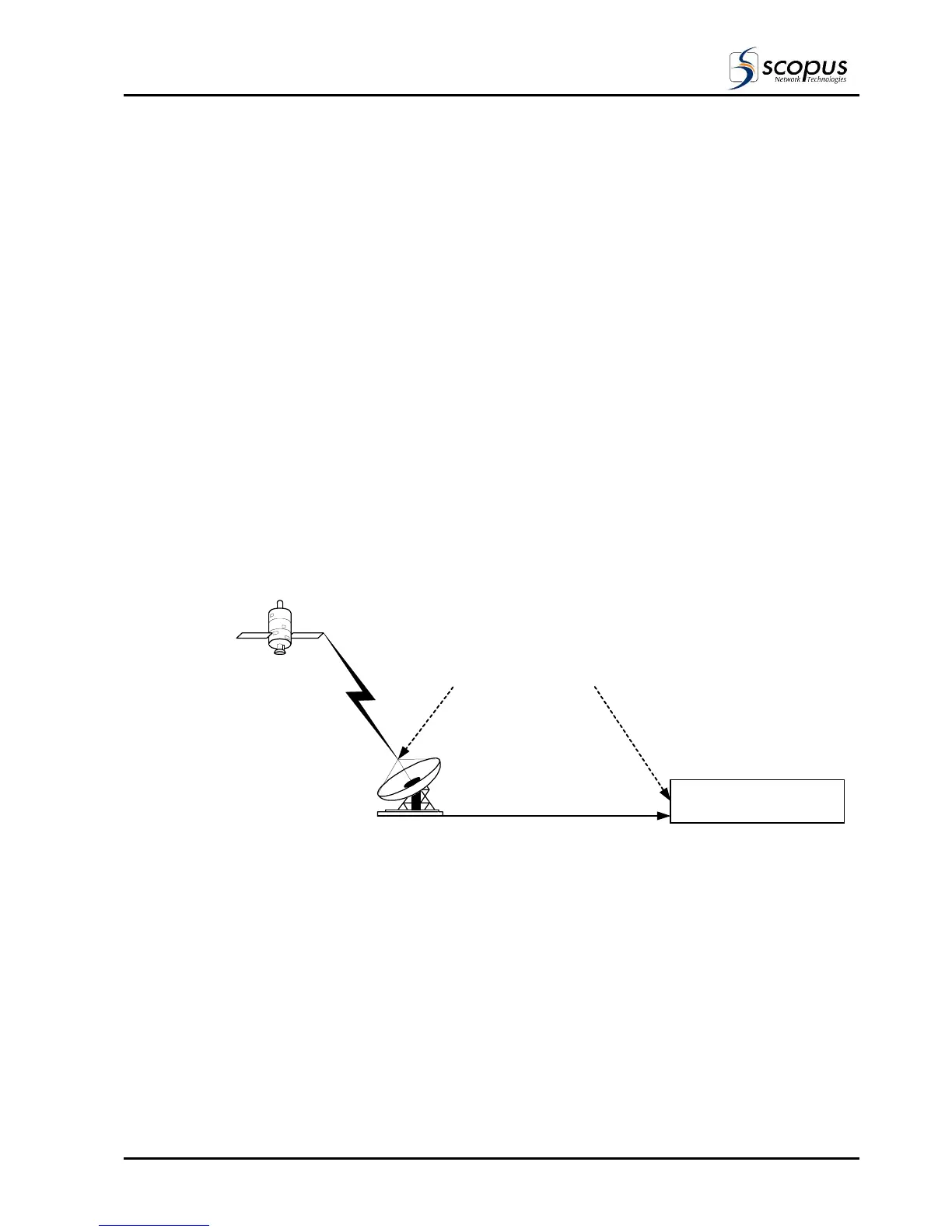
a basic set up for satellite reception.
Figure B-1: Basic Setup for Receiving A Satellite Signal
Satellite
Satellite dish
Scopus IRD
Frequency range of
satellite signal:
10 GHz to 13 GHz
approx.
Frequency range here is:
sattelite frequency - LNB frequency
Input Frequency Range
950 Mhz .. 2150Mhz
LNB
B.2 Frequency Calculation IRD + LNB
As demonstrated in the previous example, the LNB determines the actual reception
frequency range. The reception frequency range of the IRD and LNB together is calculated
as shown in the next example:
LNB frequency: = 10750 Mhz.
Input frequency range:= (950 + 10750) (2150 + 10750) Mhz
= 11700 Mhz ..12900 Mhz


 To Next Page