User Manual
Chapter 1. Overview
Page 1-10 P/N 2349-72784-00
1.2.3. Receiver Front End Options
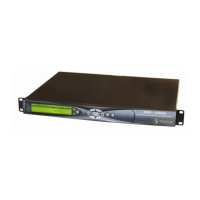
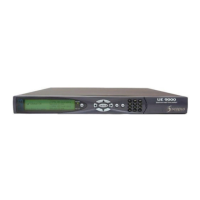
The IRD-2600 / IRD-2800 are delivered in various front-end configurations. The following
defines the specific features of each configuration, in addition to the basic features described
in paragraph 1.2.2 above.
a.
DVB-S QPSK Receiver Front-End Option:
• QPSK receiver for full bandwidth (SCPC/MCPC) operation at agile
1-45 MSymbols/sec,
• L-BAND input and RF Loop-through
b.
DVB-C QAM Receiver Front-End Option:
• 16/32/64/128/256 QAM receiver for SCPC & MCPC operation at agile
1 - 7 MSymbols/Sec
• VHF/UHF input and Loop-through.
c.
Decoder Standard Unit (RS-422 input):
• For ASI Input, refer to options 104 and 105.
d.
DVB-C G.703 Receiver Front-End Options:
• G.703 unframed input interface for SCPC & MCPC operation in telecom applications
at E1, E2 or E3 rates
• With or without FEC and Loop-through.
e.
DVB-PDH Framed DS3 or E3 Receiver Front-End Options:
• DS3 or E3 framed interface and Loop-through, (back to back ATM protocol, AAL1).
f.
DVB-SDH STM-1/OC-3 Receiver Front-End Options:
• Optical Multimode or Single mode,
• STM-1/OC-3, SONET 155Mbps input (Max TS bitrate up to 60Mbps) interface, and
• Loop-through, (back to back ATM protocol, AAL1).
g.
DVB-DSNG 8PSK, 16QAM and QPSK Receiver Front-End Option:
• 8PSK, 16QAM and QPSK receiver for full bandwidth (SCPC/MCPC) operation at
agile 1-45 Msymbols/sec
• 2 x L-Band inputs (950-2150 MHz)
The IRD also supports an option of 2 inputs with loop through of the selected input, with
automatic redundancy switching between inputs A & B, for the following input front end
options: DVB-S, DVB-C, G.703, DVB-PDH.
Time between switching is controlled.


 To Next Page