ATM
G.703
OPTION DESCRIPTION
; ;
LNB 22KHz
LNB 22 KHz Selector
Turns ON and OFF the 22 KHz LNB. This action determines the
band selected (ON = High Band, OFF = Low Band). In addition, the
selection of the LNB Power Supply determines the polarization of the
antenna. The following table shows the correlation between the LNB
parameters:
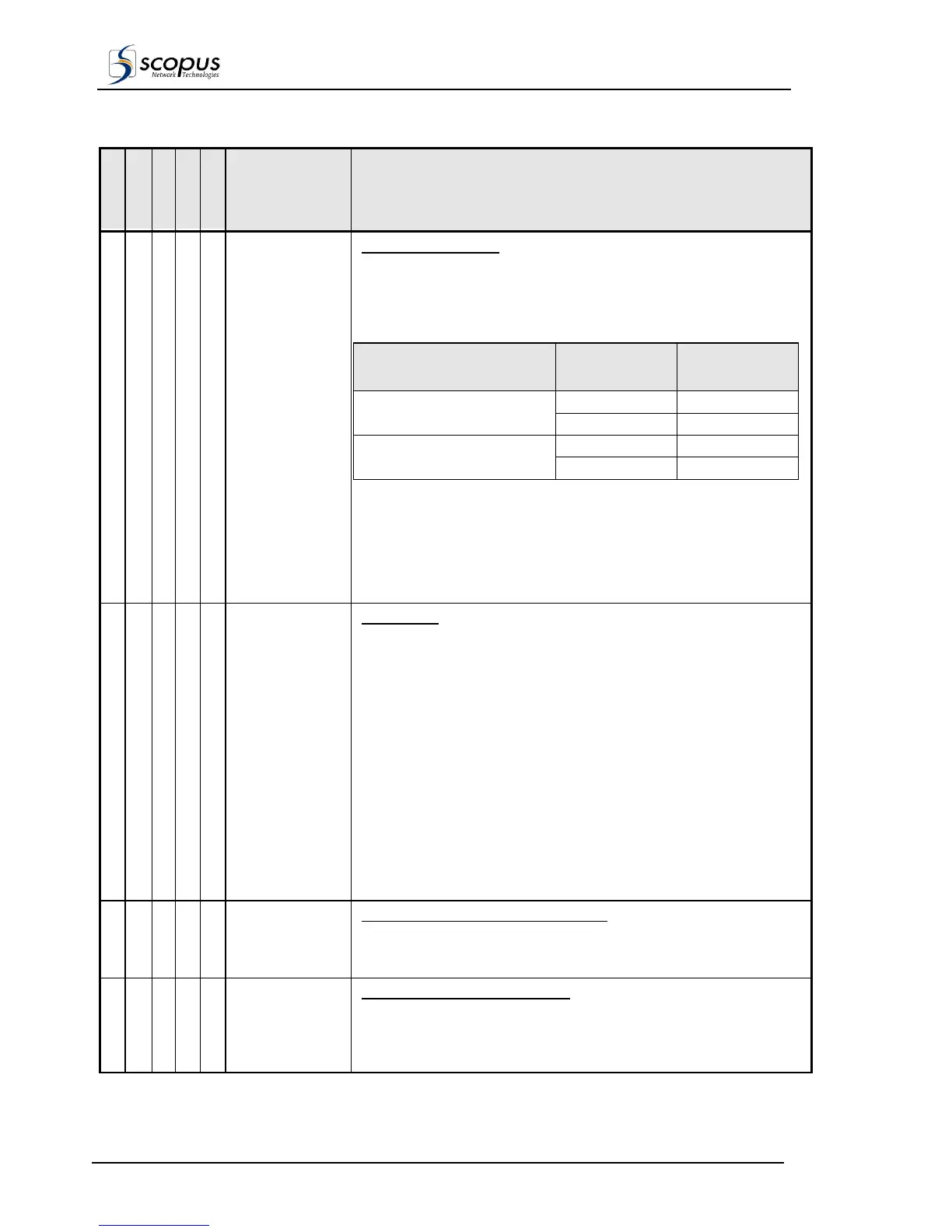
LNB POWER SUPPLY
LNB POLARIZATION
LNB 22 KHZ LNB BAND
OFF Low Band
14V / Vertical Polarization
ON High Band
OFF Low Band
18V / Horizontal Polarization
ON High Band
NOTE
In the Ku/C band mode, the LNB 22KHz converter setting is
performed automatically and the LNB 22 KHz Receiver
Configuration function is not displayed in the Receiver
Configuration Menu.
;
;*
;*
;*
;*
Input Signal
Source
Input Select
Selects the input source for the IRD Receiver input.
Available options:
In-A: Selects Input A
In-B: Selects Input B
NOTE (
;
;;
;
*)
The In-B connector is standard in the DSNG application.
For all other receivers (QPSK, QAM, ATM and G.703) the
IN-B connector is connected as loop-through of In-A input.
As an option, an additional, independent In-B input can be
added to these receivers. When this option is implemented for
any one of the receivers, the Input Select function is available
in the Receiver Configuration Menu to select between In-A
and In-B.
; ;
L-Band
Frequency
L-Band Receiver Frequency Selection
Input of the calculated L-Band Frequency for the DSNG IRD and
QPSK IRD Receivers in the L-Band, as described in Appendix B.
; ;
Transponder
Frequency
Ku/C-Band Frequency Selection
Input of the Satellite Transponder (Ku or C Band) frequency for the
DSNG IRD and QPSK IRD Receivers in the Ku/C Band.
See Appendix B for an example on calculating the input frequency.


 To Next Page