Instructions for Use
Resting & Stress ECG with seca
ct330/331 and seca diagnostic 5.9
1.3 Safety instructions for resting and stress ECGs
The device must be protected from dust and liquids.
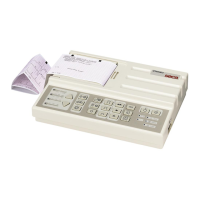
seca ct330/331 is only defibrillation-protected with the manufacturer's
patient cable.
Only use patient cables with 10 or 100 KΩ defibrillation protection
resistance for seca ct330/331.
In the event of defibrillation, observe the manufacturer's instructions
regarding the safe and proper use of the defibrillator.
Defibrillation interferes with the ECG recording. The recovery time of
seca ECG devices is less than five seconds.
Make sure that the electrode contacts do not come into contact with
other conductive parts.
If electrodes become detached from the patient during an ECG
recording or the electrode contact is too weak, a red signal line is
displayed on the corresponding ECG channel in seca diagnostic. A note
appears below the ECG recording (in red) indicating which electrodes
are affected. Attach these again. Red signal lines in seca diagnostic do
not indicate that the patient has an asystole.
seca diagnostic offers pacemaker detection. The pacemaker impulse is
detected from the ECG signal (at least in two channels) and projected
into the ECG recording as an (artificial) spike with precise timing.
seca ct330/331 is not suitable for intracardiac use.
seca ct330/331 has no protection against possible influences from high-
frequency (HF) surgical devices.
seca ct330/331 must not be used in the vicinity of HF surgical devices.
Use of the seca ct330/331 in conjunction with life-support equipment is
not permitted. The device is not suitable for intensive care or as an
alarm system for life-sustaining body functions.


 To Next Page