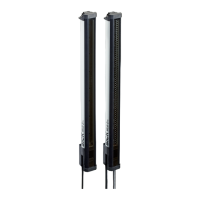
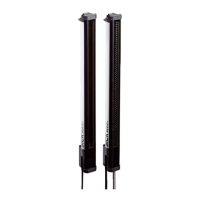
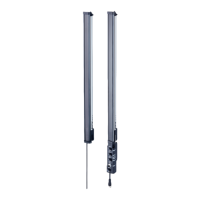
Table 11: Minimum detectable object depends on the MLG-2 Prime beam separation
Beam separation Minimum detectable object (stationary object)
1
5 mm 9 mm
10 mm 14 mm
20 mm 24 mm
25 mm 29 mm
30 mm 34 mm
50 mm 54 mm
1
Only if the object also meets the minimum detectable object length requirements.
3.6.2 Minimum detectable object length
When an object moves through the detection area, it must have a certain length.
Figure 11: Minimum detectable object length
1
Minimum detectable object
NOTE
For mo
ving objects, the minimum detectable object length also depends on the speed
of the object.
Table 12: Minimum detectable object length for the MLG-2 Prime
Beam separation Minimum detectable object length (stationary object)
1
5 … 50 mm 5 mm
1
Only if the object also meets the minimum detectable object requirements.
3.6.3 Minimum detectable object with cross-beam function
The parallel-beam function is used for measuring by default. With the parallel-beam
f
unc
tion, each light beam is received only by the receiver element situated directly
opposite.
With the cross-beam function, a sender LED projects beams to several receiver diodes.
The cross-beam function increases the measurement accuracy and enables the detec‐
tion of smaller objects.
3 P
RODUCT DESCRIPTION
20
O P E R A T I N G I N S T R U C T I O N S | MLG-2 Prime 8018715.16YM / 2020-02-13 | SICK
Subject to change without notice



 To Next Page
 Loading...