INSTALLATION AND CONFIGURATION | 17
matically negotiates and selects a codec that is supported by both ends. Implements RFC
3261 standard (but see below)
The g.722 codec is the same codec known to broadcasters from the pre-MPEG days of
ISDN remotes. It has 7kHz audio bandwidth, opening the door to much better than usual
speech quality, especially from mobile handsels. When there is reliable and sufficient IP
bandwidth, audio quality from mobile phones can be much improved compared to the
usual fuzztone. We’ve tested the iPhone application Media5 FON with satisfactory results
(but only the upgrade version includes g.722). The Acrobits app should also work.
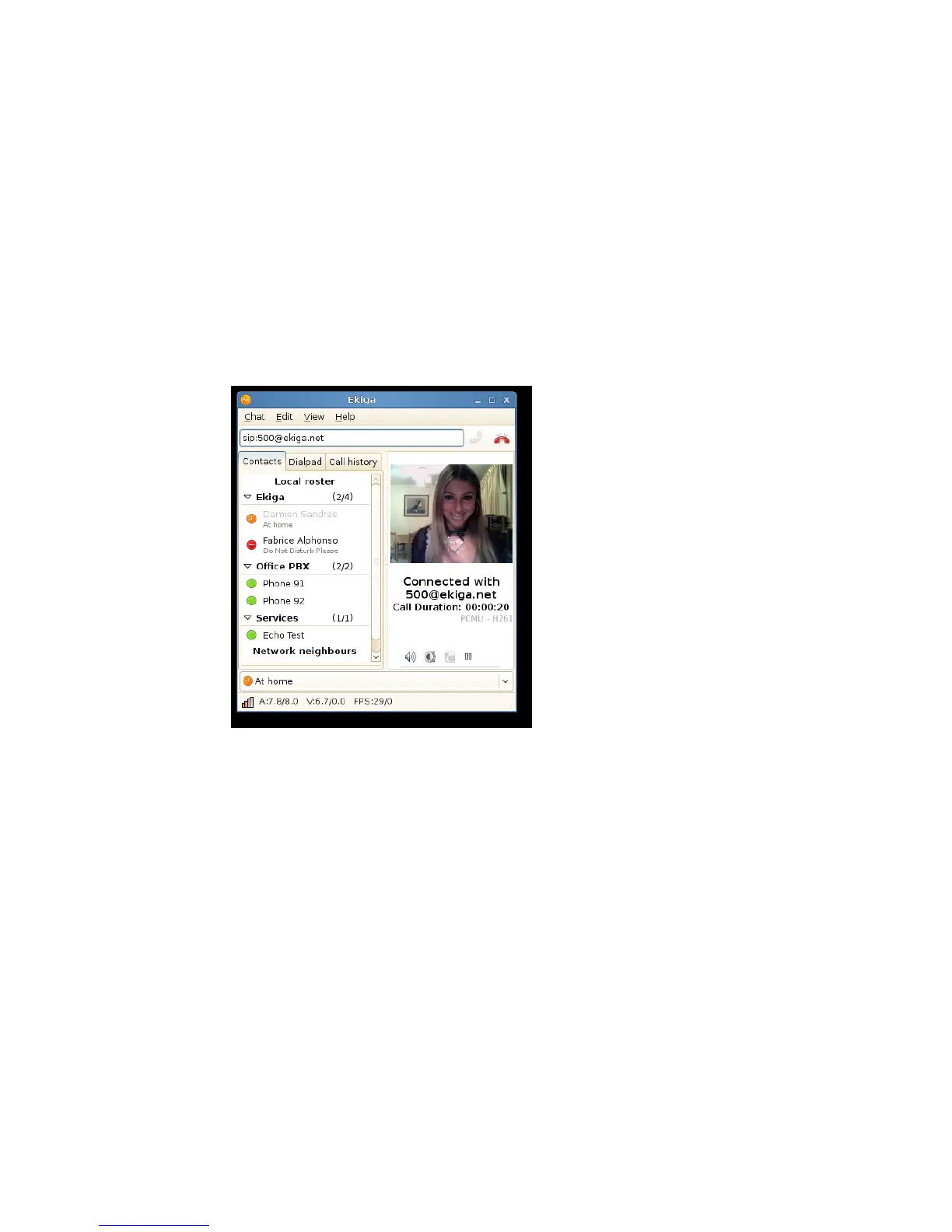
On Windows and Linux, the free Ekiga VoIP softphone works fine.
For both of the above, you need to force the use of the g.722 codec by enabling it and
disabling the others. on the VX side, everything is handled automatically during normal
SIP codec negotiation. Following the usual procedure, the codec choice is made by the
caller and conveyed in the SIP Invite message and procedure.
SIP-connected g.722 audio is via IP, so the VX Engine needs a public IP address that is
accessible to the calling side. G.722 does not pass via the PSTN and gateways (which
means that ISDN g.722 codecs will not work with the VX).
RFC 1890, the original standard governing audio codecs in SIP, erroneously listed the
clock rate of G.722 as 8kHz (the actual sampling is 16kHz). When the error was discov-
ered, it was too late to fix it, and it was decided to keep it that way. Nevertheless, makers
of some SIP devices decided “fix” this mistake on their own, breaking compatibility with
most other devices that stick to the standard, including VX. As the result, VX will use
G.711 to communicate with such devices.
Because it is essentially a pro-grade SIP phone that includes g.722, the Telos Z/IP One
also works as the other end of a VX g.722 call.
Note that VX’s call audio processing is bypassed when using g.722.


 To Next Page