26 | Section 2
Caller AGC/EQ. Normalizes the level coming from telephone calls. A wideband AGC is used
for consistency, followed a multi-band frequency-selective processor that provides spectral
control for the best caller audio, balancing intelligibility and warmth. The Duck Control module
communicates with the AGC module so that gain is not increased when the studio-side is
sending audio. Leakage from the hybrid in this case could look like low-level telephone audio
that needs to be boosted. If this happens, the effect of the hybrid and ducker would be undone.
Send EQ. This is a simple EQ that rolls-off the low-end and has a peak at high-frequencies to
improve intelligibility. This is designed to make the audio similar to what a caller would receive
from a normal telephone. When wideband audio is fed directly into a telephone connection,
there are often complaints that “it is hard to understand” because the low-frequency energy is
masking the higher frequencies that are needed for intelligibility.
A Sample Rate Converter is an essential part of the signal processing. The SRC is automatic
and there are no controls or configuration. The SRC between the telephone processing and the
studio-side audio adapts the telephone sampling rate to the 48kHz Livewire rate and allows the
switching and mixing to be performed synchronously within the VX Engine. The SRC adapts a
number of rates on the telephone side. The usual telephone rate is 8kHz, but newer wideband
codecs making their way into telephony will have higher rates. The output (to Telco) rate of the
send-side SRC is locked to the receive rate on the same line.
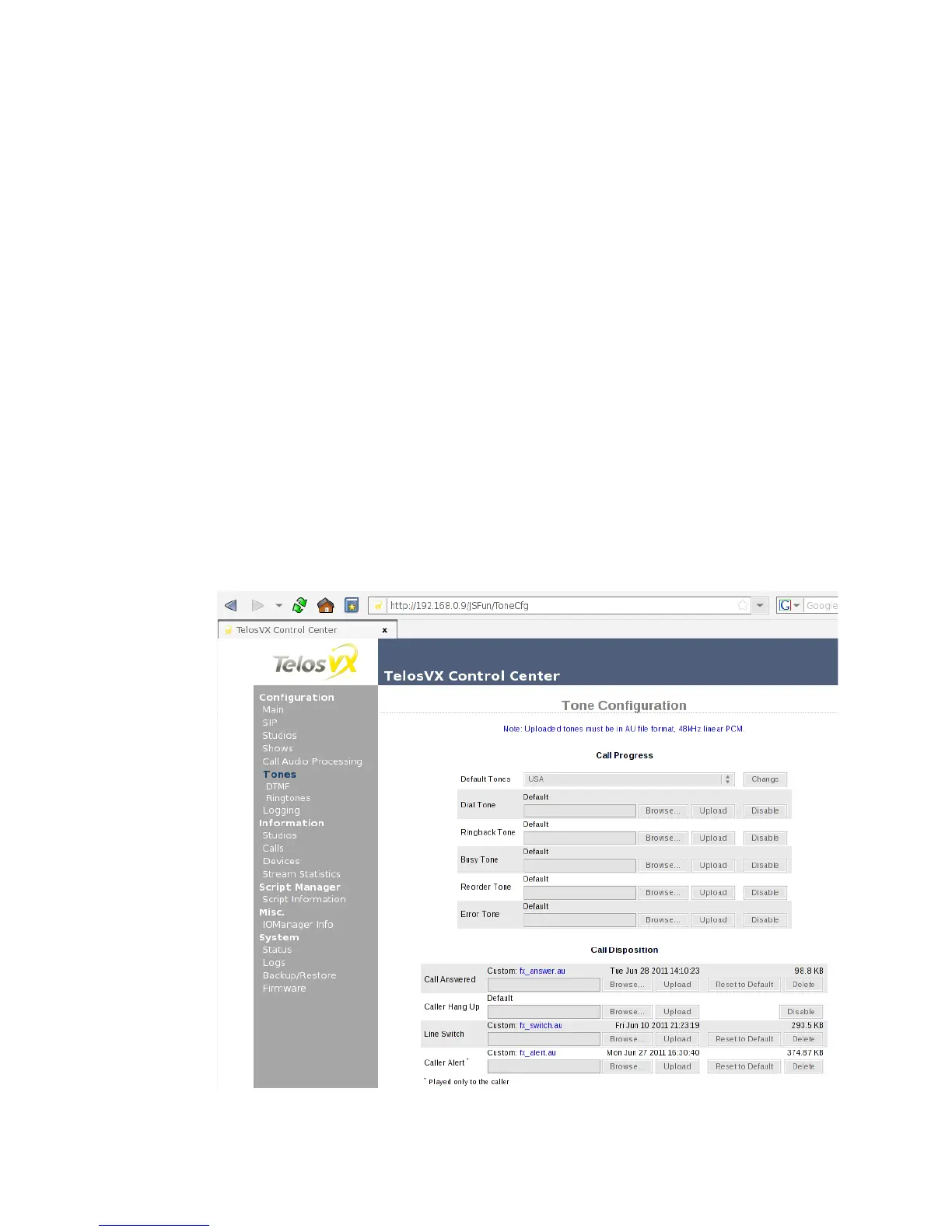
Assigning sounds & Tones – The Tones page


 To Next Page