72 | Section 5
(E.164 NUmber Mapping) is the Internet service used to look up the URI associated with a
particular E.164 telephone number. It’s part of the DNS system. SIP can use ENUM to locate the
VoIP system associated with a telephone number that accepts incoming calls.
How SIP Works
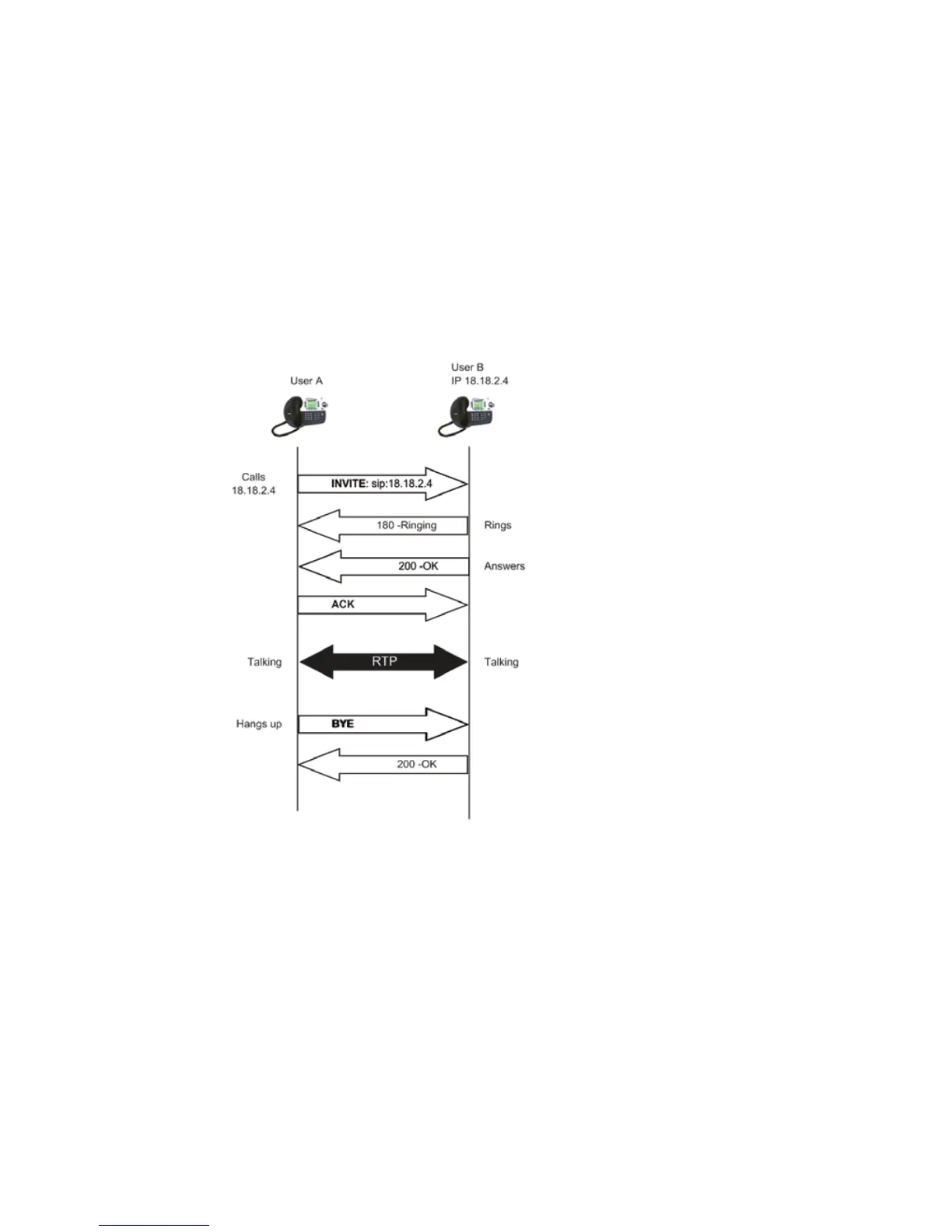
As we’ve seen, SIP is a simple, text-based protocol. It uses requests and responses to arrange
for communication among the various components in the network, and ultimately to establish
a connection between two or more endpoints.
SIP at its simplest. An IP phone calls another directly.
But this is not the real world. Almost always, there are SIP servers of various kinds in the
picture. When a user initiates a call, a SIP request is sent to a SIP server (either a proxy or a
redirect server). The request includes the address of the caller and the address of the intended
called party. In more sophisticated scenarios, users register with a registrar server using their
assigned SIP addresses. The registrar server provides this information to the location server
upon request.
From time to time, a SIP user might move between end systems. The location of the user can
be dynamically registered with the SIP server. Because the end user can be logged in at more
than one station, and because the location server can sometimes have inaccurate information,
it might return more than one address for the end user. If the request is coming through a
SIP proxy server, the proxy server tries each of the returned addresses until it locates the end
user. If the request is coming through a SIP redirect server, the redirect server forwards all the
addresses to the caller in the Contact header field of the invitation response.


 To Next Page