Safety Precautions:
•
Always make sure that the vehicle is in neutral gear (or that it is set in parking position
in case of a vehicle equipped with automatic transmission).
•
Always activate the hand brake or parking brake on the vehicle.
•
Always block the vehicle's wheels using specific mechanical blocks.
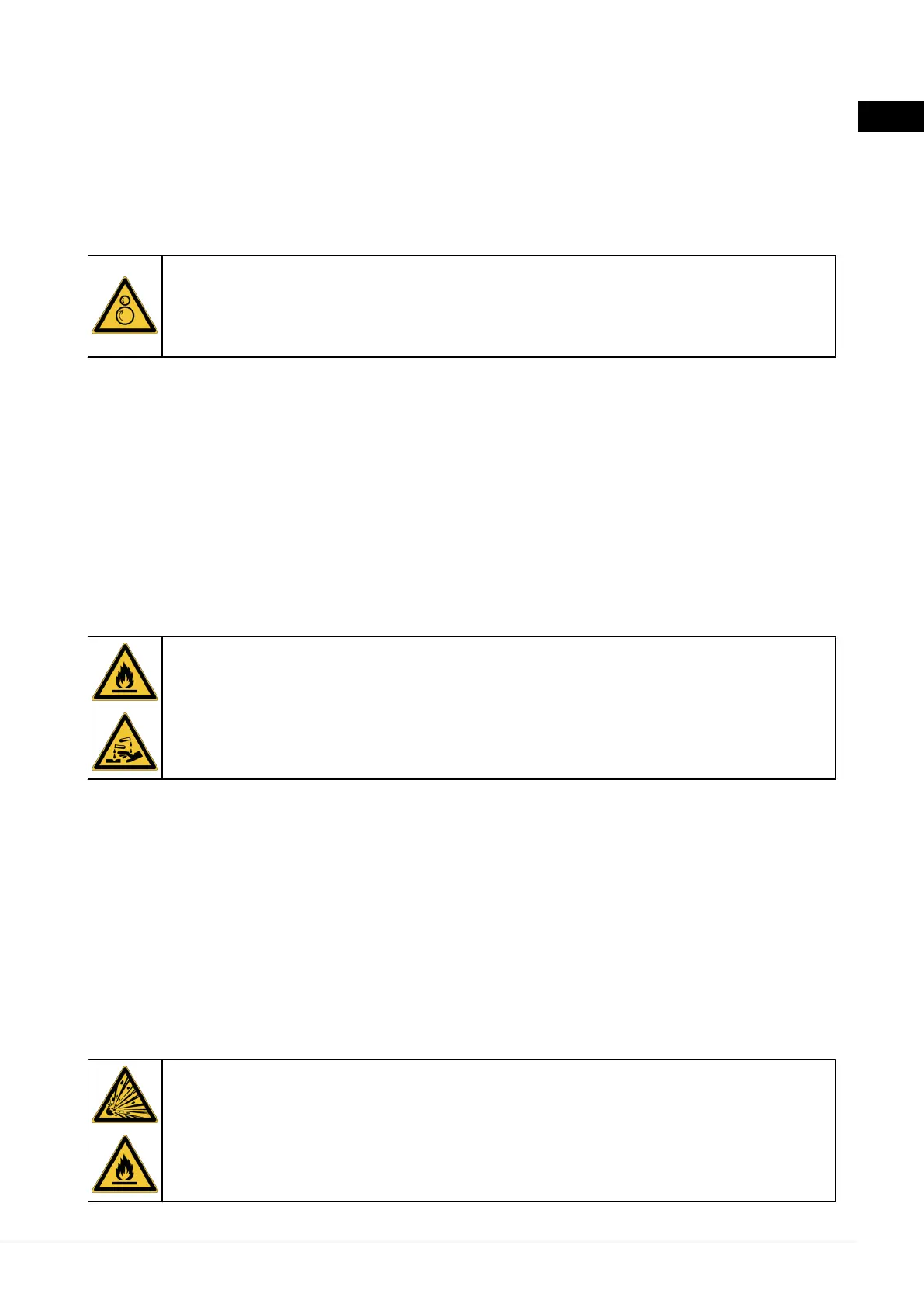
2.2.4 Hazards Caused by Moving Parts
Vehicle engines include parts that move, both while running and not running (eg:
the cooling fan is controlled by a thermal switch in connection with the coolant
temperature and become activated even when the vehicle is off), that can injure
the operator.
Safety Precautions:
•
Keep hands away from moving parts.
•
Disconnect the engine cooling fan each time the engine you are working on is still hot.
This will avoid the fan from becoming activated unexpectedly even when the engine is
off.
•
Do not wear ties, loose clothes, wrist jewellery or watches when working on a vehicle.
•
Keep connection cables, probes and similar devices away from the moving parts of the
engine.
2.2.5 Risk of Burning or Scalding
The parts that are exposed to high temperatures in engines that are moving or
have just stopped could burn the operator.
Remember that catalytic mufflers reach very high temperatures, able to cause
serious burns or even start fires.
Acid in the vehicle batteries is another potential hazard.
Safety Precautions:
•
Protect your face, hands, and feet by using suitable protection.
•
Avoid contact with hot surfaces, such as spark plugs, exhaust pipes, radiators and
connections within the cooling system.
•
Make sure there are no oil stains, rags, paper or other inflammable material near the
muffler.
•
Avoid splashing electrolyte onto your skin, eyes and clothes, as it is a corrosive and
highly toxic compound.
2.2.6 Fire and Explosion Hazard
The following are potential fires and / or explosion hazards:
•
The types of fuel used by the vehicle and the vapours released by these fuels.
•
The refrigerants used by the A/C system.
•
The acid in the vehicle batteries.
55
en


 To Next Page
 Loading...