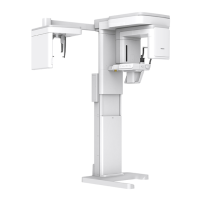
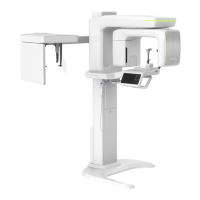
The Vatech A9 (PHT-30CSS) is an advanced dental imaging system designed for comprehensive diagnostic capabilities, including Cone Beam Computed Tomography (CBCT), panoramic, and cephalometric imaging. This technical manual provides detailed information on its hardware, image optimization, evaluation, firmware upgrades, and maintenance procedures, primarily for authorized Vatech engineers.
Function Description:
The Vatech A9 integrates multiple imaging modalities into a single unit, offering versatile diagnostic tools for dental professionals. Its core functions include:
- CBCT Imaging: Provides high-resolution 3D images for detailed anatomical assessment, crucial for implant planning, orthodontics, and endodontics.
- Panoramic Imaging: Captures a broad view of the entire dentition, jawbones, and surrounding structures, useful for general diagnosis and treatment planning.
- Cephalometric Imaging: Generates lateral and PA cephalometric images for orthodontic analysis and treatment progress monitoring.
The system's operation is managed by a Main MCU Board (MCU028), which handles LAN communication to the PC, CAN communication to sensors, inverters, and keypads, and controls various motors for rotator, generator tilting, column movement (up/down), collimator movement, and sensor movement (PANO and CEPH). It also manages fan control, sensor power, laser on/off, X-ray control, X-ray warning lamp, MP3 control, and sync pulse generation during X-ray exposure.
Important Technical Specifications:
Hardware Components:
- Vertical Frame Part: Houses the Ethernet Grabber, Main MCU Board (MCU028), Power Board (VT-PWR-016), and Noise Filter.
- Ethernet Grabber: Features 12V/24V DC input, RS232 to MCU, CAN to MCU (reserve), two optic signal inputs (Tx 1550/Rx 1310), one G-Ethernet output, and 4Gbyte memory.
- Main MCU Board (MCU028): Central control unit for motor control (rotator, generator tilting, column, collimator, sensor, CEPH sensor), fan control, sensor power, laser, X-ray, X-ray warning lamp, MP3, and sync pulse generation.
- Power Board (VT-PWR-016): Provides 24V DC output for system, motor, sensor, and inverter, and 380V DC output for the generator. It also includes an emergency switch input for power shutdown.
- Noise Filter: Reduces electrical noise in the system.
- Handle Unit: Contains the Circuit Breaker (UP/DOWN switch), Speaker, Emergency Switch, ORG Sensor, and Touch Keypad.
- Rotating Unit Part: Includes the SUB056 (Sensor Interface), Inverter, CT/PANO Sensor (Xmaru1314CF), and Generator (DG-07E22T2).
- Sensor Interface (SUB056): Manages control signal interfacing for sensor moving motor, rotator motor, and the sensor, as well as control power interfacing for the sensor.
- Inverter: Supplies high DC/AC power.
- CT/PANO Sensor (Xmaru1314CF): The primary sensor for CT and panoramic imaging.
- Generator Interface (SUB055): Interfaces with the generator, generator tilting motor, laser, laser motor, collimator, fan, and CT/PANO sensor, providing control and power.
- Generator (DG-07E22T2): X-ray source.
- CEPH Unit: Comprises the CEPH Sensor (Xmaru2602) and CEPH Interface (SUB075).
- CEPH Sensor (Xmaru2602): Dedicated sensor for cephalometric imaging.
- CEPH Interface (SUB075): Interfaces with the Main MCU Board (MCU026) and CEPH motors, controlling the CEPH sensor and regulating sensor power (24V to ±5V).
Imaging Geometry:
- CT Imaging:
- FDD (X-ray source to sensor distance): 584.6 mm
- FOD (X-ray source to center of rotation distance): 353.6 mm
- FOV: 80 x 80 mm
- PANO Imaging:
- FDD (X-ray source to sensor distance): 584.6 mm
- FOD (X-ray source to center of rotation distance): 425.6 mm
Image Quality Standards:
- CT Image Evaluation:
- Spatial Resolution (MTF 10%): LSL 1.00 lp/mm, USL 3.50 lp/mm
- Contrast: LSL 500 HU, USL <1000 HU
- Noise (CNR): LSL 500
- Homogeneity: LSL 10.00, USL 150.00
- CT Number Accuracy: Air (-1030 to -900), Water (-20 to 20), Teflon (900 to 1100)
- High Contrast Resolution: USL 1.0 mm
- Low Contrast Resolution: USL 9.0 mm
- Slice Thickness: LSL 38.0 mm, USL 42.0 mm
- Collimator Alignment (Threshold 95%): Left (1-2 pixels), Right (1-2 pixels)
- Collimator Alignment (Threshold 75%): Upper (1-10 pixels), Lower (1-10 pixels)
- PANO Image Evaluation:
- Line Pair Resolution: LSL 3.1 lp/mm
- Low Contrast Resolution (Hole): USL 1.5 mm
- Noise (Dev): ROI 1 (40 or less), ROI 2 (30 or less)
- Homogeneity (Ave): ROI 1 (8000 or more), ROI 2 (1200 or more), difference between ROI 1,2 values is 10% or less.
- Collimator Alignment (Threshold 70%): Upper (1-10 pixels), Lower (1-10 pixels), Left (2-2 pixels), Right (1-2 pixels)
- CEPH Image Evaluation:
- LAT Start Position: LSL 605 pixels, USL 625 pixels
- PA Start Position: LSL 1160 pixels, USL 1180 pixels
- Line Pair Resolution: LSL 2.5 lp/mm
- Low Contrast Resolution: USL 2.5 mm
Usage Features:
- User Interface: The system operates via a console software, allowing users to select imaging modes (CBCT, PANO, CEPH), adjust exposure conditions (kVp, mA), and initiate image acquisition.
- Phantom-Based Calibration: The manual details procedures for using various phantoms (QUART DVT, CT Number Phantom, S&C Phantom, PANO Ball Phantom) to calibrate and optimize image quality across all modalities.
- EzAlign Software: Facilitates automated collimator alignment for CT, PANO, and CEPH modes, simplifying setup and ensuring consistent image quality.
- V.I.P.S. (Vatech Image Processing System): A software tool for setting image options, checking image size, and saving configurations, particularly for cephalometric images.
- Remote Exposure Function: Allows for X-ray exposure from a remote location, enhancing safety for operators. This function requires prior approval from hospital staff and strict adherence to safety protocols.
- Firmware Upgrade: The system's firmware can be upgraded via Ethernet or serial communication using dedicated software (Flexspeed2000Manager or flash_loader_demo_v2.8.0.exe), ensuring the system benefits from the latest functions and patches.
Maintenance Features:
- Disassembly Procedures: Detailed instructions are provided for disassembling various covers of the vertical frame, rotating unit, handle frame, and CEPH unit, allowing access to internal components for service and repair. This includes removing rubber caps and loosening bolts.
- Sensor Calibration: Regular sensor calibration (dark and bright) is crucial for maintaining image quality, especially with variations in temperature and humidity. The manual outlines specific procedures for CT, PANO, and CEPH sensors, including checking median values against defined standards and adjusting parameters if necessary.
- Bad Pixel Verification: Procedures are described to identify and verify dead pixels, non-uniform response pixels, bad lines, and clusters of bad pixels, ensuring the sensor's integrity.
- Geometry Calibration: Calibration of sensor U offset, handle frame alignment, pin alignment, rotator Y/Z-axis setting, center pin position, and center ball size are detailed to ensure accurate imaging geometry.
- Collimator Alignment: Manual and automated (using EzAlign) collimator alignment procedures are provided to ensure precise X-ray beam shaping and optimal image capture.
- DAP Calibration: Steps for Dose Area Product (DAP) calibration are included, involving positioning a dosimeter, acquiring images, and adjusting mA values to meet background level standards.
- CT Number Calibration: Procedures for calibrating CT numbers using a CT Number Phantom are outlined, ensuring accurate representation of tissue densities in CBCT images.
- Dose Measurement Mode: A unique feature allowing inspectors to measure radiation dose without removing sensor stickers or rotating unit covers, facilitating quick and easy dose checks.
- Error Message List: Comprehensive lists of hardware, software, acquisition module, image processing, and stitching software error codes are provided to assist technicians in diagnosing and resolving system issues.
- Pre-check Points: A checklist for service technicians to confirm before performing any maintenance or repair, covering power, voltage, grounding, accessories, operator readiness, and tool availability.
The Vatech A9 is designed for precision and reliability, with extensive documentation to support its maintenance and ensure optimal performance in a clinical setting.

 Need help?
 General

 To Next Page