104
ENGLISH
11. Moving and braking
The bed can be moved and therefore the easy positioning within the room ensures easy clean-
ing of the low nursing bed and the space underneath. However, the low nursing bed is not
suitable for the transport of residents. The low nursing bed may only be moved in its lowest
position and without a resident. Moving the low nursing bed to other rooms with a resident still
in it does not comply with the intended use.
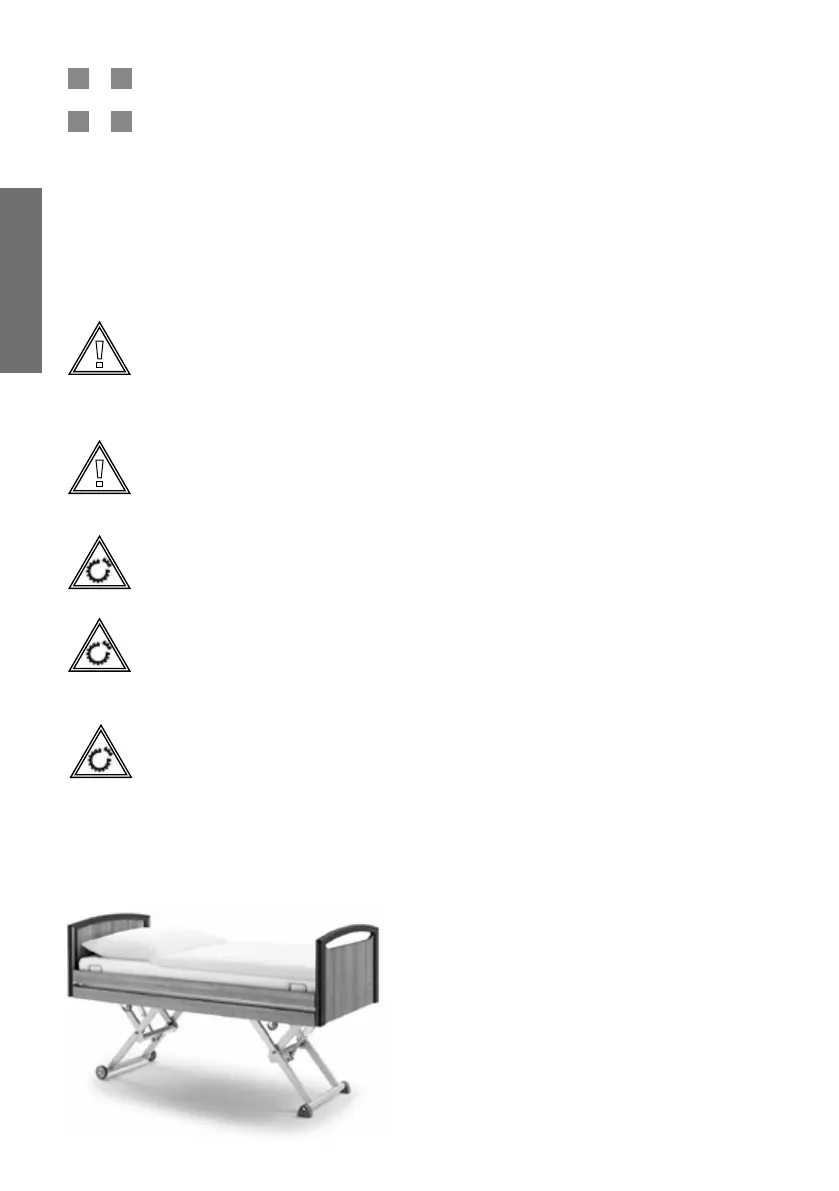
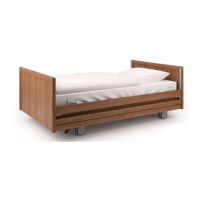
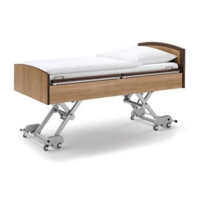
At the foot end, the sentida 1 has foot blocks
and four small castors attached to the top
frame.
The bed can only be moved in the low position,
as only then are the castors in contact with the
oor. As soon as you adjust it to another posi-
tion, the bed brakes are automatically engaged
and it cannot be moved.
Caution!
The side panels' anchoring could come loose under high load. To move the bed,
always push or pull it at the head or foot section only.
Attention!
Injuries could be caused if feet or other body parts get caught in the moving castors
or the undercarriage cladding when moving the bed. When moving the bed, make
sure that your foot does not get caught under the moving castors or under the un-
dercarriage cladding.
Caution!
Running over power cables can damage them. Never run over power cables or other
cables.
11.1 Moving and braking (sentida 1)
Caution!
The bed can only be moved if the brakes are released correctly. If still braked
castors are moved across the oor contrary to the instructions, this can result in
damage to the ooring and braking system.
Attention!
A bed without the brakes engaged can pose a risk of falling. Always engage the
bed's brakes before leaving. If the resident is unsupervised, move the bed to the
low position�


 To Next Page