Automatic Performance Tests
193
source. Moreover, the test unit supports one.way latency measurements between two-
units placed in remote locations with GNSS or 1 PPS / ToD synchronization.
The Local bidirectional test method is conceived as an extension to the One-way test
but in a Local bidirectional test the traffic flows in both transmission directions. Unlike it
happens with One-way tests, Local bidirectional tests run strictly between Port A and
Port B within the same unit. Distributed test architectures are not supported when this
test method is configured. The Local bidirectional test mode applies only to RFC 6349
tests.
The asymmetric test is also similar in some aspects to the one-way test method but it
always requires two units to run. Asymmetric tests are more powerful than one-way
tests because they allow the user to perform most of the configuration from a single
end. Once finished, the results are shown in the same end where the was configured.
The asymmetric test is based on collaborative operation of the controlling test unit and
a remote responder unit (See section 7.5). The synchronization requirements are the
same that in one-way tests running between two units. In latency measurements, the
near and far ends require external synchronization. Asymmetric testing has to be
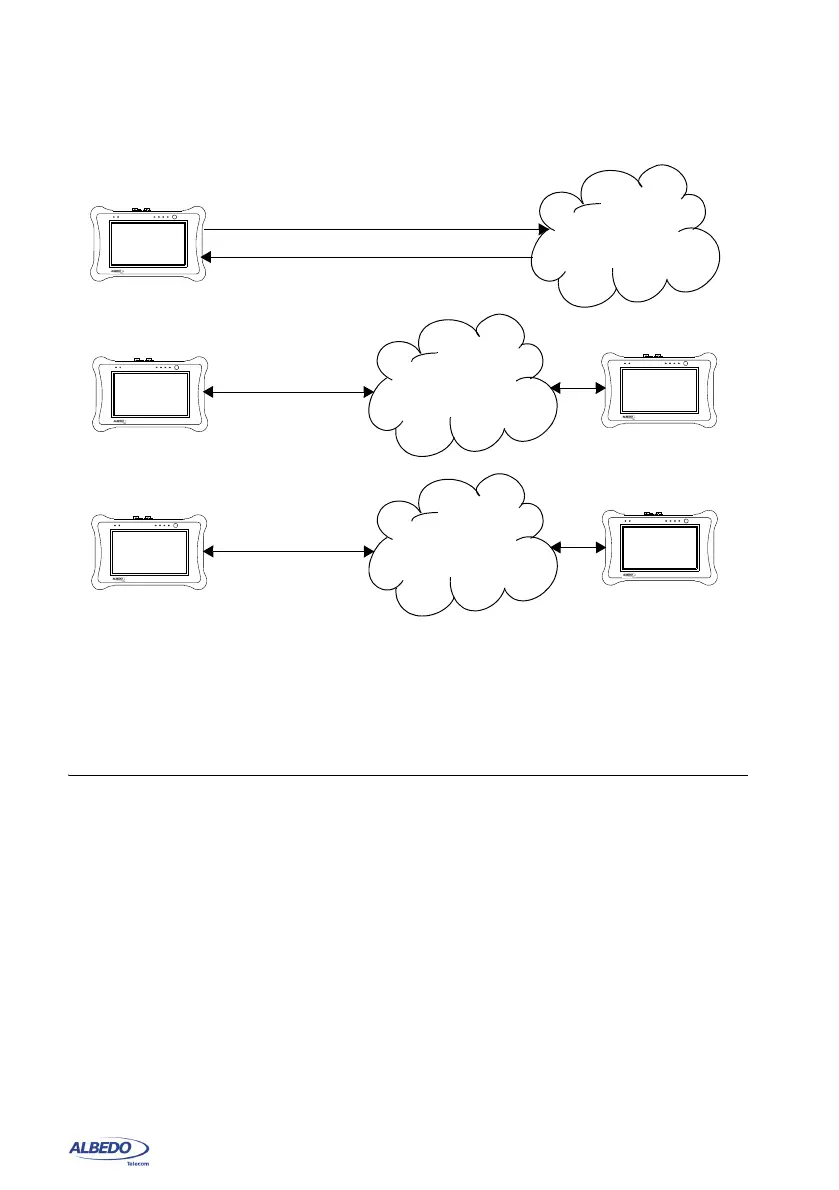
Figure 7.16: Connection setup for one-way and two-way tests: (a) One-way test, the test
pattern leaves the tester in port A and it is received in port B. (b) Two-way test, the test
pattern leaves in port A and it is received in the same port A (c) Asymmetric and
bidirectional tests, the controller and responder units run a collaborative test. Typically,
the controller generates commands for the responder. the responder executes these
commands and it reports status and results.
DUT / SUT
DUT / SUT
Tester
Port A
Port B
Traffic
reflector
Port A
(a)
(b)
DUT / SUT
Controller
Responder
unit
Port A
(c)
unit
xGenius
xGenius
Tester
xGenius
xGenius
xGenius


 To Next Page