A
L
B
E
D
O
T
e
l
e
c
o
m
-
J
o
a
n
d
’
À
u
s
t
r
i
a
,
1
1
2
-
B
a
r
c
e
l
o
n
a
-
0
8
0
1
8
-
w
w
w
.
a
l
b
e
d
o
t
e
l
e
c
o
m
.
c
o
m
User Guide
244
phase error. There are many performance figures defined to assess the quality of a
timing signal but the most important of them are:
•The time interval error (TIE) is the phase fluctuation amplitude, which means that
it indicates the phase variation of the clock to be measured, relative to the phase
of an ideal reference clock during each measurement instant. The time origin,
TIE=0 is taken as a reference at the start of the measurement. The TIE is
expressed in absolute time units (ns, s, ms).
•The maximum time interval error (MTIE) is the maximum value of peak-to-peak
TIE in a certain observation time. This means that in order to calculate the MTIE, a
time window of predefined length, k, must be scrolled over the function TIE (n),
recording the maximum peak-to-peak value of the TIE. This can be repeated for
different values of k, thus obtaining a graph of MTIE (k).
• Time deviation or TDEV is a measurement that characterizes the spectral content
of a TIE (n) signal. This means that it measures the power of wander frequency
components. The TDEV converges for all common types of phase noise, which
makes it possible to identify the source and eventually correct the causes of deg-
radation in transmission. As it is the case with MTIE, the TDEV is a function of the
observation time k.
In digital circuits (PDH, SDH, SONET) the wander is always measured over the
recovered clock. As the wander cannot be filtered out by the clock recovery circuit, the
results are not affected by this test mechanism but on the other hand the unwanted fast
phase fluctuations are removed or greatly attenuated. When dealing with PTP, wander
can be evaluated directly from the packet interface but with this procedure the results
are unrealistically pessimistic. The reason is that a real PTP slave clocks implement
several packet selection and filtering mechanisms to improve the synchronization
performance. ITU-T G.8260 defines several filtering mechanisms to be applied to the
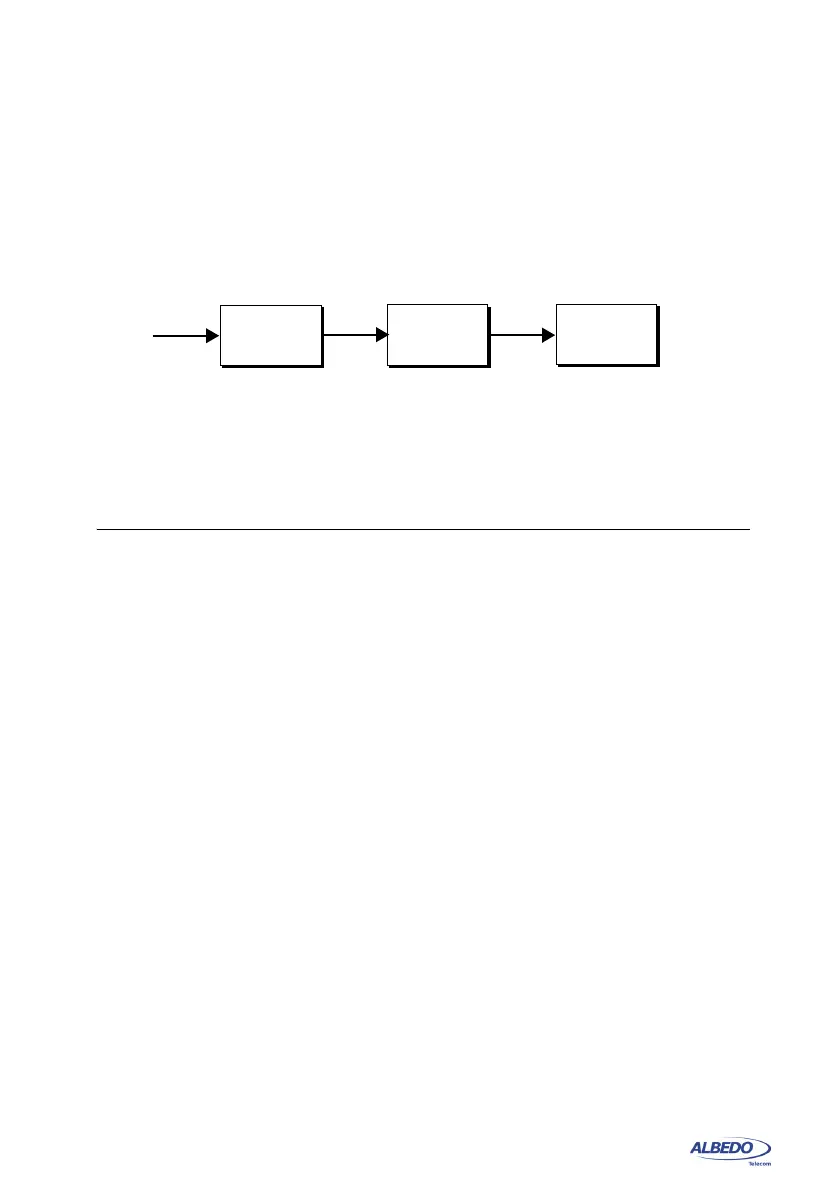
Figure 9.4: Wander measurement mechanism. The timing information has to be
filtered before being delivered to the MTIE and TDEV block.
TIE (n)
Packet
Selection
Drops packets
(1) (2) (3)
MTIE (k)
selection
BW
filter
TDEV (k)
- Minimum
- Maximum
- Percentile
- Band
far from the
expected delay
statistics
Filters out
fast variations
from the
collected samples
Computes
clock stability
metrics


 To Next Page