163
Commands
If the command is set without a period, the G12 uses the period set by the
$PASHS,NME,PER command If the $PASHS,NME,PER command is issued after
this message period has been set, the period resets to the PER setting.
The receiver outputs this message even when a position is not computed.
Example
Enter the following command to enable the LTN output message on port B.
$PASHS,NME,LTN,B,ON
$PASHQ,LTN,[c1]
This command allows you to query for the LTN message, where c1 is the optional
port designator for the output of the response. If a port is not specified, the receiver
sends the response to the current port.
$PASHR,LTN
This single-field message is output even if a position is not computed. Latency is
defined as the number of milliseconds it takes the receiver to compute a position
(from the position fix tag time) and prepare data to be output through the serial port.
The latency range is typically between 20 and 40 milliseconds, depending on the
number of satellites tracked and the number of satellites used in the position
solution. The response is output in the format:
$PASHR,LTN,d1*hh
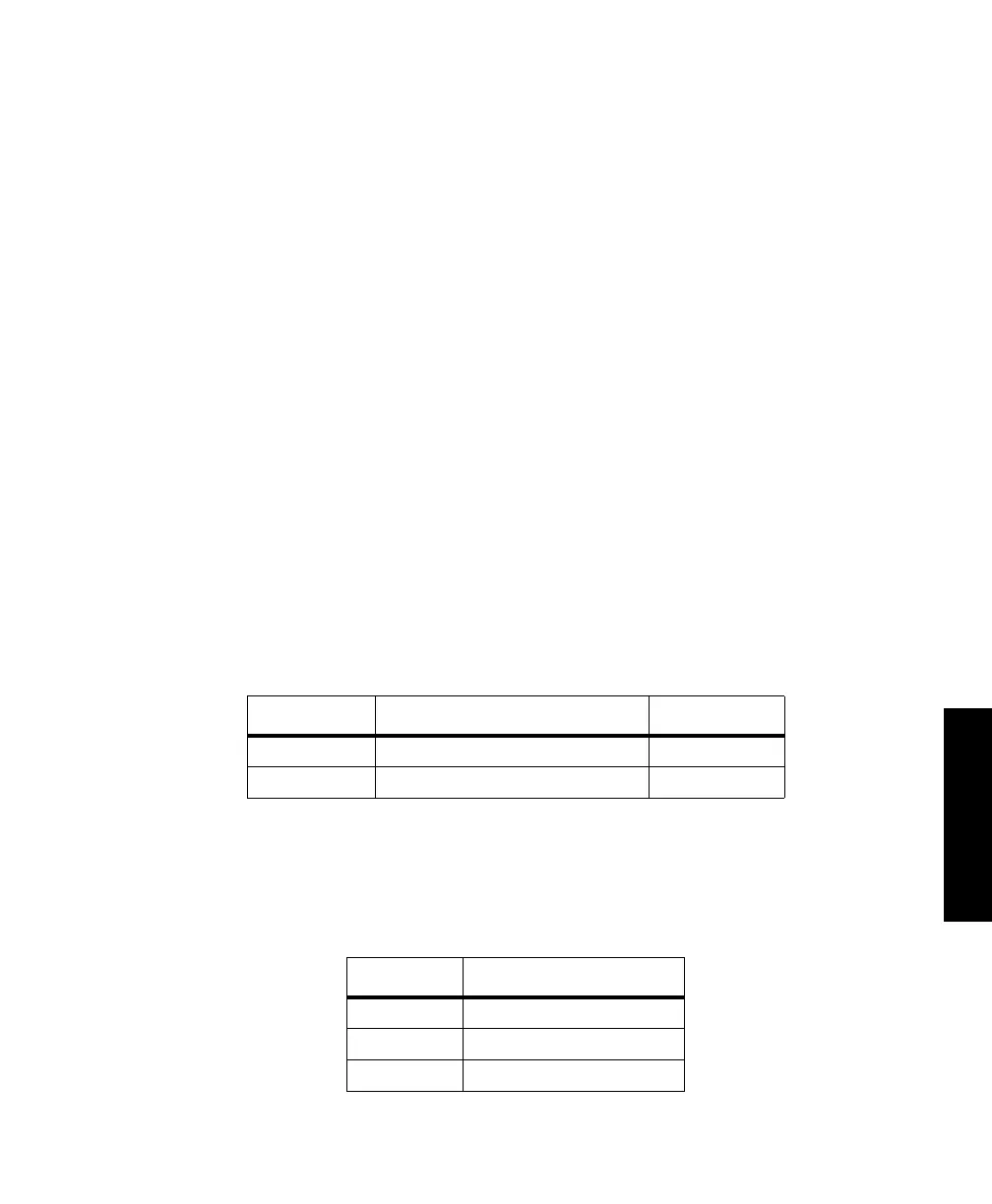
Table 4.88 defines the message format.
Typical LTN message:
$PASHR,LTN,29*05
Table 4.89 describes the typical LTN response message.
Table 4.88. $PASHR,LTN Message Format
Parameter Description Range
d1 Latency value (milliseconds) 20 - 40
*hh Checksum 2-character hex
Table 4.89. $PASHQ,LTN Query Response
Field Significance
$PASHR,LTN Header
29 Latency value (milliseconds)
05 Checksum
G12RevD.book Page 163 Tuesday, April 2, 2002 4:33 PM


 To Next Page