93
Commands
RIO: Receiver Identification Parameters (Format 2)
$PASHQ,RIO,[c1]
This command allows you to query for receiver identification parameters, where c1
is the optional port designator for the output of the response. If a port is not specified,
the receiver sends the response to the current port.
When you contact customer support, the customer support agent will request the response to the
$PASHQ,RIO command for your receiver.
$PASHR,RIO
The response message contains the receiver model name, a firmware version
number, a list of installed options, and a receiver serial number. The response is
output in the format:
$PASHR,RIO,s1,s2,s3,s4,f5*hh
Table 4.38 defines the RIO message structure.
As with the RID query, the presence of a given option is indicated by the presence
of the corresponding letter or number. A dash (“-”) indicates that a given option is
not installed. An underscore (“_”) indicates a reserved option slot.
C Code correlator option installed
_ Reserved option slot
*1A Checksum
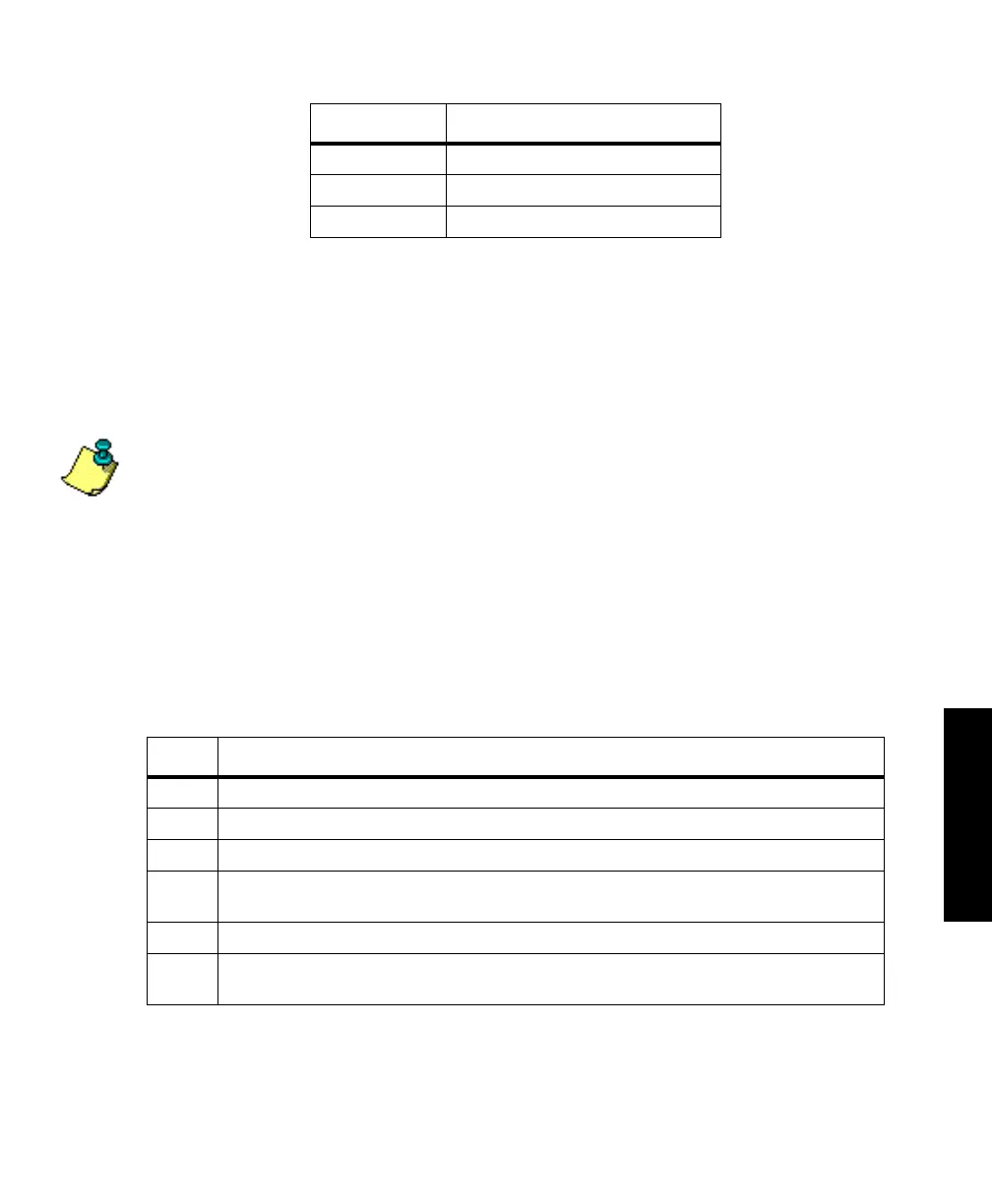
Table 4.38. RIO Structure
Field Description
s1 Receiver model name (maximum 10 characters)
s2 Main processor firmware version number (maximum 10 characters)
s3 Channel Firmware version number (maximum 10 characters). This field is empty for the G12
s4 Option list (maximum 42 characters). ASCII characters represent options not available. For
option definitions, see Table 4.36
s5 Receiver serial number (maximum 20 characters). Underscores represent blank fields
*hh Checksum: XOR of all characters between the dollar sign ($) and the asterisk (*), but not
including the dollar sign and asterisk
Table 4.37. $PASHR,RID Fields
Field Description
G12RevD.book Page 93 Tuesday, April 2, 2002 4:33 PM


 To Next Page