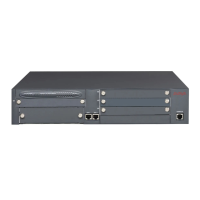
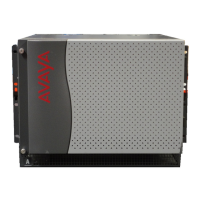
5381000/n 9/9 locl 2 1/303
5385000/n 9/9 locl 3 1/720
10. Enter exit to leave the dial-pattern context in SLS.
Related topics:
Available call types on page 186
Available call types
emer: Emergency calls only
fnpa: 10-digit North American Numbering Plan calls
hnpa: 7-digit North American Numbering Plan calls
intl: Public-network international number calls
iop: International operator calls
locl: Public-network local number calls
natl: Non-North American Numbering Plan calls
op: Operator calls
svc: Service calls
Administering incoming-routing parameters
About this task
The incoming-routing parameters are useful for mapping DNIS numbers directly into the station
extension numbers when the Service Provider's DNIS plan does not directly reflect the station
extension number length used in the Branch Gateway’s dial plan.
Note:
Since the PIM application does not automatically extract this information from the
Communication Manager SAT screen for Incoming-Digit-Treatment-Handling, you must
enter this SLS information using the Branch Gateway CLI interface.
Procedure
1. Enter incoming-routing tgnum mode, where tgnum is an existing ISDN trunk
group number and mode is the protocol used for receiving incoming digits.
mode can be either enbloc or overlap.
The command line prompt changes to sls-incoming-routing <tgnum>. If you
want to remove the incoming routing treatment from the SLS administration, enter
Standard Local Survivability (SLS)
186 Administering Avaya G430 Branch Gateway October 2013
Comments? infodev@avaya.com



 To Next Page