Mechanical Dock Leveler – M and FMC Group 06, Section 03, Page 1
Issue Date: 10/01/01, Rev. 0 (Part #038-550E)
SPECIAL APPLICATION ADJUSTMENT INSTRUCTIONS
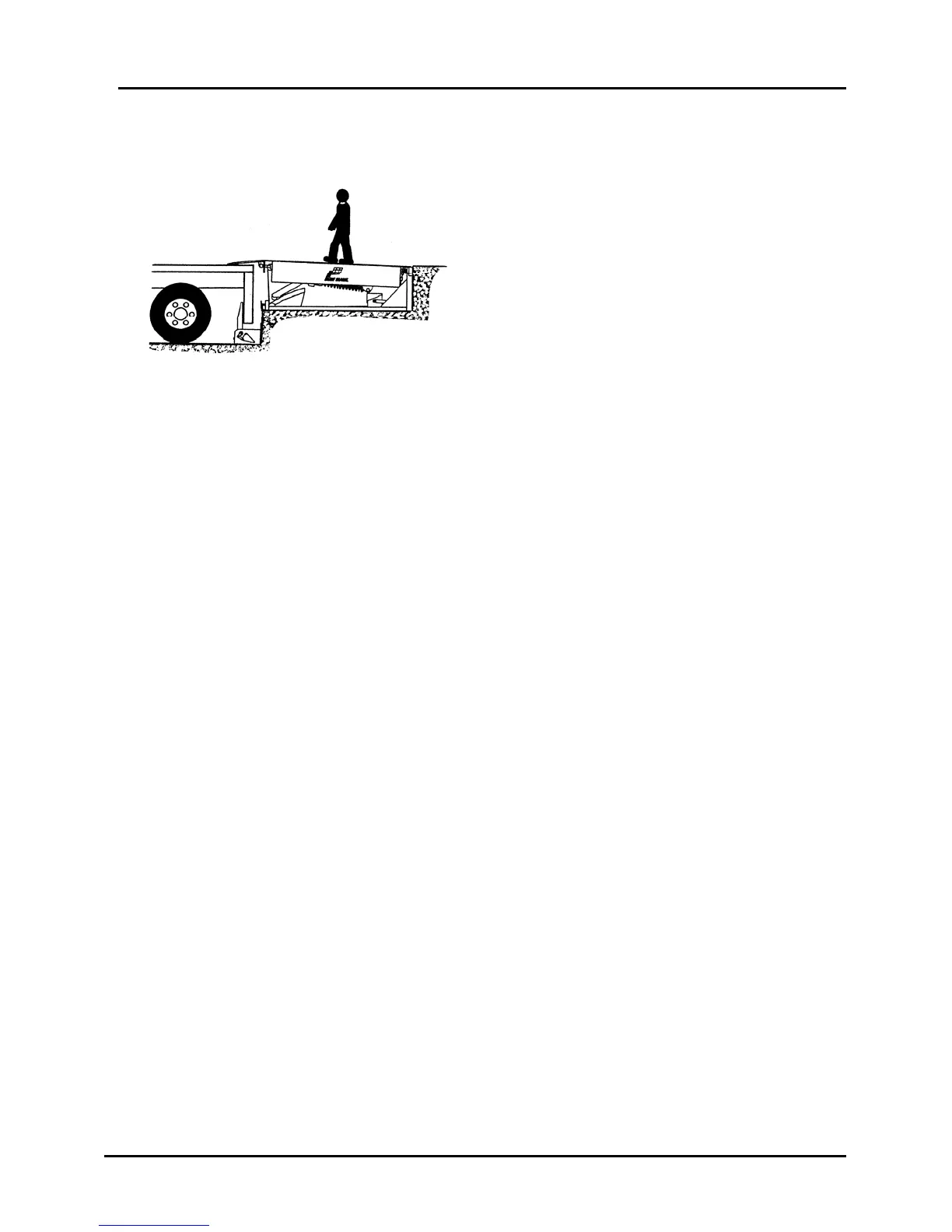
Light Weight Dock Attendant
has difficulty lowering the
Dock Leveler from the fully
raised position.
Figure 6
The main lift spring tension may be decreased to provide easier lowering, but is not
recommended for normal applications because the setting will cause the lip to be
borderline non-operational. Decreasing the lift spring tension will slow the deck “Up”
speed, which in turn slows the lip out action. A slight build-up of foreign material in
the lip hinge area or lack of lubrication of the lip hinge may cause the slow moving lip
to not reach full extension, which in turn prevents the lip from locking in the extended
position. This causes the lip to lower, as the deck is walked down, and not make
contact with the vehicle loadbed.
Decrease the main spring tension to suit this application on demand only, and
explain that maintenance of the lip hinge area must be performed frequently and that
premature re-adjustment can be expected. Ensure the lip hinge assembly is fully
lubricated to eliminate resistance to the lip extending.
LIP CAN NOT BE REMOVED FROM A PARKED VEHICLE and / or
LIP STRIKES REAR OF PARKED VEHICLE AS DECK RAISES
See the “Trouble Shooting” section of this manual, Group 04, Section 01, Pages
1 and 2, for possible causes of this problem. When all other causes have been
eliminated, the probable cause is that the height differential between dock and
vehicle loadbed is greater than the maximum recommeded for the dock leveler being
used.
A non-standard adjustment can be performed, that will produce an improvement
over the existing situation, but has practical limitations that may result in not being
able to completely satisfy all situations encountered. In severe cases that can not be
corrected with the following adjustments, recommend that the unit be converted to
Full Hydraulic Operation. Contact Blue Giant for details.



 To Next Page