7
Remote Room Sensor/HMI Installation
Do not install the room sensor on the ceiling.
Smart controls, remote room sensors, and remote HMI (Human Machine Interface) faceplate(s) may be
ordered and shipped separately. These components measure temperature and assist in controlling the
unit. These components should be installed in a safe location, free of influence from external heat sources,
and should be indicative of the average room temperature away from heat-producing appliances. HMIs
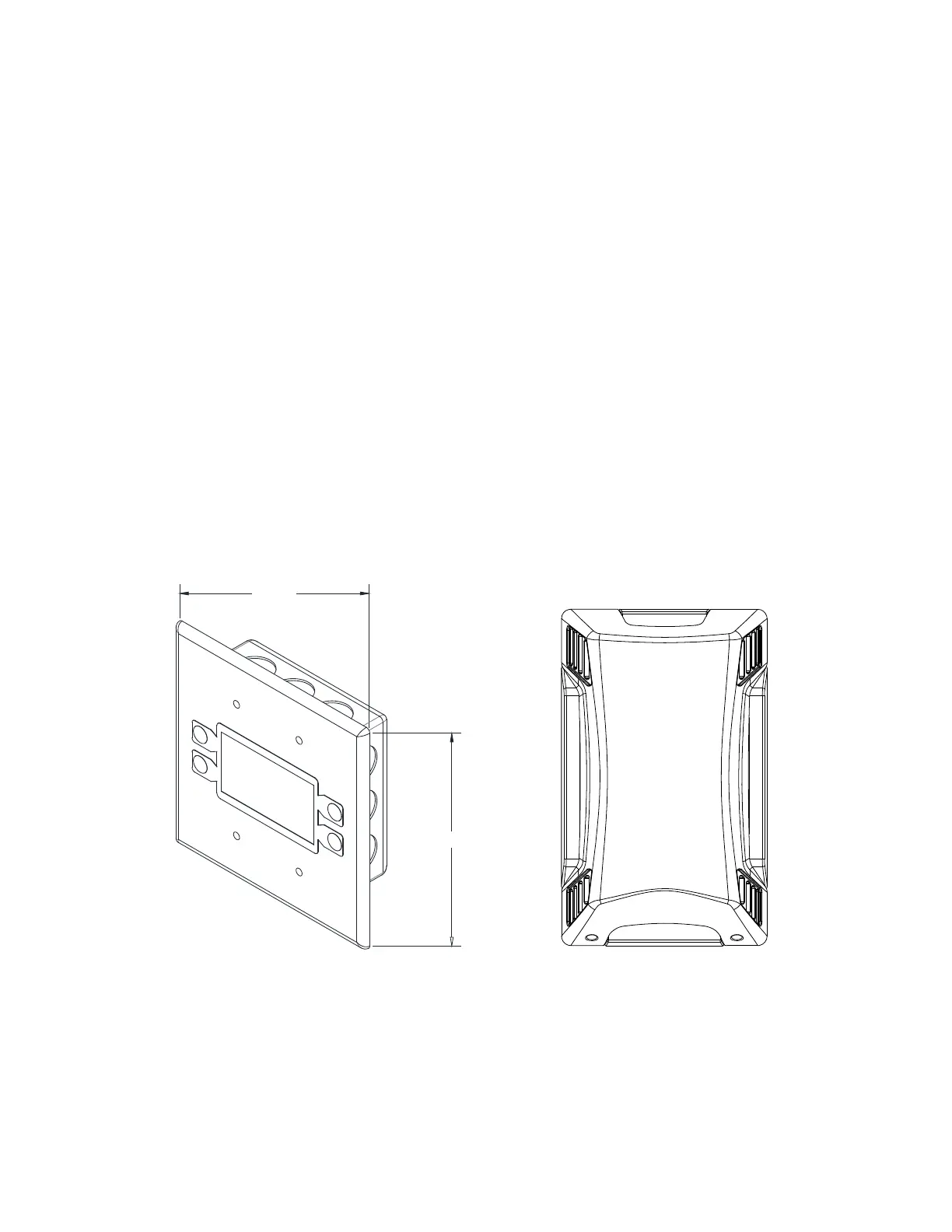
and remote room sensors (Figure 2) can be installed directly to industry-standard junction boxes, either
surface mounted or recessed mounted. HMIs have a built-in temperature sensor, which is typically used to
help control the automatic function of the unit. The HMI can also be configured to control the unit from a
remote location manually. They can be configured not to use the internal temperature sensor. In this
configuration, the sensor in the HMI is ignored in automatic operation. Multiple HMIs can be connected to
one unit for temperature and R/H averaging. Control modes will be discussed in later sections of this
manual.
Room Temperature Sensor
The room temperature sensor is a 10K ohm thermistor. The sensor provides constant room temperature to
the controller. It should be installed on a wall somewhere in the room, but not directly in the path of HVAC
diffusers or close to heat-producing appliances so that the reading is not affected by heat.
Room sensors are not required for proper control operation but can be configured to be used as remote
sensors or averaging sensors.
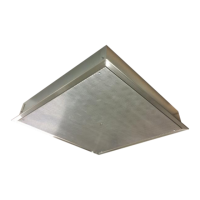
Figure 2 - Remote Room Sensors
5-1/2”
5-1/2”
HMI Mounted to Junction Box
Remote Room Sensor



 To Next Page