28
Infant Flow LP patient set-up
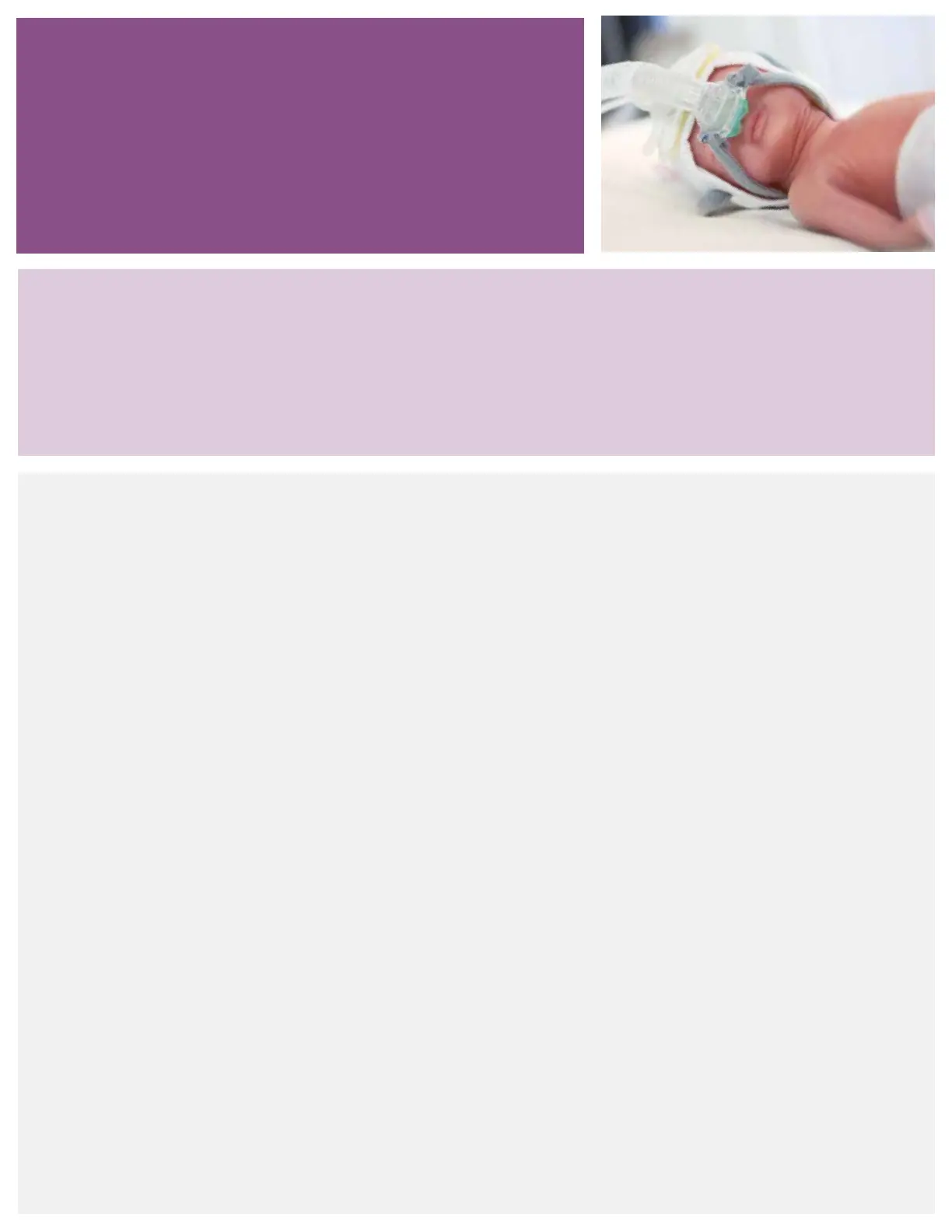
Nasal prongs
The nasal prongs consist of a pair of short tubes positioned
directly in the infant’s nares to deliver the prescribed CPAP
level. The tip of the prong flares slightly as the gases pass
through them, which helps form a seal within the infant’s
nares. The size of the nares vary with each infant and does
not depend on the infant’s weight, gestational age or body
length. Five available sizes of nasal prongs cater to the
individual differences.
Sizing guide (figure 3)
Use the nasal prong and mask sizing guide to select the
prong that best fits the infant. To determine the correct
prong size, position the dots on the sizing guide over the
infant’s nostrils. Choose the dots that best match the
nostril’s opening.
Tip: Go larger: If the infant is between sizes, select the
larger size. If blanching of the nares occurs, go to the
smaller size.
Prongs that are too small may lead a clinician to overtighten
the fixation device to eliminate a leak. Overtightening or
inserting the prongs too deep may lead to pressure sores
or nasal dilation.
Nasal mask
The nasal mask provides an alternative to the nasal prongs.
The mask is positioned over the infant’s nose and forms a
seal around the perimeter for the delivery of the prescribed
CPAP level. To ensure a good fit and the ability to maintain
the desired level of CPAP, use the sizing guide to choose
the appropriate mask size.
Sizing guide (figure 2)
Use the nasal prong and mask sizing guide to select the
mask that best fits the infant. Hold the triangle over the
infant’s nose, and select the triangle that encompasses the
nasal area. Note: The size of the mask may differ from the
prong size.
Tip: Go larger: If a patient falls between sizes, go larger.
A mask that is too small may create pressure points on
the nose and prevent a good seal from forming.
Routine care
The clinician must select the correct size of the infant
interface during the initial set-up, and continues to monitor
and assess it throughout the treatment. Some infants
may be on nCPAP therapy for several weeks, and the
correct size of the interface may change. Re-evaluating
the interface size is an important part of routine patient
assessments. Attention to this detail reduces the potential
for skin/septal injury and ensures that the prescribed CPAP
level is achieved and maintained for optimal therapy.
Infant Flow LP interfaces
Depending on the facility’s protocol and the infant’s need,
either nasal prongs or nasal masks may be used with the
variable-flow generator. Some protocols require the clinician
to routinely alternate between the nasal prongs and mask.
The goal is to provide a good seal within and around the
nose to deliver and maintain the desired nCPAP level.



 To Next Page