4
CPAP modalities
What are the treatment options?
A variety of technologies have been employed in nCPAP
delivery throughout the years.
Conventional CPAP (V-CPAP): Utilizes a traditional mechanical
ventilator to deliver a constant flow of gas. CPAP is created
by changing the expiratory port orifice size. The ventilator
equipment is comprehensive and expensive.
Bubble CPAP (B-CPAP): Utilizes a constant flow of heated
and humidified gas. The level of pressure is controlled by
the depth of the exhalation tube inserted into a water
container. The pressure can increase if condensate collects
in the tubing, the flow rate changes or the water evaporates
from the container. B-CPAP lacks system alarms and
imposes a higher WOB
due to the constant flow and
inability to entrain flow during inspiration.
(16,18,19)
High flow nasal cannula (HFNC): Has not been cleared by
the FDA for nasal CPAP delivery. HFNC utilizes a constant
flow of heated, humidified gas that potentially delivers a
positive distending pressure. The level of therapy cannot
be measured and fluctuates depending on body position,
oral leaks, nasal secretions and the size and weight of the
patient. HFNC does not contain critical alarms that ensure
the safe delivery of therapy.
Variable flow CPAP (VF-CPAP): Incorporates a generator that
redirects the heated and humidified gas flow away from the
patient during exhalation and allows air entrainment during
periods of high inspiratory effort.
By redirecting the gas, VF-CPAP offers a lower imposed
WOB and less expiratory resistance compared to other
nCPAP technologies. Because the pressure is created and
measured at the nares, the variable flow technology
provides the most stable pressure, even in the presence of
leaks up to 6 LPM.
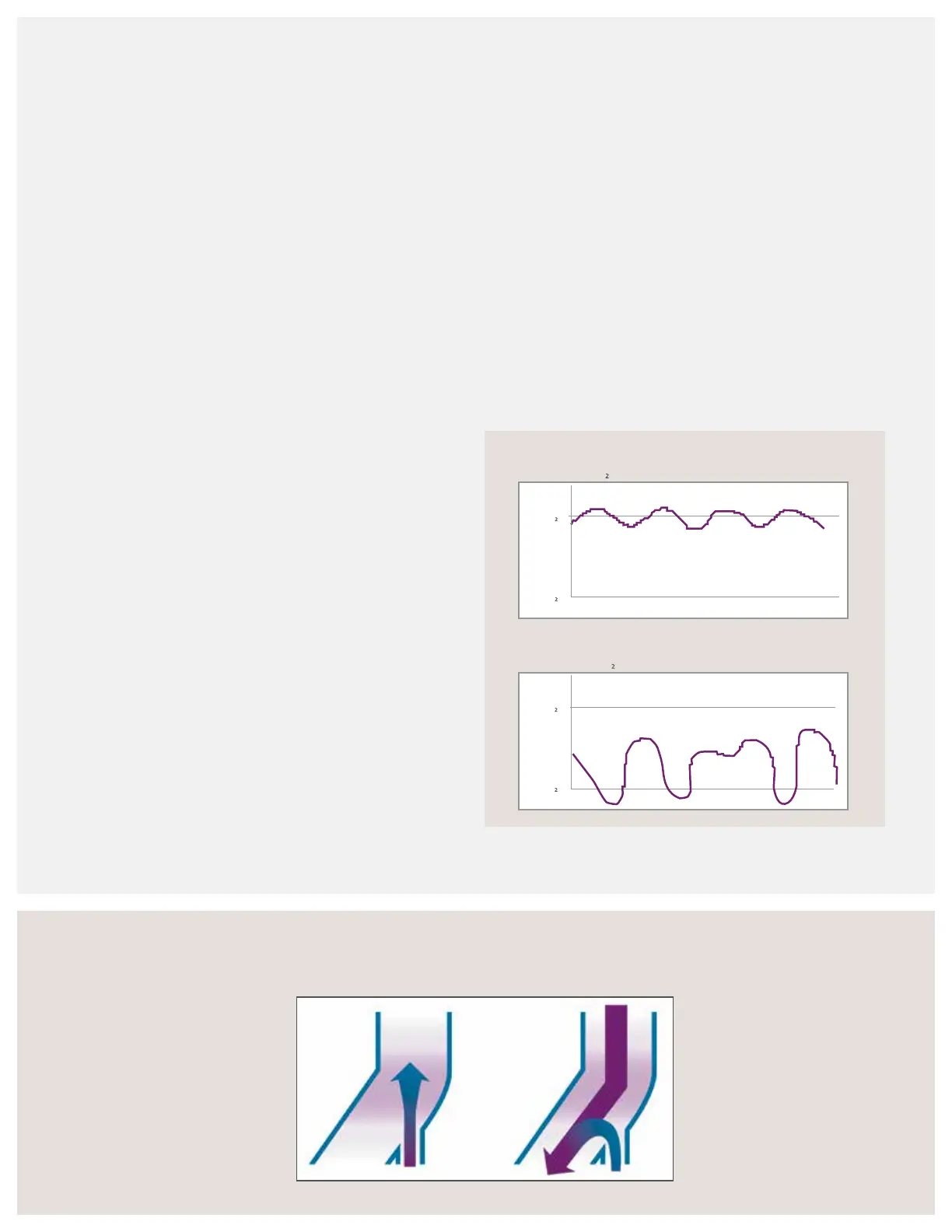
Pandt and Associates demonstrated that the Infant Flow
variable flow technology delivered a consistent level of
CPAP with little fluctuations. In contrast, the conventional
CPAP did not reach the desired level of 5 cmH
2
O, and
the pressure fluctuated significantly throughout the
breath cycle.
9
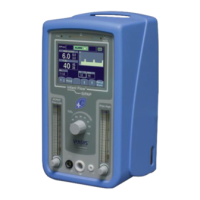
Using a variable flow generator with a dedicated CPAP
driver provides a measurable therapy with system alarms
to help ensure safe and effective therapy.
Inspiration: Gas flow converted
to pressure reducing the WOB
and maximizing the pressure
stability at the patient interface.
Expiration: Gas flow
flipped away from the nasal
prongs to the expiratory
tube. The residual gas
pressure provided by the
continuous gas flow creates
a stable CPAP throughout
the respiratory cycle.
Moa, G., Nilsson, K. et al. Crit Care Med, 1988, 16(12):1238–1242.
Infant Flow variable ow
Infant Flow
8 Lts flow, 5 cmH
2
O
5 cmH
2
O
0 cmH
2
O
Time
System pressure
Conventional CPAP
17 Lts flow, 5 cmH
2
O with 5 Lts reservoir bag
5 cmH
2
O
Time
0 cmH
2
O
System pressure



 To Next Page