55
Glossary
Abdominal respiratory sensor: A pressure sensor
taped to the infant’s abdomen to sense respiratory
efforts. The signal returns back to the SiPAP driver
through a transducer interface.
Added work of breathing (WOB): The extra effort
or work that is created by the introduction of an artificial
system used to supply enriched gas to support the infant.
Apnea of prematurity: Cessation of breathing in a
premature infant for 15 seconds and associated with
hypoxia or bradycardia.
Bubble CPAP (B-CPAP): A constant flow of heated and
humidified gas, where the level of pressure is controlled
by the depth of the exhalation tube in a water container.
BiPhasic: Bi-level noninvasive ventilation mode, which
cycles between high and low CPAP levels on a timed
basis. For use with a spontaneously breathing infant.
Bradycardia: When the heart rate in a newborn falls
below 100 beats per minute.
Breathe: The inspiratory phase as expiration is passive.
CPAP: The application of positive pressure to the airways
of a spontaneously breathing infant throughout the
respiratory cycle.
Conventional CPAP (V-CPAP): Noninvasive ventilation
utilizing a traditional mechanical ventilator to deliver CPAP.
Extubation: ET tube removal.
Fixation device: The device used to secure the generator
to the infant, referring to either the bonnet or headgear.
Fluidic flip: The key to the functionality of the Infant
Flow LP Generator. This occurs within the generator
in harmony with the infant’s breathing pattern. The
patented internal design of the generator manipulates
the gas flow to provide a stable CPAP level at the
infant’s airway. Because the device depends on fluidic
action and not valves or other mechanical devices, the
response time to the infant’s respiratory effort is almost
instantaneous. During expiration, gases are flipped away
from the infant, and during inspiration, the flow flips back.
Generator assembly: The generator, exhaust tube,
proximal pressure line, drive pressure line, support block
and interface.
High flow nasal cannula (HFNC): A constant flow of
heated, humidified gas that potentially delivers positive
distending pressure via a nasal cannula.
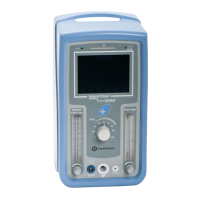
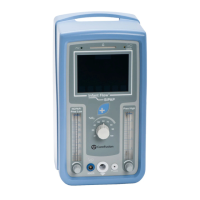
Infant Flow SiPAP Plus driver: A dedicated flow driver
for use with infant nCPAP variable flow generators. The
SiPAP Plus driver provides two modalities of respiratory
support: nCPAP and BiPhasic. Infant monitoring, alarms
and safety features are built into the driver to ensure the
system operates correctly and the infant’s respiratory
efforts are supported safely.
Infant Flow LP SiPAP Comprehesive driver: A
dedicated flow driver for use with infant nCPAP variable
flow generators. The comprehensive model provides
three modalities of respiratory support: nCPAP, BiPhasic
and BiPhasic trigger. The trigger mode utilizes the
respiratory abdominal sensors to synchronize supported
breaths. Infant monitoring, alarms and safety features
are built into the driver. Not available in the U.S.
Infant Flow LP nCPAP generator: A single infant
use, dual-jet generator that delivers the CPAP therapy.
The patented Infant Flow LP Generator is designed to
reduce the added work of breathing by providing active
assistance to the infant on inspiratory and expiratory
phases of the respiratory cycle. The infant interface is
provided by the use of nasal prongs and nasal masks.



 To Next Page