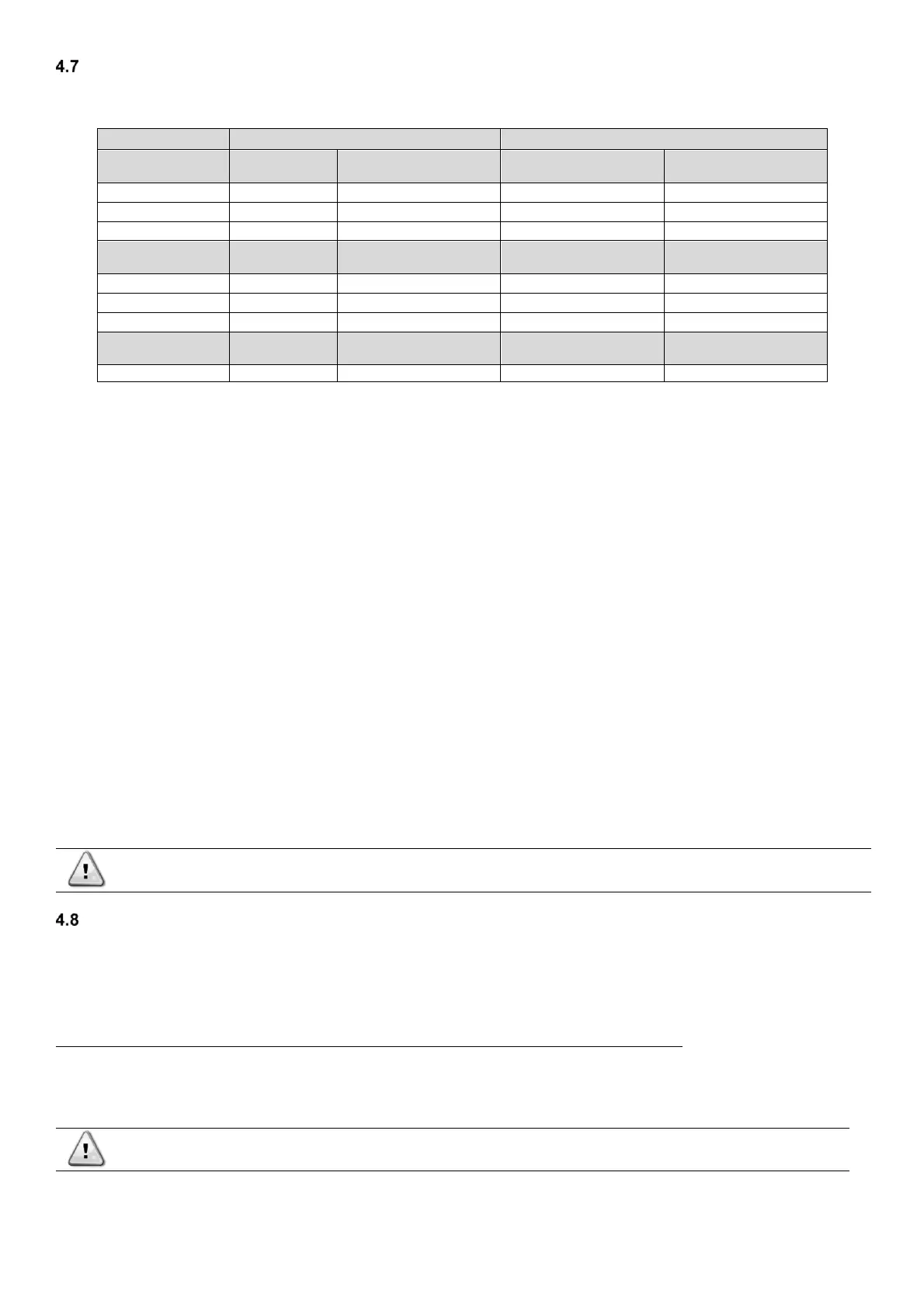
To ensure the correct operation of the unit, the flow of water in the evaporator must fall within the operating sphere specified in the
preceding table and there must be a minimum volume of water in the system.
The distribution circuits of the cold water should have a minimum content of water to avoid an excessive number of start-up and
shutdowns of the compressor. In fact, every time the compressor goes into operation, an excessive amount of oil from the
compressor starts circulating in the refrigerant circuit and at the same time there is an increase of the temperature of the
compressor stator, generated by the inrush current of the start-up. Therefore, to avoid damages to the compressors, the
application of a device has been planned to limit frequent shutdowns and start-ups: in one hour, there will only be 6 start-ups of the
compressor.
The system where the unit is installed must therefore ensure that the overall content of water allows the unit to operate
continuously and therefore greater environmental comfort. The minimum water content per unit must be calculated with a certain
approximation using the following formula:
Single circuit unit:
M(litres) = 5.7 (l/kW) x P(kW)
Where:
M = minimum content of water per unit expressed in litres
P = refrigerating capacity of the unit express in kW
This formula is valid with the standard parameters of the microprocessor.
By default, the unit is set to have a water temperature difference of 2.5 K which allows it to operate with the minimum volume
mentioned in the previous table. However, if a smaller temperature differential is set, as in the case of process cooling applications
where temperature fluctuations must be avoided, a larger minimum water volume will be required.
To ensure proper operation of the unit when changing the value of setting, the minimum water volume has to be corrected. If this
volume exceeds the range allowed in the unit, an additional expansion vessel or a buffer tank must be installed in the field piping.
To determine most accurately the quantity of water, we recommend contacting the designer of the system.
Anti-freeze protection for evaporator and recovery exchangers
When the entire system of the cooling or heating installation is being designed, two or more of the following anti-freeze protection
methods should be considered at the same time:
1- Continuous circulation of the flow of water inside the exchangers
2- Additional heat insulation and heating of exposed piping
3- Emptying and cleaning of the heat exchanger during the winter and its maintenance with antioxidant atmosphere (nitrogen).
As an alternative, it is possible to add an appropriate amount of glycol (antifreeze) to the water circuit.
The installer and/or the local personnel assigned to maintenance must make sure that anti-freeze protection methods are in use
and ensure that the appropriate maintenance operations of the antifreeze protection devices are always carried out. Failing to
follow the instructions above could result in unit damage. Damage caused by freezing is not covered by the warranty.




 To Next Page