In this scheme the error in the measured T
prop
is given by the following: -
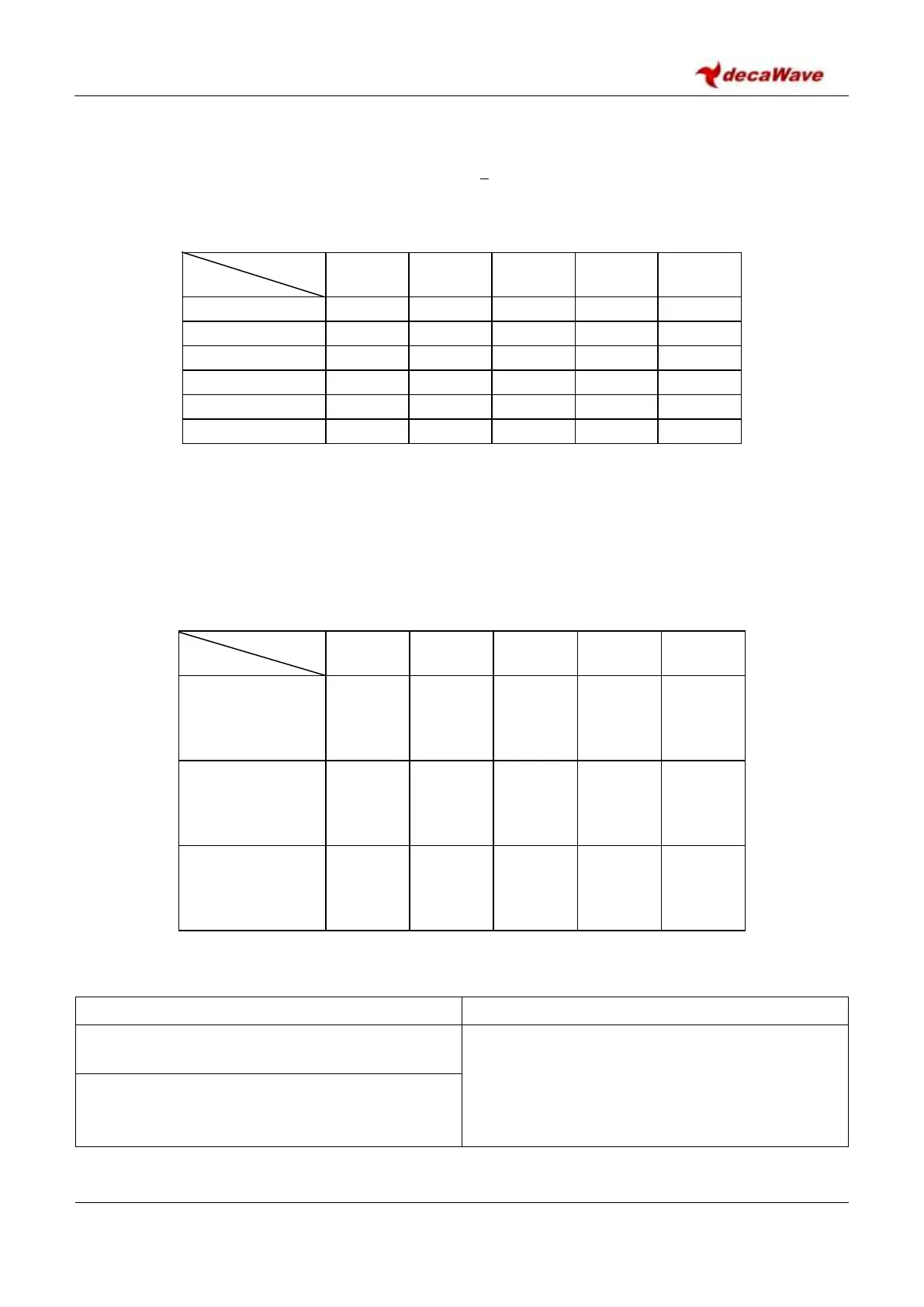
Table 65: Typical clock induced errors in SS-TWR time of flight estimation
It can be seen that as T
reply
increases and as the clock offset increases the error in the time-of-flight
estimation increases to the point where the error is such as to render the estimation very inaccurate. For
this reason, SS-TWR is not commonly used but it is worthy of examination for particular use cases where
tight tolerance clocks are used and the communication range is relatively short.
Table 66: Typical clock induced error in SS-TWR time-of-flight estimation using actual IEEE80.15.4-2011
UWB frame lengths
211 µs total
6.81 Mbps
64 Symbol Preamble
96 µs response delay
275 µs total
6.81 Mbps
128 Symbol Preamble
96 µs response delay
403 µs total
6.81 Mbps
256 Symbol Preamble
96 µs response delay
Note: An error of 1 ns is equivalent to a 30 cm error in measured distance.
Only one message exchange required which saves
time & power.
As T
reply
increases and clock offsets increase the
estimated time-of-flight becomes very inaccurate.
If T
reply
is kept short and accurate crystals are used
then time-of-flight estimation may be accurate
enough for certain use cases.


 To Next Page