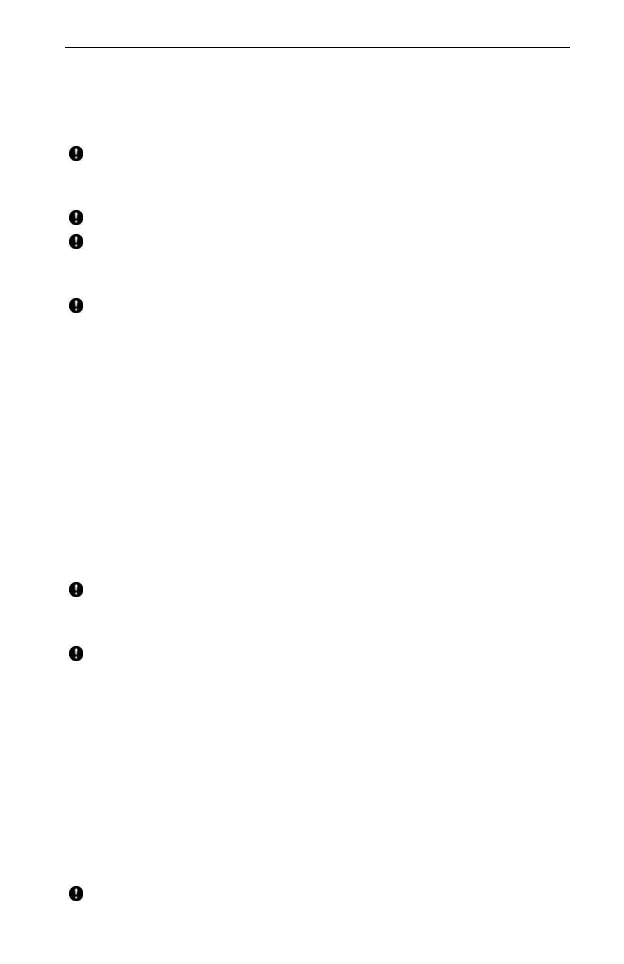
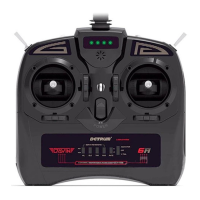
Blitz-DT9 User Manual
- 3 -
Precautions before Flight:
Always make sure that all servos in the model work properly following the
transmitter stick movements prior to flight. And make sure that all switches
work properly as well.
Always check the remaining capacity of both the transmitter and receiver
batteries before each flying session prior to flight. Low battery capacity will
cause loss of control and a crash.
Always perform a range test before each flying session.
Always check the operation of each control surface before each flying session.
When using the trainer function, please check both the instructor and student
transmitters.
For safety reasons, always set fail safe functions before each flying session.
Especially set the throttle channel fail safe function.
Precautions during Flight:
Never grasp the transmitter antenna during flight. Otherwise, the transmitter
output power will reduce drastically.
Do not point the antenna directly toward the aircraft during flight. When
pointing the antenna directly, the transmitter output is the weakest. The
strong radio wave radiate from the side of the transmitter antenna.
Never turn on and off the power switch of transmitter during flight or while the
engine or motor is running.
Do not touch the engine, motor, or other heating device during and
immediately after use. These devices or components may become hot during
use.
For safety, always fly the aircraft in visible range. Flying behind tall buildings
will not only lose sight of the aircraft, but also degrade the RF signal
performance.
Always return the transmitter setting screen to the initial main screen during
flight. Erroneous input during flight is very dangerous.
Precautions in Other Conditions
Never fly in the range check mode (test mode). In this mode, the transmitter
output power is greatly reduced, it may cause a crash.
When setting the transmitter during flight preparations, do not set it upright on
the ground. The transmitter may fall to the ground, the sticks may move and
the servos may rotate unexpectedly and cause injury.
Do not touch the receiver antenna directly by hands. Otherwise, the
components may be damaged by static, and this may cause a reduction in
transmission distance of the receiver.
Before turning on the transmitter, always make sure the transmitter throttle


 To Next Page