IP Server 900 Programming Manual Function 8: IP programming
L.2
Function 82: Local IP-PBX programming
Function 82 is used to program the system’s IP parameters for devices such as IP/ASC Carrier Cards, IP
stations, and the Network Services Processor (NSP).
Note: After making any IP configuration changes, wait at least five minutes before you power down the system.
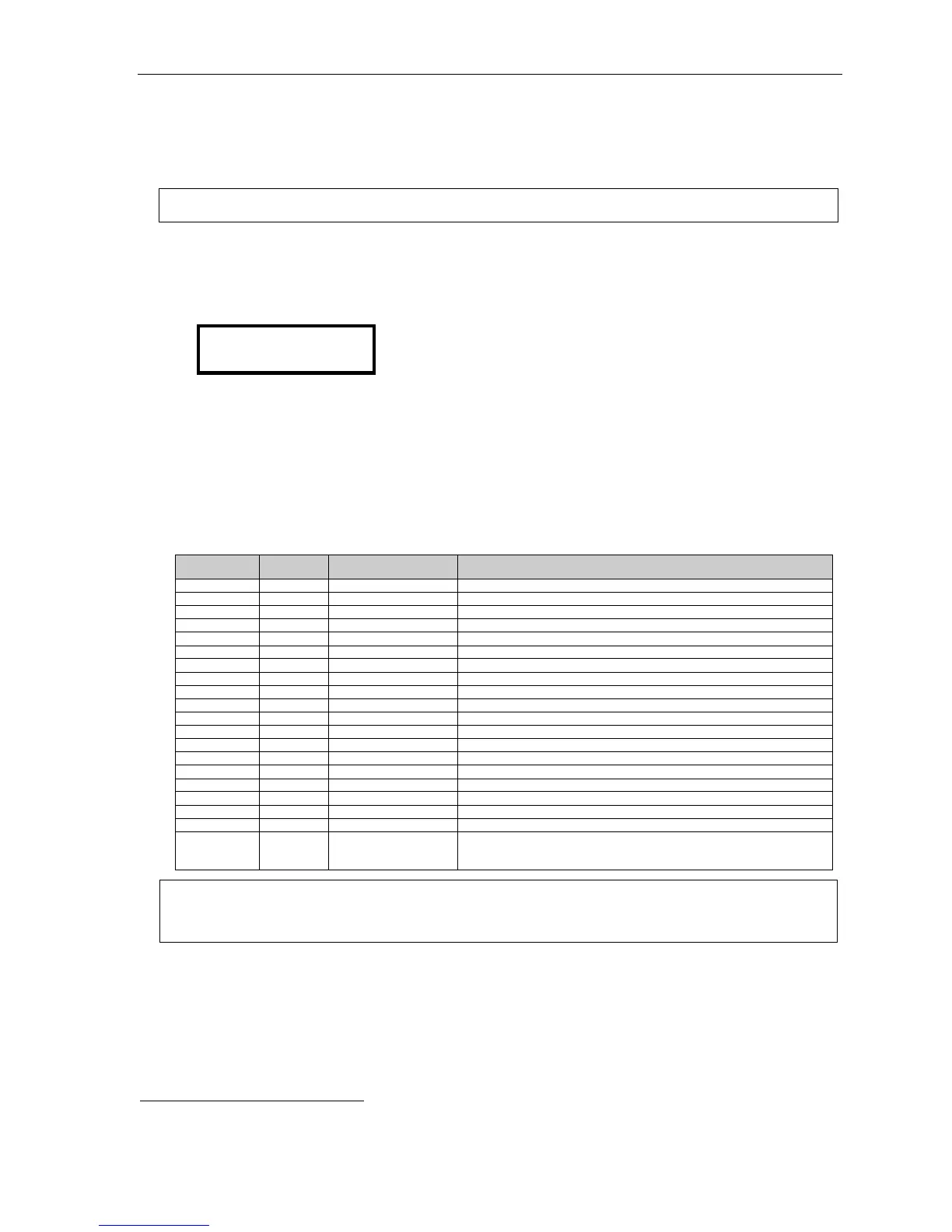
When you enter Function 82, the first screen will appear as shown; press the appropriate number to view the
desired item from the following choices:
• 1 — IP Carrier Card programming
• 2 — DSP IP Address settings
• 3 — System-Wide IP settings
• 4 — Network Services Processor IP Addressing
IP PBX SETTINGS
CMD:_
A note about port forwarding
Each IP/ASC Carrier Card, including the Master Control Unit, has a unique IP address, which can be viewed
or changed in Function 821, as well as a Media DSP IP address, which can be viewed or changed in Function
822. In addition, the Master Control Unit contains two IP address aliases dedicated for specific traffic: the
Network Services Processor (NSP) address, set or changed in Function 824, and the Software Assurance
address, set or changed in Function 825. If the system is configured on a private data network the customer’s
Internet router will have to be configured to forward the appropriate IP ports to the appropriate IP addresses.
1
This capability is known as port forwarding, and it is available in most modern routers. The Network
Administrator will need to configure the router to forward the necessary ports according to the chart below.
Port Protocol Forwarded to Used for
22 TCP IP/ASC IP (F.821) Remote diagnostics & service
443 TCP IP/ASC IP (F.821) Web ESI System Programmer traffic
5060 TCP/UDP IP/ASC IP (F.821) SIP CO lines (can be changed in F.2142)
5070 TCP/UDP IP/ASC IP (F.821) SIP stations (can be changed in F.84)
5080 TCP/UDP IP/ASC IP (F.821) Esi-Link G.711 traffic (to other IP Server 900s only)
59002 TCP NSP IP (F.824) VIP 7 traffic
59003 TCP NSP IP (F.824) SMDR traffic
59004 TCP NSP IP (F.824) VIP 7 voice mail control traffic
59005 TCP/UDP NSP IP (F.824) ESI API traffic
59006 TCP/UDP NSP IP (F.824) ESI Mobile Messaging traffic
59020 UDP NSP IP (F.824) Remote VIP 7 Softphone traffic
59090 UDP NSP IP (F.824) VIP 7 traffic
59091 UDP NSP IP (F.824) VIP 7 call control traffic
59092 UDP NSP IP (F.824) VIP 7 voice mail messaging traffic
59093 UDP NSP IP (F.824) VIP 7 SMDR traffic
59094 UDP NSP IP (F.824) VIP 7 Attendant traffic
59110 UDP IP/ASC IP (F.821) Esi-Link G.711 traffic (to other IP Server 900s only)
59111 UDP Media DSP IP (F.822) Esi-Link G.726 traffic and remote IP phones (can be changed in F.822)
59112 UDP Media DSP IP (F.822) Esi-Link G.729a traffic (can be changed in F.822)
10000-10351 UDP Media DSP IP (F.822) SIP Station and CO audio (RTP) traffic (can be changed in F.822);
also used for Esi-Link audio (RTP) trafffic between IP Server 900s and
remote IP phones
Note: This chart assumes that the Base UDP Prefix and Base RTP Prefix settings in Function 823 are left at the
default values of 59 and 10, respectively. If these values are modified remember to update the 59xxx and/or
10xxx ports listed here to account for the new number(s).
1
You may wish to refer to “Configuring the remote office NAT router” in the NSP/VIP Advanced Options Guide (ESI # 0450-0667).


 To Next Page