54
Ex. 1)
Allows the next command to be sent when receiving a prompt.
Resends the previous command when the timeout period (5 seconds) has elapsed without reply after
sending a command.
Ex. 2)
Allows the next command to be sent when receiving a prompt.
Resends the previous command when the timeout period (5 seconds) has elapsed without reply after
sending a command.
Recognizes and uses “S” responses as tallies (crosspoint states).
Ex. 3)
Allows the next command to be sent when receiving a prompt.
Recognizes and uses “S” responses as tallies (crosspoint states).
Resends the previous command when the timeout period (5 seconds) has elapsed without reply after
sending a command.
Sets the maximum number of continuous resends, because crosspoints cannot be changed if they are
locked or inhibited from changing.
Ex. 4)
Allows the next command to be sent when receiving a prompt.
Resends the previous command when the timeout period (5 seconds) has elapsed without reply (echo)
after sending a command.
Ex. 5)
Allows the next command to be sent when receiving a prompt if tally or echo recognition is not performed.
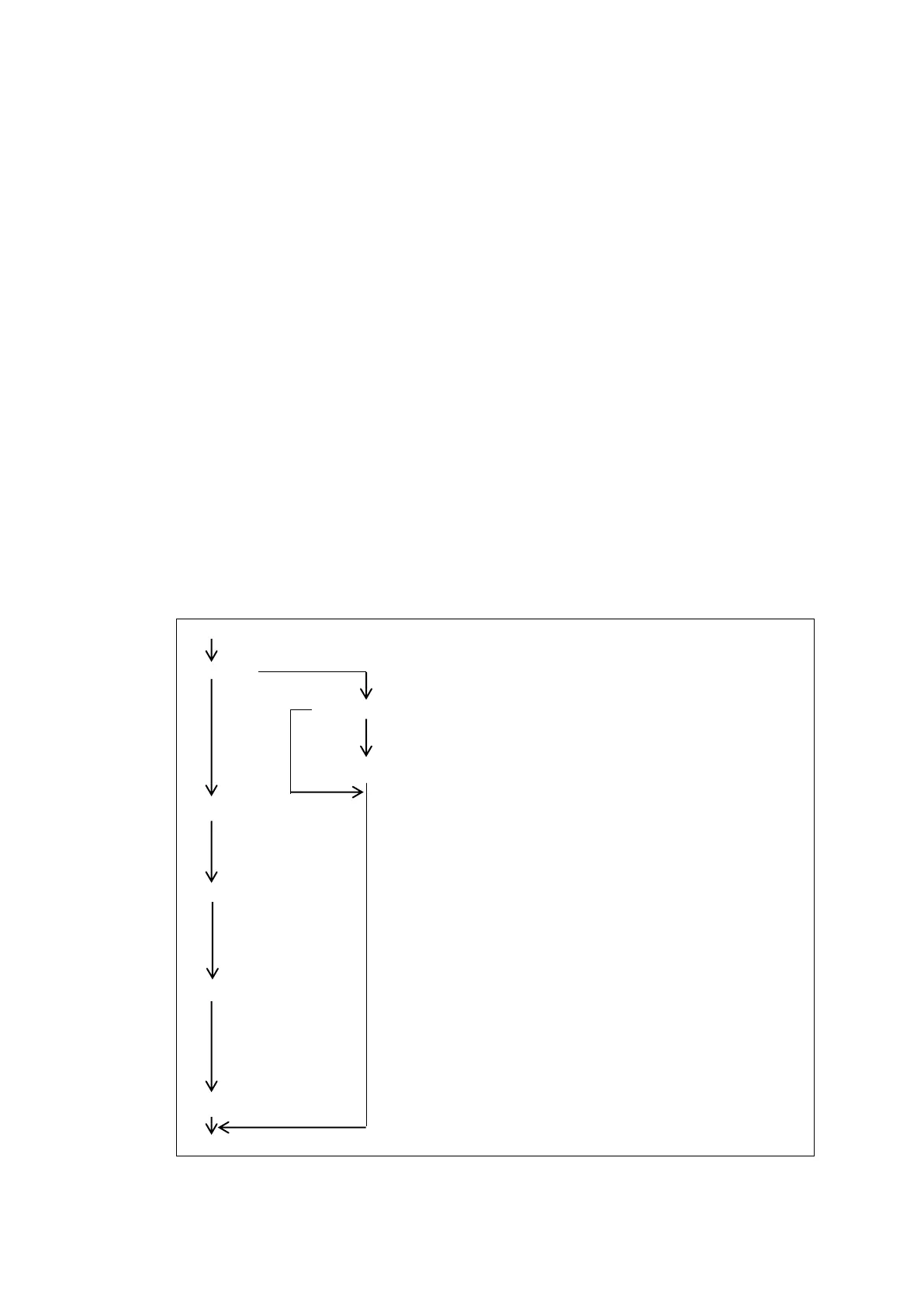
Response Message Evaluation Example:
Response message received
Is the 1st character of a line Prompt?
- Prompts are not added to line buffers.
Does the line buffer begin with S:?
- Other characters are recognized and used as tallies.
- Characters are cleared, if unnecessary.
Does the line buffer begin with C:?
- Other characters are received as processed
command.
- Characters are cleared, if unnecessary.
Add the rest of characters to the echo buffer, excluding
S and C responses Newline and Prompt. (The echo
buffer is cleared when sending a new command.)
- Checks that they are identical to the sent command.
- Characters are cleared, if unnecessary.
Waiting the next message.


 To Next Page