EasyBalancer EB 3500 Evaluation - Overall value measurement
10 - 3
10.2 Overall value measurement
Area of use Overall value measurement is suitable for checking and monitor-
ing the vibration conditions of a machine.
The currently valid standards for evaluating machine vibrations
are DIN ISO 20816 (bearing vibrations) and DIN ISO 7919
(shaft vibrations).
In most cases, the vibration velocity is sufficient to describe
the strength of the vibrations over a wide operating speed range.
In order to prevent a speed-independent limit value from leading
to inadmissibly high vibrations at low speeds, for example, eval-
uation criteria based on the vibration velocity generally take the
following form:
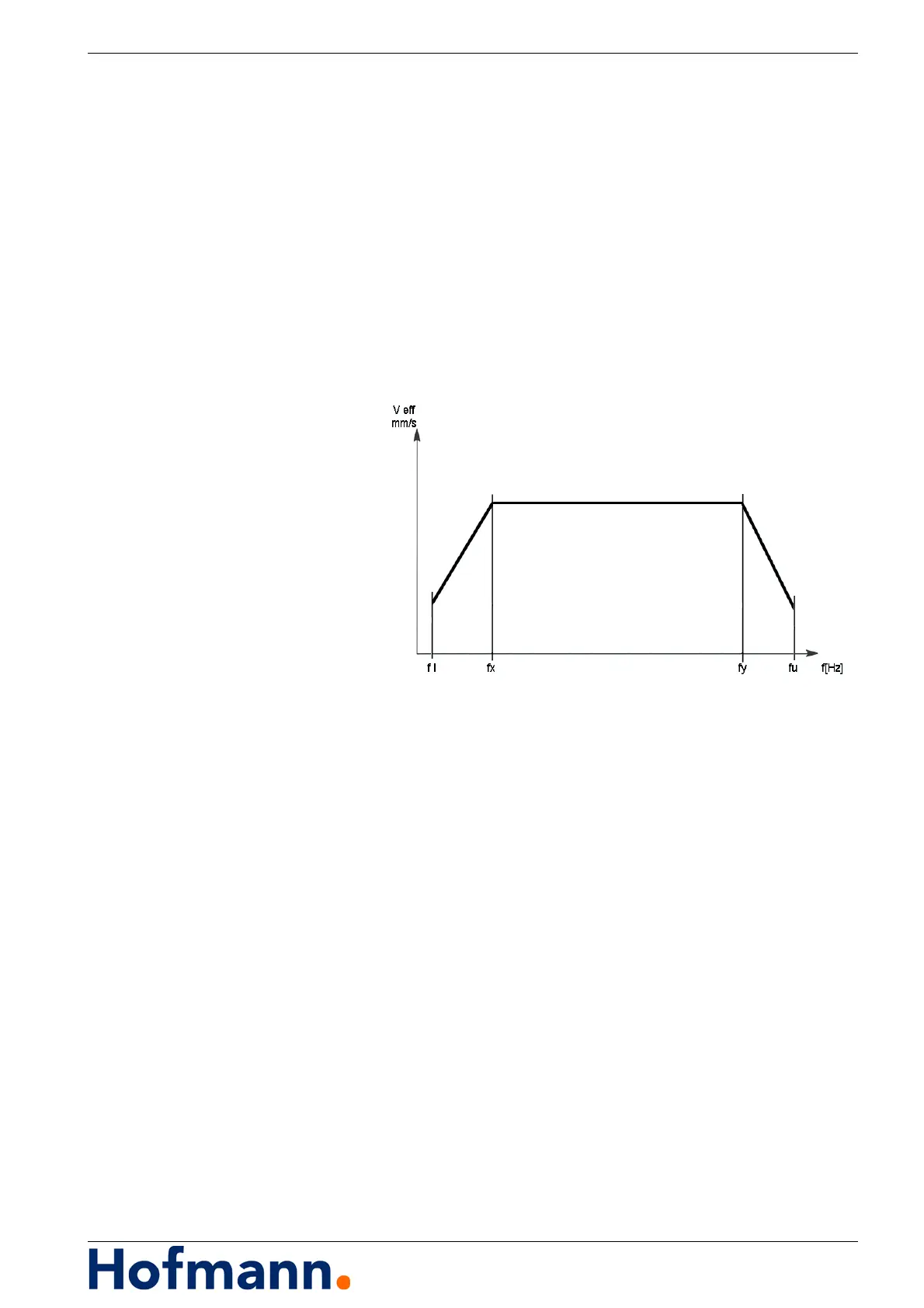
Fig. 10-17: General vibration velocity curve as an evaluation variable
The effective vibration value is measured broadband in a frequency
range at least from 10 Hz to 1,000 Hz.
For the assessment of a machine it is sufficient to compare
the effective or accumulated value of the vibration velocity with
the permissible value (in Fig. 10-17: limit value between fx and fy).
The RMS or cumulative value represents a broadband evaluation
of the vibration spectrum, which generally contains many frequency
components.
Permissible vibration strengths depend on the type of machine
and its condition. For this reason, DIN 20816-1 groups machines
into four classes.



 To Next Page