p2 Section 2. Intro. Version 1.01 CONCEPT IQ. Installation & Programming Manual.
1. Introduction
1.1 SYSTEM OVERVIEW
The Concept IQ is an affordable, simple to use security system targeted at the domestic and small commercial
markets. The system has been designed for ease of use by the Installer and the End User.
System Hardware
The basic Control Module has the following hardware dimensions:
• Zones: 8 standard Zone Inputs or 16 doubled Zone Inputs.
• Auxiliaries: Total of 3. 1 Siren speaker / 1 Strobe / 1 General purpose.
• Serial Communications Port: RS232.
• External Device Bus.
• System LAN: Provides connectivity for up to 4 LAN Devices.
• IO Expansion Bus.
• Separate Tamper Input.
A variety of Peripheral devices can be connected directly to the Control Module:
• Programming Key.
• Plug-on Expansion Card options. 8 additional Auxiliary outputs and/or 8 additional Zone Inputs.
• DTMF communications Card.
• DTMF + Voice communications Card.
• Serial Adapter Cable for connection to PC.
The System LAN supports the following LAN Modules:
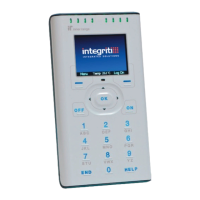
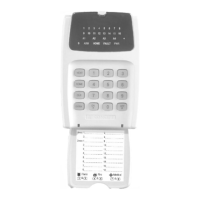
• Standard 16 Zone / 4 Area LED Terminal.
• Enhanced 16 Zone / 4 Area LED Terminal incorporating Input for a Wiegand Reader
and Input/Output facilities for access control functions.
• RF Terminal that adds 2 key or 4 key radio remote functionality.
Functional Description
Zone Inputs. Zone Inputs are individually programmed to define how they are to be processed. An appropriate
“Zone Type” is chosen and additional options relating to; Alarm Processing, Reporting, Siren,
Pulse counting, Testing, and type of Input Device can also be defined.
Global Zone options also allow system-wide parameters to be set for Pulse Counting, End-Of-Line
Resistor values and Zone Self Testing.
System Inputs. 20 System Inputs are also available for monitoring Faults and System Alarms such as; Power
Problems, Cabinet & Siren Tampers, Communication Problems, LAN & Battery Fuses, Zone Self-
test Status, Keypad Emergency Alarms (Panic, Fire, Medical & Duress) and Access Control
violations. The Installer enables the Siren and Reporting options for each System Input required.
Automatic Battery Testing is available and triggers the Low Battery alarm if the test fails.
Areas. The system can be configured in Single Area or Multi Area Mode according to the site
requirements. Up to 4 Areas are available and Zone Inputs can be assigned to one or more Areas.
Each Area can be armed in “AWAY” or “HOME” modes.
Each LED Terminal can be configured for Multi-Area mode or assigned to a Single Area.
Siren. The Siren Speaker output supports a standard 8 Ohm Horn speaker and can generate 4 different
siren tones for Burglary, Fire, Medical & Panic alarms. The Siren time is programmable and any
System Input Alarms that are programmed to activate the Siren are differentiated from Zone Input
Alarms by a choice of 3 Siren tone-burst options.
Auxiliaries. Auxiliary outputs are extremely flexible thanks to a range of versatile programming options for
Security, Access control and Building/Home automation. A choice of over 50 “Auxiliary Types”
provides for Auxiliaries to; Annunciate different types of alarms, Indicate (mimic) individual Area or
Zone status, Indicate Entry, Exit, Auto-Arm & Zone Bypass conditions, Follow TimeZones, etc.
For each individual Auxiliary the output logic and On/Off actions can be tailored including an
optional timer that can be programmed in Minutes or Seconds.
Communications.The system offers “Contact ID” or “Domestic” dialing options. For a higher level of Dialer integrity a
Secondary telephone number can be programmed, Telephone line monitoring is provided and the
maximum number of dial attempts can be specified. A “Comms Fail” alarm is activated if the line is


 To Next Page