5
X-Series Waterblast Unit
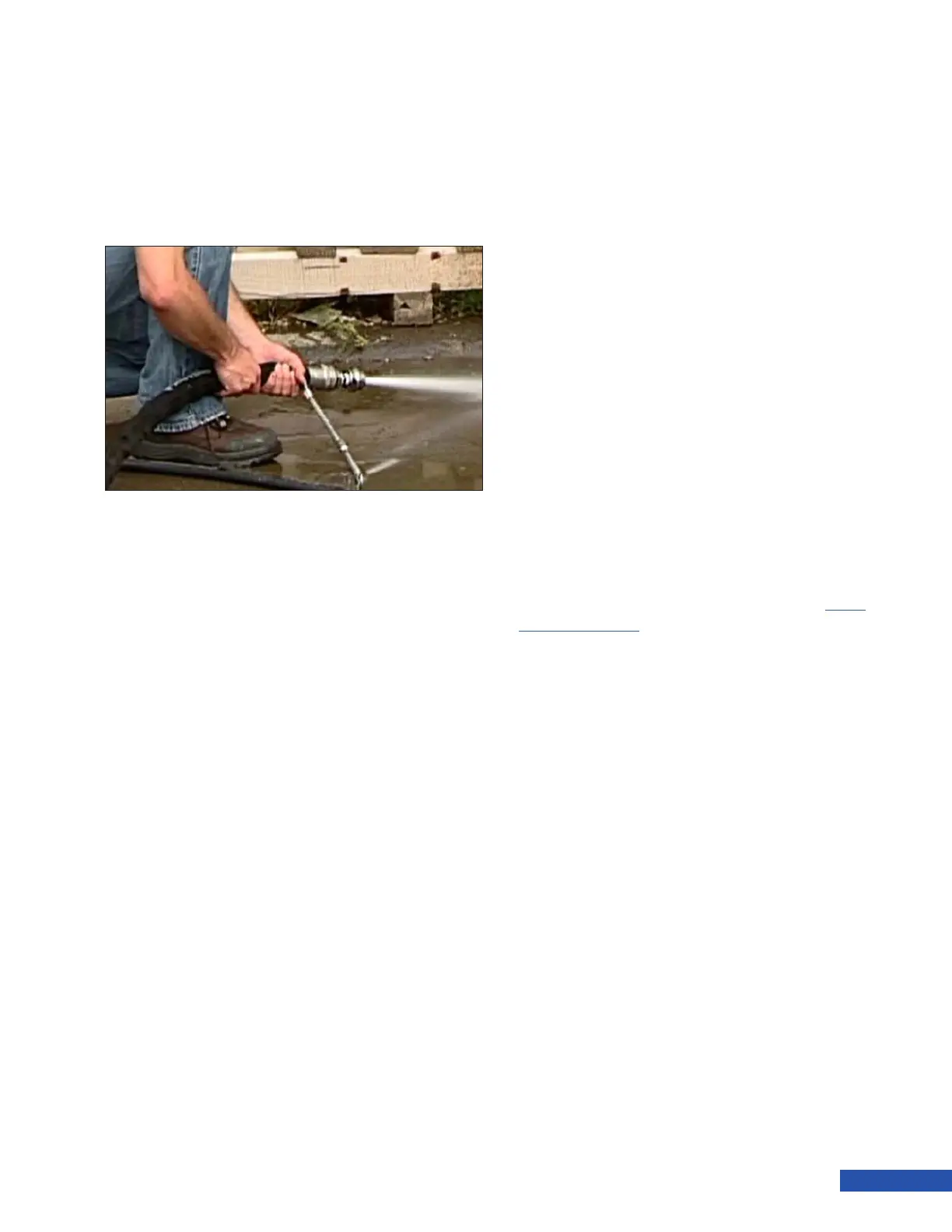
Purge the System
Before attaching a nozzle to the control gun or
tube cleaning lance, operate the pump at low
speed to purge dirt and debris from the sys-
tem. Dirt and debris can clog nozzle orice(s)
and cause excessive system pressures.
Test the System
With the nozzle installed, operate the pump at
low speed (low pressure) to test the system.
Should system repairs or adjustments be
necessary, stop the pump and relieve all pres-
sure before performing any required repairs or
adjustments.
Slowly Increase Pressure
Visually inspect all ttings for leaks at 1000
psi (69 bar), and then again once the system
reaches full pressure. Do not use your hand to
nd leaks. If leaks are evident, turn the sys-
tem off and relieve the pressure. Remove the
leaking tting, clean and inspect. If the tting
looks undamaged, re-install the tting. If the
leak persists, the tting must be replaced.
Leaking ttings can cause tting damage and
very dangerous injection wounds.
With the system operating properly, slowly
increase pump speed until operating pressure
is reached.
Use the Minimum Pressure Required
Do not exceed the operating pressure of the
system’s lowest pressure-rated component.
Use of lower pressure-rated components in a
system should be avoided if possible. Com-
ponents with a lower pressure rating can be
overlooked and explode if vigilance is not
maintained. Keep equipment pressure rating
and warning tags intact.
Be Prepared
If equipment malfunctions or a malfunction
is suspected, immediately stop the cleaning
activity and relieve the pressure in the system
before attempting any repair. Always follow
manufacturer’s repair instructions.
Performing Maintenance or Repairs
Because of the hazards involved with water
blasting, maintenance or repairs may only be
performed by service personnel that are prop-
erly trained to maintain this equipment. Train-
ing is available through Jetstream
®
and can be
requested from the Jetstream website (www.
waterblast.com) or FS Solutions rental centers.
Following repairs or maintenance, operate the
system at low pressure to test the system. Ad-
just the pressure slowly during operation.
Freezing Conditions
After shutting down in freezing conditions,
even for brief periods, drain the water from all
components. Prior to starting the equipment
after a freeze, the operation of all equipment
components must be checked carefully to
ensure they are not frozen, or cracked, and are
still in safe operating condition.
Refer to”Winterizing the Unit” on page 34
for details.
Store Components Properly
Properly store components to protect from
damage when not in use. Ensure all warning
tags and markers remain intact for the next
usage.
Long Term Storage
Refer to Appendix B: LONG TERM STORAGE
PROCEDURE.
Figure 5: Purging the System


 To Next Page