28
Operation Manual
5. Once properly adjusted, system pressure
can be raised for waterblasting.
6. 5200 pump differences: The plumbing
arrangement is slightly different on the
5200 power end. It is located in the rod
box and the adjustable ow controls are
integrated into the elbow ttings (Figure
32).
Raising System Pressure
1. With the engine running and transmission
in gear, raise engine speed to 1400 rpm by
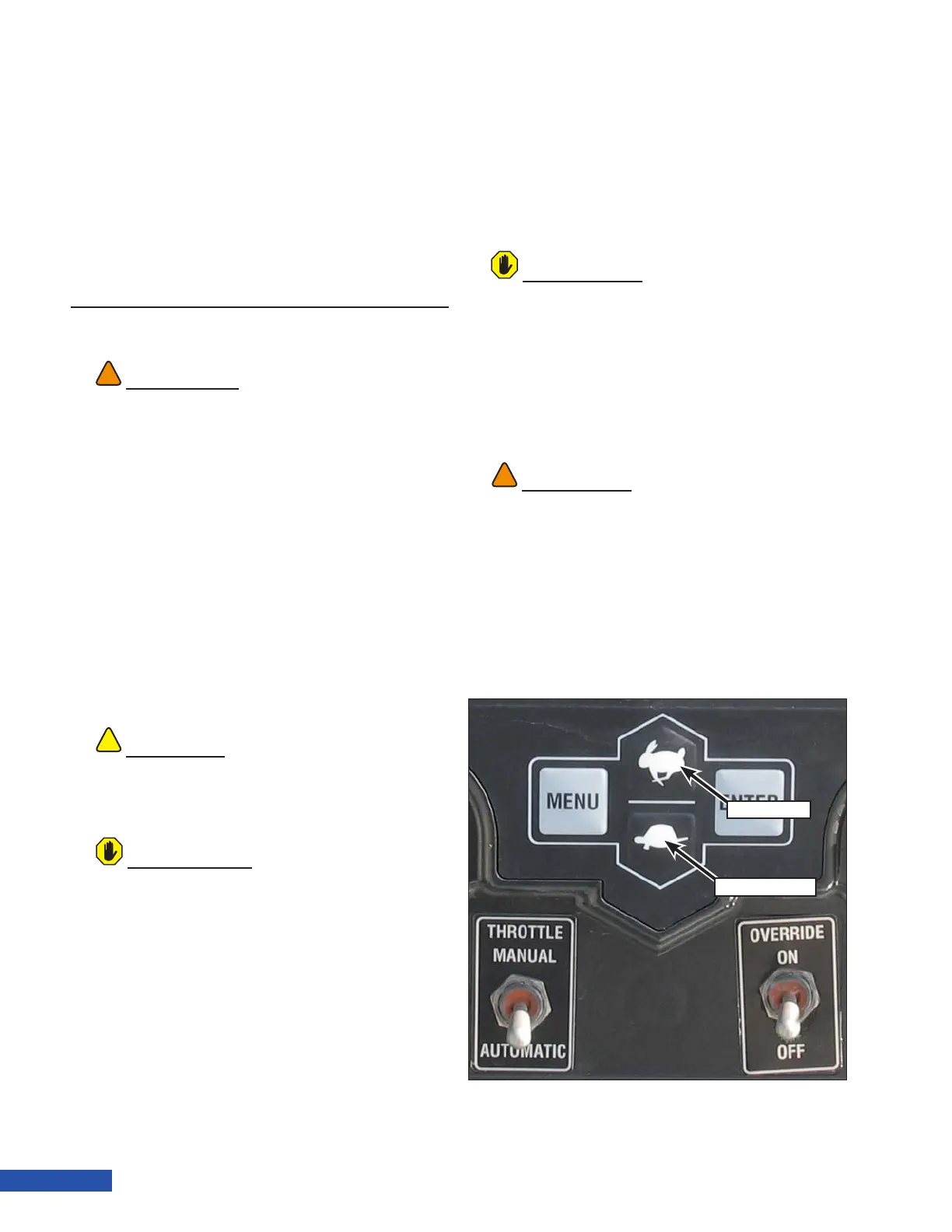
pressing the throttle up button (Figure 38)
on the control panel.
2. Slowly turn the bypass valve clockwise to
start closing the bypass and build pres-
sure.
WARNING
!!
Before building pressure, contain the high pressure
discharge hose. Failure to contain and control the
high pressure water can result in death or serious
injury. The water is considered “contained” if it
is allowed to discharge from the system through
a “manned” control gun or a “manned” lance
inserted in a tube. Control guns can produce a
tremendous amount of reverse thrust based on
ow and pressure.
Discharge must be in an enclosed space where
no one can get injected and the end of the hose is
restrained from moving.
Never use open lengths of high pressure hose for
anything but purging at low pump speed.
Install whip checks at all hose connections.
!!
CAUTION
When operating in cold temperatures, allow
ample time for the pump oil to warm before
raising system pressure.
ATTENTION
If new packing was installed or if operating the
pump for the rst time, the pump packing must
be broken in properly. Refer to “Breaking In New
Packing” for instructions.
3. Slowly increase pressure by increasing
engine rpm until the intended operating
pressure and ow is obtained. Optimal
engine speed for operation is between
1400-2100 rpm. The control panel prevents
the unit from exceeding the maximum
rpm allowed by the pump.
ATTENTION
Always blast with the bypass valve fully closed.
This will ensure the most efcient operation with
all water being utilized. If less water volume is
required, reduce the engine rpm to control the
ow amount. If bypassing ow is necessary, the
bypass valve cartridge and the bypass valve
diffuser will wear and these parts may need
replacing regularly. Bypassing water also wastes
water and wastes fuel as this is lost horsepower.
WARNING
!!
Do not operate the pump under a load at engine
speeds below 1400 rpm. This will lug the engine
and cause excessive vibration leading to engine
damage and cracked brackets, guards and
ttings.
Throttle Down
Throttle Up
Figure 38: Throttle Controls.



 To Next Page