D9U003VS0-0101_01
53
13 Cleaning/Disinfection (OptiCare)
CAUTION!
Material damage due to incorrect cleaning/disinfection!
► Do not use pressure or steam cleaners.
► Follow the instructions and observe the dosages recommended by the manufacturer.
► Ensure that disinfectants are selected and applied exclusively by qualied hygiene experts.
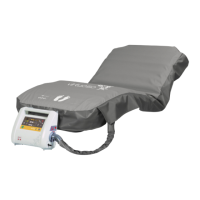
General guidance – Standard Cover:
► Do not use any strong acids or alkalines, (optimum pH range 6 – 8. Do not exceed pH of 9). Some hard surface cleaners
have pH values outside this range, these are not suitable for use on coated textiles.
► Only use detergents that are suitable for cleaning medical equipment and for use on coated textiles.
► Do not use abrasive powders, steel wool, or other material and cleaning agents that might damage the mattress. Do not
scrub mattress surface.
► Never use any corrosive or caustic detergents.
► Never use detergents that deposit calcium carbonate.
► Never use detergents with solvents that might aect the structure and consistency of the plastics (benzene, toluene, ace-
tone, phenol, etc.).
► Use only hospital-approved cleaners and observe local directives concerning infection control.
► Always rinse with water after cleaning and dry thoroughly before use.
Mattress parts to be cleaned Recommended Cleaning Agents (General cleaning)
Top Cover
High MVP (Moisture Vapor Permeable) Material
Standard hospital detergents, Alcohol or Quaternary Ammoni-
um based disinfectants, Chlorine based disinfectants contai-
ning up to 1000ppm Chlorine, followed by rinsing with water
and drying thoroughly before use.
Decontamination: Blood spills/Clostridium dicile etc
Chlorine based disinfectants containing up to 10,000 ppm Chlo-
rine. Dwell time on surface at 10,000 ppm of 2 minutes, follo-
wed by rinsing with water and drying thoroughly before use.
Base Cover, Air Cells, Foam Base As procedures above.
Due to the variety of laundry equipment, chemicals and conditions in use, customers should satisfy themselves through pre-testing.
It is essential that articles be thoroughly rinsed and dried after all cleaning procedures and before storage or reuse. Wet or damp
PU surfaces are more prone to mechanical damage than when dry.
As stated above, after application of a suitable cleaner, the surface must be rinsed with water and dried before use. (Even if the
cleaner instructions say that this is not required). This prevents a build up of chemicals on the mattress surface which could be
reactivated during use and aect biocompatibility. The High MVP Coating may swell and change appearance during cleaning. This
will recover after being thoroughly dried.
NOTE Continued use of high concentration, chlorine-based disinfectants may signicantly reduce the performance and the wor-
king life of a coated material.
Type of Cleaning Parts to be cleaned
Routine Cleaning and Disinfection ■ exposed mattress parts
■ exposed SCU parts
Full Cleaning and Disinfection ■ exposed mattress parts
■ exposed SCU parts
■ internal parts of mattress
■ internal parts of cover
13.1 Routine Cleaning and Disinfection
Cleaning the mattress:
► Check mattress cover top for any signs of damage.
Replace or repair and completely disinfect mattress cover top if damaged.
► Check inside of mattress cover top for signs of liquid ingress.
Replace or clean and completely disinfect mattress cover top if damp inside.
► Leave mattress cover on mattress.
► Clean with 60°C warm water and cleaning detergent.
► Rinse mattress with cold water.


 To Next Page