Choosing a protocol
RET
eval
Device User Manual 22
In addition to showing reference intervals, the DR Assessment Protocol
displays clinical decision limits, as specified by you. Unlike reference
intervals, which enclose 95% of normally-sighted subjects regardless of
how that may classify someone with VTDR, clinical decision limits
consider diseased and normal subjects to optimize both test sensitivity
as well as test specificity. When running the DR Assessment protocol the
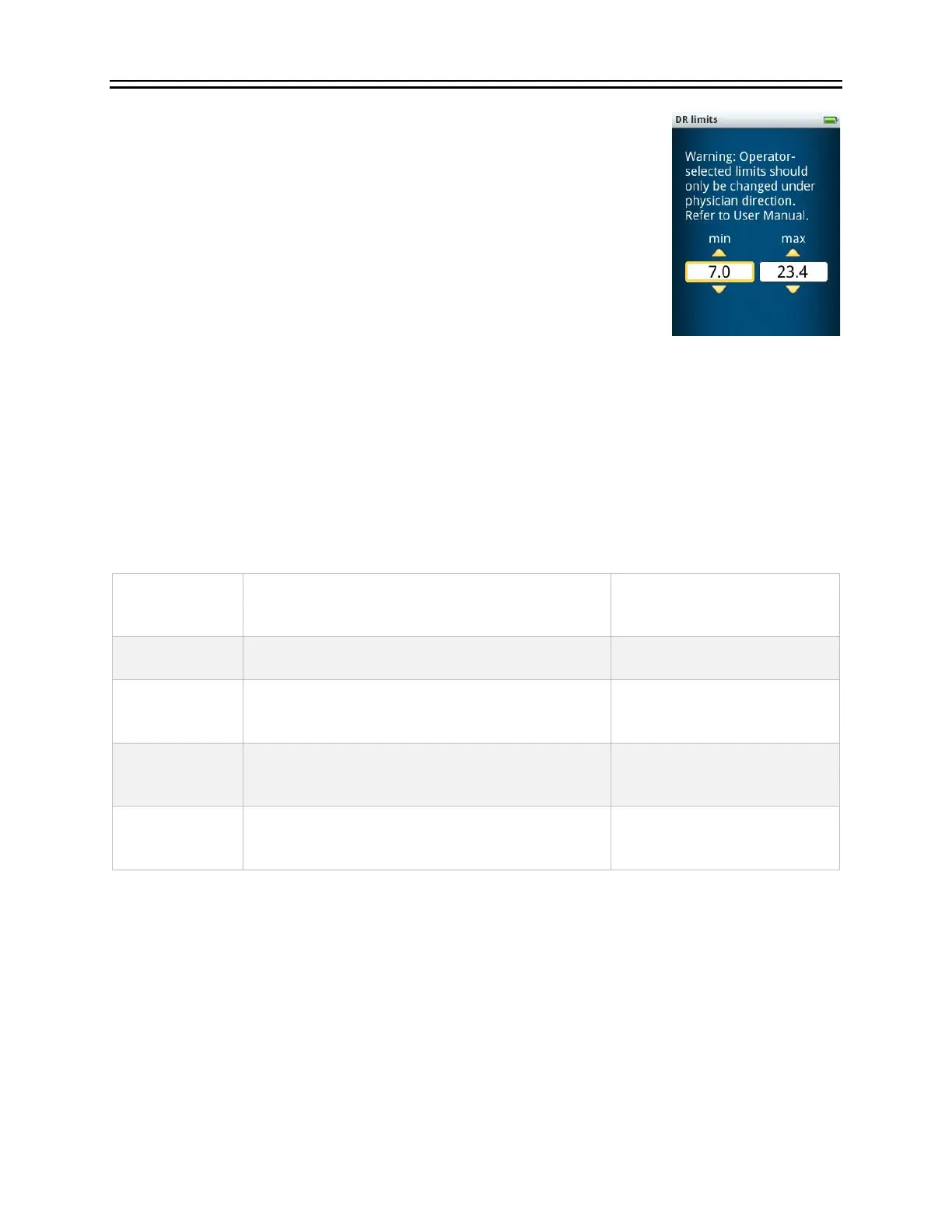
first time, you will have the opportunity to set the decision limits, which
are labeled on the report as “operator-selected limits”. This screen can
be reached at any time by selecting Settings, then Reporting, then
DR Limits.
As seen in Figure 1 above, increasing DR Scores are correlated with increasing disease severity.
The lower clinical decision limit, therefore, is only useful to catch unexpectedly low results that
likely indicates an issue with the test rather than an issue with the subject. A lower limit of 7 is
smaller than the smallest measurement in the reference data and DR studies (score = 9.5, n =
595).
For the upper limit, several values have been proposed. Three cross sectional studies each
proposed the point that maximized the sum of sensitivity and specificity (the upper left points on
their ROC curves). In the longitudinal study, the relative risk between a positive and negative
result for a future ocular intervention was maximized.
The difference in proposed upper clinical decision limits may be because of differing gold
standards. In this regard, longitudinal studies have the advantage because diagnoses generally
get clearer with time. Further, cross-sectional studies can also compare one method to a
different method that predicts an outcome, rather than actually having the outcome (which can
be done in longitudinal studies). For example, patients with high-risk PDR have only a 15.8%
chance of having severe vision loss or vitrectomy with 5 years (Davis et al. 1998).
Other protocols
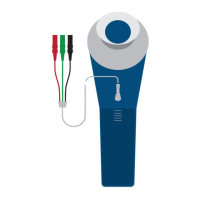
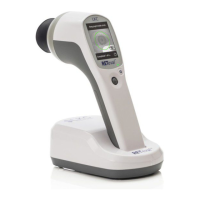
The RET
eval
device has two other protocols that are “flashlight” protocols where the device
creates either 30 cd/m
2
or 300 cd/m
2
white light.


 To Next Page