This document and the information contained herein, is the exclusive property of MODE. And represents a nonpublic,
confidential and proprietary trade secret that may not be reproduced, disclosed to third parties, or otherwise employed in
any manner. whatsoever without the express written consent of MODE. Copyright © (2016) MODE. Allrights reserved.
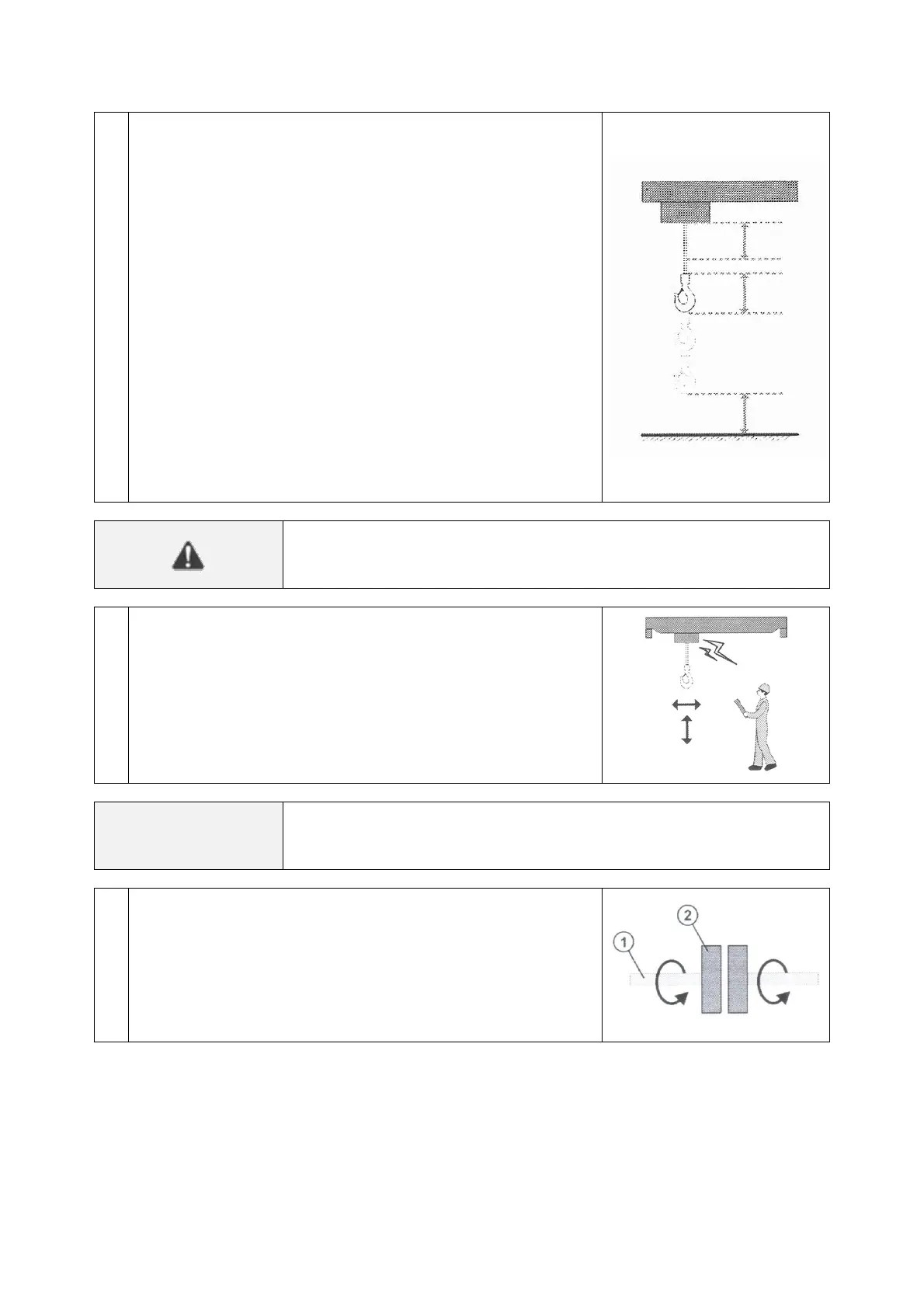
Hoisting limit switch
If the hoist is equipped with electrical limit switches, check for
correct operation of the limit switches by raising and lowering the
hook at low speed until the limit switches are activated and prevent
further upward or downward movement.
In case the desired function is not activated at desired position,
adjust the limit switches according to the adjustment instructions
given under 'Operational Checks with Controller Enabled’.
If that does not help, geared limit switch needs to be replaced.
Functional description of the limit switch
2-step geared limit switch
The 2-step geared limit switch together with controls is working as
an adjustable upper and lower stop limit.
4-step geared limit switch
The 4-step geared limit switch provides an adjustable upper and
lower stop limit connected to the internal controls. Two (2) cams are
not connected to the controls, and can thus be freely used for
end-user requirements.
Traveling limit switches shall always be adjusted before the
commissioning tests can be continued.
Operating sound and movements
Listen to the operating sound when the product is hoisting or
traveling. Pay attention to unusual noises such as squealing.
Check that the hoist is running smoothly. There should not be any
strong vibration.
Any defects or abnormalities which are detected during the
commissioning must be investigated and corrected in accordance with
the instructions relevant to the component in question.
Slipping clutch
Check that the slipping clutch mechanism works correctly.
When the torque caused by load (1) exceeds the designed hoisting
limit, the clutch discs (2) should begin to slip, preventing upward
hoisting movement.


 To Next Page