This document and the information contained herein, is the exclusive property of MODE. And represents a nonpublic,
confidential and proprietary trade secret that may not be reproduced, disclosed to third parties, or otherwise employed in
any manner. whatsoever without the express written consent of MODE. Copyright © (2016) MODE. Allrights reserved.
APPENDIX: INSPECTING THE HOOK OPENING
Measuring Wear on the Hook
Wear on the suspension and lifting hooks should be checked regularly. Damaged safety
catches should be replaced immediately.
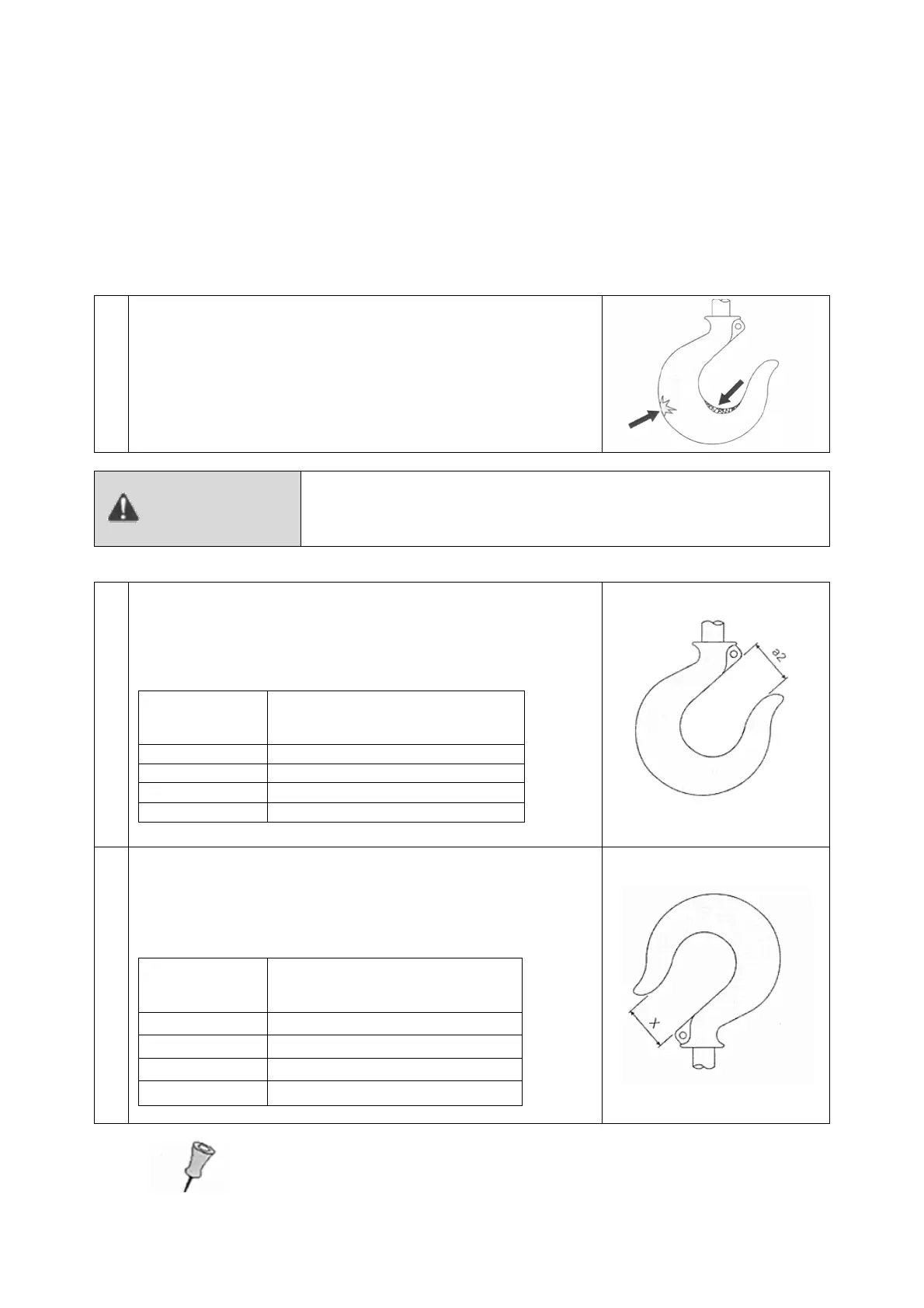
Visual checks
Hook surface should be free of significant rust, weld splatter, deep
nicks, or gouges.
Check for damage from chemicals, deformation or cracks or twisted
more than 10 degrees from the plane of the unbent hook, or
opening, allowing the hook latch to bypass hook tip.
Any hook that is twisted or has excessive throat opening indicates
abuse or overloading of the hoist. Other load bearing components
of the hoist should be inspected for damage.。
Measure bottom hook opening (a2)
If the maximum dimension (a2) on the lifting hook is greater than
the initial dimension by more than 15 %, the hook should be
replaced.
Criteria:
Measure top hook opening (X)
If the maximum dimension (X) on the suspension hook is greater
than the initial dimension by more than 15 %,the hook should be
replaced.
Criteria:
Note: The hook dimensions are nominal since they are not controlled to a
tolerance. The reference measurement of throat opening (a2) should be taken
when the hook is new.


 To Next Page