This document and the information contained herein, is the exclusive property of MODE. And represents a nonpublic,
confidential and proprietary trade secret that may not be reproduced, disclosed to third parties, or otherwise employed in
any manner. whatsoever without the express written consent of MODE. Copyright © (2016) MODE. Allrights reserved.
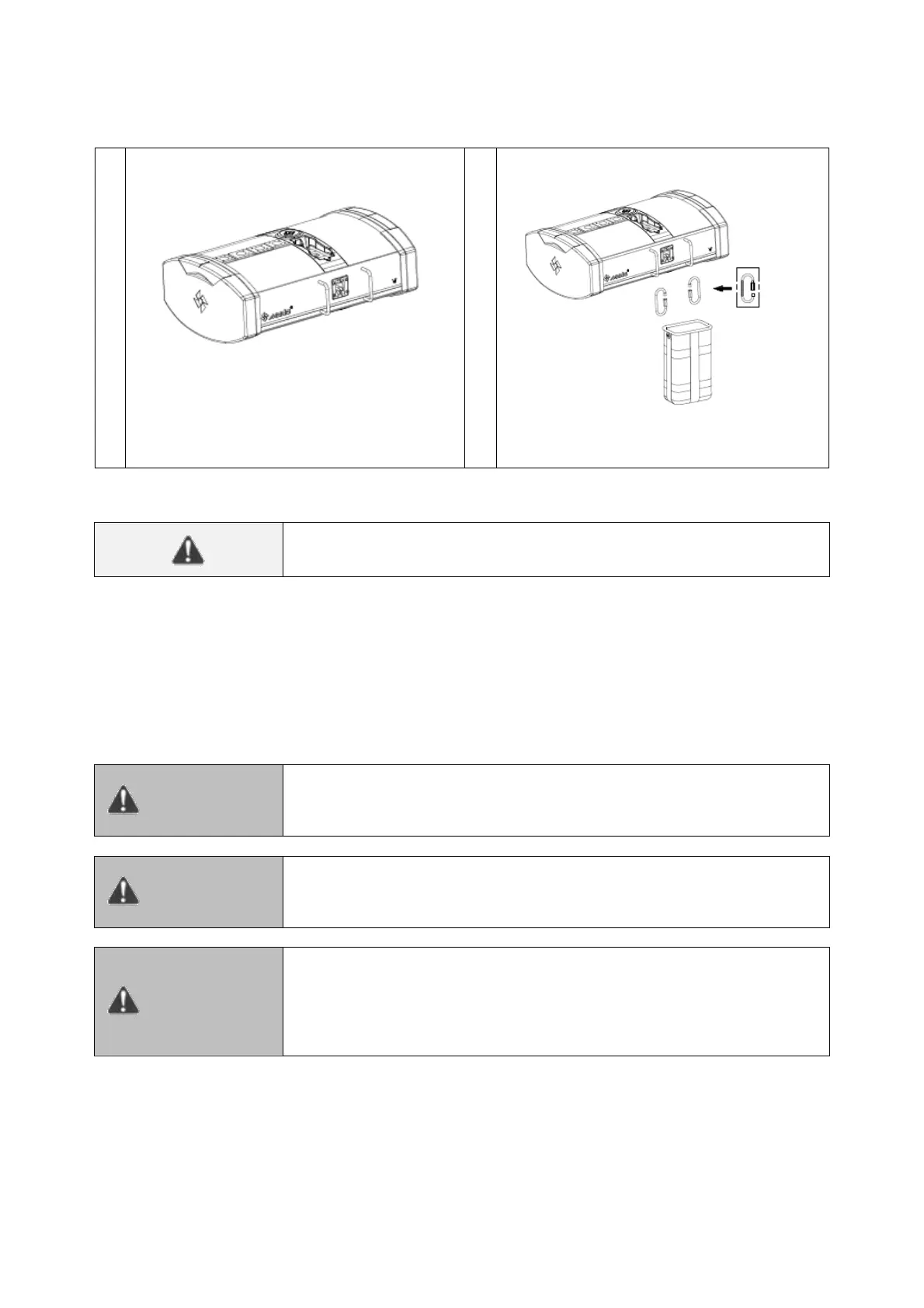
Fitting the chain bucket
If the hoist has been stored for a long time or has been transported by sea, check that the
Motors are dry. Move the hoist to the installation location.
Read instructions in chapter “Lifting the hoist” Before lifting the
hoist.
5.1.1 Lifting the hoist
Evaluating the weight of hoist
It is important that you know the weight of the hoist before commencing lifting so that you can
select an appropriate lifting device and prevent overloading. The weight of the hoist can often
be found from the packing list, the technical documents or the data plate.
Never lift a load that is heavier than the rated capacity of the lifting
device. The load will fall if the lifting device fails.
Never attempt to lift a load before ensuring that it weighs less than
the maximum permitted load of the auxiliary lifting devices.
Overloading can damage the auxiliary lifting devices.
Do not use any overload device like the slipping clutch to determine
whether the load can be lifted. Overload devices are not accurate
enough and a load which does not trigger the overload device may
still be heavier than the maximum permitted load. Overloading can
damage the auxiliary lifting devices.
Auxiliary lifting device
The hoist is usually lifted by using an auxiliary hoist and some kind of lifting device. The most
common lifting devices are chains, wire rope slings and lifting belts. Every lifting device must be
clearly marked with the maximum capacity and must be approved by authorities.
The chain bucket connection parts are fixed to
the hoist enclosure with screws.
Attach the chain bucket to the connection part
with screw-lock carabiner.


 To Next Page