EasyManua.ls Logo

NewTek 3Play 440 - User Manual

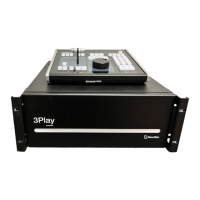
NewTek 3Play 440
262 pages
Print Icon
To Next Page IconTo Next Page
Loading...

Table of Contents

Question and Answer IconNeed help?

Do you have a question about the NewTek 3Play 440 and is the answer not in the manual?

Summary

1 ABOUT THIS MANUAL

Part I - Getting Started

Introduction to 3Play, connections, registration, and walkthrough.

Part II - Reference

Detailed guide to using 3Play features.

Part III - Appendices

Q&A, shortcuts, and index.

2 INTRODUCTION

2.1 OVERVIEW

Overview of NewTek 3Play system components and capabilities.

2.2 RECORDING, MARKING AND EVENTS

Recording, marking, and event management features.

2.3 NEWTEK 3 PLAY CONTROL SURFACE

Describes the dedicated control surface for operational control.

2.4 STARTUP SCREEN

Area for initial configuration options and system management tools.

2.5 REPLAY DESKTOP

Central interface for live production features, controls, and modules.

2.6 FEATURES

Overview of key 3Play features.

2.6.1 PHYSICAL

Describes the physical characteristics of the 3Play unit.

2.6.2 MULTI-TIER FAILSAFE

Explains the failsafe mechanisms in hardware and software.

2.6.3 INPUT, OUTPUT & CAPTURE

Details about connectors, recording capabilities, and output options.

2.6.4 MONITORING

Describes output monitors, Channel Info, and controls.

2.6.5 VIDEO PROCESSING

Adjusting video signal for color balance and harmonization.

2.6.6 RECORDING

Explains the dependency of replay features on recorded data.

2.6.7 BOOKMARKS

Timecode bookmark system for quick skipping through footage.

2.6.8 THE CLIP LIST

Interface for managing timed events and recorded camera angles.

2.6.9 THE PLAY LIST

For creating and controlling sequences with optional transitions and music.

2.6.10 PROGRAM TRANSITIONS

Details 3Play's transition system and Animation Store effects.

2.6.11 TEXT, TAGS AND MORE

Using the Tags bar for text entry and search criteria.

2.6.12 PUBLISH

Publishing clips and still images to social media and storage.

2.6.13 MACROS

Recording and assigning operations to macros for automation.

3 SETTING UP

3.1 COMMAND AND CONTROL

Instructions for connecting monitors, mouse, keyboard, and powering up.

3.2 ACTIVATING & AUTHORIZING WINDOWS

Steps to activate and authorize the Windows operating system.

3.3 REGISTRATION

Details on registering the 3Play system online or by phone.

3.4 INPUT CONNECTIONS

Connecting external audio and video sources to 3Play.

3.5 OUTPUT CONNECTIONS

Discusses audio and video output connectors and settings.

3.6 STARTING A SESSION

Steps to power up and access the Startup Screen.

3.7 CONFIGURE VIDEO OUTPUTS

Operating without downstream monitors or configuring outputs.

3.8 CONFIGURE GENLOCK

Settings for Genlock reference signal and phase adjustments.

3.9 CONFIGURE VIDEO INPUT

Configuring video sources and connection types.

3.10 CONFIGURE AUDIO

Setting input type and gain for audio sources.

3.11 NETWORKING

Procedure for joining a workgroup and connecting to a network.

4 LIVE PRODUCTION WALKTHROUGH

4.1 CREATING A SESSION

Steps for starting and configuring a new 3Play session.

4.2 THE REPLAY DESKTOP

Overview of the Replay Desktop interface after session creation.

4.3 CHANNEL AND SOURCE DELEGATES

Setting channel and source delegates for output control.

4.4 RECORD

Enabling and using the record function for capture.

4.5 MARKING EVENTS

Marking events and clips during recording.

4.6 LIST NAVIGATION

Navigating through the CLIP LIST and PLAY LIST.

4.7 MEMOS AND TAGGING

Using Memo fields and Tags for data management.

4.8 SEARCH AND GO TO

Using search and go to functions for finding clips.

4.9 TRIMMING EVENTS

Adjusting In/Out points and duration of events.

4.10 MANAGING EVENTS

Re-ordering, copying, pasting, and publishing events.

4.11 PREPARING A PLAY LIST

Adding, editing, and preparing clips for a PLAY LIST.

4.12 RENDERING A PLAY LIST

Exporting the PLAY LIST project to a new clip.

5 THE STARTUP SCREEN

5.1 INTRODUCTION TO SESSIONS

Explains production environment information and session adjustments.

5.2 THE HOME PAGE

Primary screen for creating and choosing sessions.

5.3 THE SESSION PAGE

Interface for managing session content after opening.

6 THE REPLAY DESKTOP

6.1 OVERVIEW

Top-level view of the Replay Desktop interface.

6.2 A FEW HINTS

Convenience features and usage of controls like sliders and text fields.

6.3 CUSTOMIZING THE REPLAY DESKTOP

Tweaking the user interface for specific needs.

6.4 DASHBOARD TOOLS

Useful data and menus displayed on the Dashboard.

6.5 GRAB & RECORD

Using the Grab and Record features.

7 I;O CONFIGURATION

7.1 OUTPUT CONFIGURATION

Tools for configuring video output.

7.2 INPUT CONFIGURATION

Configuring input sources and related audio.

7.3 ROUTER CONFIGURATION

Connecting 3Play to video router systems.

7.4 TIMECODE CONFIGURATION

Configuring timecode sources for sessions.

8 THE CONTROL SURFACE

8.1 DUAL CHANNEL REPLAY

Understanding 3Play's two independent audio/video output channels.

8.2 TRANSITIONS (TAKE | AUTO)

Using Take and Auto buttons for program/preview workflow.

8.3 SOURCE DELEGATES

Choosing audio/video sources for channels from CLIP LIST, PLAY LIST, or Live.

8.4 INDEPENDENT STATES

Storing control and output delegate states independently for channels A and B.

8.5 RECORD

Activating and controlling audio-visual data capture.

8.6 TRANSPORT

VCR-style controls for media playback.

8.7 PLAY SPEED (T-BAR SECTION)

Adjusting playback speed using the T-Bar.

8.8 LIST SELECTION TOOLS

Buttons for changing selection in CLIP LIST or PLAY LIST.

8.9 SHIFT

Qualifier button modifying Control Surface operations.

8.10 SET | IN;OUT

Buttons for marking events with In and Out points.

8.11 ANGLE

Changing cameras or angles for clips.

8.12 BOOK MARK

Setting timecode bookmarks for quick skipping.

8.13 UTILITY BUTTONS

Buttons for media management functions like Cut, Copy, Paste, Publish.

8.14 TAG, GO TO AND SEARCH

Overview of Tag, Go To, and Search functions.

8.15 THE NUMBER PAD

Using the number pad for text entry, searching, and TAGS.

9 MONITORING

9.1 OVERLAY OPTIONS

Viewport overlay options for operator reference.

9.2 INPUT MONITORS

Previews of live inputs, referred to as ISO monitors.

9.3 CHANNEL MONITORS (A, B)

Monitors showing current output to downstream devices.

10 RECORDING AND STORAGE

10.1 RECORD CONFIGURATION

Deciding which inputs to capture and where to store data.

10.2 STORAGE VOLUMES

Lists mounted storage volumes available for capture.

10.3 RECORDING AND THE DESKTOP

Recording and desktop interaction.

11 THE CLIP LIST

11.1 TITLEBAR TOOLS

Tools and features in the CLIP LIST titlebar.

11.2 MEDIA ASSET MANAGEMENT SYSTEMS

Overview of NewTek's Media Browser and third-party systems.

11.3 CLIP LIST TABLE FEATURES

Explains columns like Event ID, In Point, Out Point, Duration, and Memo.

11.4 PLAYING CLIPS

Playing clips using PLAY, STOP, T-Bar, or Jog Wheel.

11.5 SELECTION, CHANNELS, & DISPLAY

How highlighted clips are shown on output.

11.6 ADD TO PLAY LIST

Ways to add clips to the PLAY LIST pane.

12 THE PLAY LIST

12.1 TITLEBAR TOOLS

Tools and features in the PLAY LIST titlebar.

12.2 THE PLAY LIST TABLE

Columns for Clip ID, Memo, Audio, In/Out Points, Speed, and Transitions.

12.3 PLAY LIST PREPARATION

Adding, editing, and preparing clips for a PLAY LIST.

12.4 CLIP CONTEXT MENU

Menu for Cut, Copy, Paste, Delete, Undo, Redo, Export Playlist, Add to Publish Queue.

12.5 PLAYBACK

Initiating PLAY LIST playback.

12.6 PLAY LIST EDLS

Creating EDL files for playlist reconstitution in NLE applications.

13 TAGS, SEARCH, & MORE

13.1 OVERVIEW

Importance of metadata, Memo fields, TAGS, and FastClip for data management.

13.2 THE TAGS BUTTON

Using the Control Surface number pad for TAGS input.

13.3 THE TAGS PANE

Interface for managing tags with tabs and cells.

13.4 SEARCH

Functions for searching clips based on criteria.

13.5 IMPORT TAGS

Importing tags from CSV files using spreadsheet software.

14 TRANSITIONS

14.1 PLAY LIST TRANSITIONS

Using transitions between clips in a prepared sequence.

14.2 PROGRAM-PREVIEW TRANSITIONS

Using transitions in a program-preview workflow.

14.3 TRANSITION EFFECTS

Standard wipes and Animation Store effects.

15 DSKS (OVERLAYS)

15.1 OVERVIEW

DSK overlay channels for layering video sources.

15.2 SOURCE OPTIONS

List of potential sources for DSKs (Cameras, Buffers, etc.).

15.3 CONFIGURATION

DSK layer settings accessed via Network Input Configuration.

16 PUBLISH

16.1 OVERVIEW

Publishing clips and images to social media and storage.

16.2 ACCOUNT CONFIGURATION

Entering credentials for social media sites or storage targets.

16.3 THE PUBLISH QUEUE

Panel showing batch processing list for uploads.

17 MACROS AND AUTOMATION

MACRO CAPABILITIES

Smoothing workflow by reducing complex operations to single button presses.

17.1 SYSTEM MACROS

Commands identical to UI and Control Surface operations with default shortcuts.

17.2 SESSION MACROS

Macros available only within the current session.

17.3 RECORDING MACROS

Creating macros by recording a sequence of operations.

17.4 SHORTCUTS AND TRIGGERS

Executing macros via menu, keystrokes, MIDI, or GPI.

17.5 MIDI CONTROLLERS

Using MIDI devices as macro triggers.

17.6 AIRSEND CONTROL

Software API for network A/V and control instructions.

17.7 AMP CONTROL

Protocol for Advanced Media Protocol commands.

17.8 GPI CONTROLLERS

Using GPI for macro triggers and signal input/output.

17.9 EDITING MACROS

Modifying steps in an existing macro using the Macro Editor.

A HOW DO I …?

A.1 CONNECTIONS

Connecting cameras, monitors, and the control surface.

A.2 SESSIONS

Managing sessions, including deletion and renaming.

A.3 EVENTS AND RECORDING

Starting, ending, and marking events.

A.4 FILES

Managing files, importing, exporting, and preparing clips.

A.5 SOFTWARE, MAINTENANCE AND UPDATES

Improving performance, updating software, and virus protection.

A.6 REGISTRATION AND TECH SUPPORT

Registering the system and contacting technical support.

A.7 MISCELLANEOUS

Miscellaneous topics like remote desktop and blurry images.

A.8 MORE QUESTIONS AND ANSWERS

Common questions about power supply and clip timing.

B KEYSTROKE SHORTCUTS

B.1 TABLES AND NAVIGATION

Keystrokes for navigating tables and lists.

B.2 EDIT LISTS;TEXT

Keystrokes for editing lists and text.

B.3 MARKING

Keystrokes for marking events and setting bookmarks.

B.4 SEARCHING

Keystrokes for executing search and going to specific items.

B.5 CONTROL

Keystrokes for controlling channels, sources, and inputs.

C RELIABILITY TESTING

CREDITS

Summary

1 ABOUT THIS MANUAL

Part I - Getting Started

Introduction to 3Play, connections, registration, and walkthrough.

Part II - Reference

Detailed guide to using 3Play features.

Part III - Appendices

Q&A, shortcuts, and index.

2 INTRODUCTION

2.1 OVERVIEW

Overview of NewTek 3Play system components and capabilities.

2.2 RECORDING, MARKING AND EVENTS

Recording, marking, and event management features.

2.3 NEWTEK 3 PLAY CONTROL SURFACE

Describes the dedicated control surface for operational control.

2.4 STARTUP SCREEN

Area for initial configuration options and system management tools.

2.5 REPLAY DESKTOP

Central interface for live production features, controls, and modules.

2.6 FEATURES

Overview of key 3Play features.

2.6.1 PHYSICAL

Describes the physical characteristics of the 3Play unit.

2.6.2 MULTI-TIER FAILSAFE

Explains the failsafe mechanisms in hardware and software.

2.6.3 INPUT, OUTPUT & CAPTURE

Details about connectors, recording capabilities, and output options.

2.6.4 MONITORING

Describes output monitors, Channel Info, and controls.

2.6.5 VIDEO PROCESSING

Adjusting video signal for color balance and harmonization.

2.6.6 RECORDING

Explains the dependency of replay features on recorded data.

2.6.7 BOOKMARKS

Timecode bookmark system for quick skipping through footage.

2.6.8 THE CLIP LIST

Interface for managing timed events and recorded camera angles.

2.6.9 THE PLAY LIST

For creating and controlling sequences with optional transitions and music.

2.6.10 PROGRAM TRANSITIONS

Details 3Play's transition system and Animation Store effects.

2.6.11 TEXT, TAGS AND MORE

Using the Tags bar for text entry and search criteria.

2.6.12 PUBLISH

Publishing clips and still images to social media and storage.

2.6.13 MACROS

Recording and assigning operations to macros for automation.

3 SETTING UP

3.1 COMMAND AND CONTROL

Instructions for connecting monitors, mouse, keyboard, and powering up.

3.2 ACTIVATING & AUTHORIZING WINDOWS

Steps to activate and authorize the Windows operating system.

3.3 REGISTRATION

Details on registering the 3Play system online or by phone.

3.4 INPUT CONNECTIONS

Connecting external audio and video sources to 3Play.

3.5 OUTPUT CONNECTIONS

Discusses audio and video output connectors and settings.

3.6 STARTING A SESSION

Steps to power up and access the Startup Screen.

3.7 CONFIGURE VIDEO OUTPUTS

Operating without downstream monitors or configuring outputs.

3.8 CONFIGURE GENLOCK

Settings for Genlock reference signal and phase adjustments.

3.9 CONFIGURE VIDEO INPUT

Configuring video sources and connection types.

3.10 CONFIGURE AUDIO

Setting input type and gain for audio sources.

3.11 NETWORKING

Procedure for joining a workgroup and connecting to a network.

4 LIVE PRODUCTION WALKTHROUGH

4.1 CREATING A SESSION

Steps for starting and configuring a new 3Play session.

4.2 THE REPLAY DESKTOP

Overview of the Replay Desktop interface after session creation.

4.3 CHANNEL AND SOURCE DELEGATES

Setting channel and source delegates for output control.

4.4 RECORD

Enabling and using the record function for capture.

4.5 MARKING EVENTS

Marking events and clips during recording.

4.6 LIST NAVIGATION

Navigating through the CLIP LIST and PLAY LIST.

4.7 MEMOS AND TAGGING

Using Memo fields and Tags for data management.

4.8 SEARCH AND GO TO

Using search and go to functions for finding clips.

4.9 TRIMMING EVENTS

Adjusting In/Out points and duration of events.

4.10 MANAGING EVENTS

Re-ordering, copying, pasting, and publishing events.

4.11 PREPARING A PLAY LIST

Adding, editing, and preparing clips for a PLAY LIST.

4.12 RENDERING A PLAY LIST

Exporting the PLAY LIST project to a new clip.

5 THE STARTUP SCREEN

5.1 INTRODUCTION TO SESSIONS

Explains production environment information and session adjustments.

5.2 THE HOME PAGE

Primary screen for creating and choosing sessions.

5.3 THE SESSION PAGE

Interface for managing session content after opening.

6 THE REPLAY DESKTOP

6.1 OVERVIEW

Top-level view of the Replay Desktop interface.

6.2 A FEW HINTS

Convenience features and usage of controls like sliders and text fields.

6.3 CUSTOMIZING THE REPLAY DESKTOP

Tweaking the user interface for specific needs.

6.4 DASHBOARD TOOLS

Useful data and menus displayed on the Dashboard.

6.5 GRAB & RECORD

Using the Grab and Record features.

7 I;O CONFIGURATION

7.1 OUTPUT CONFIGURATION

Tools for configuring video output.

7.2 INPUT CONFIGURATION

Configuring input sources and related audio.

7.3 ROUTER CONFIGURATION

Connecting 3Play to video router systems.

7.4 TIMECODE CONFIGURATION

Configuring timecode sources for sessions.

8 THE CONTROL SURFACE

8.1 DUAL CHANNEL REPLAY

Understanding 3Play's two independent audio/video output channels.

8.2 TRANSITIONS (TAKE | AUTO)

Using Take and Auto buttons for program/preview workflow.

8.3 SOURCE DELEGATES

Choosing audio/video sources for channels from CLIP LIST, PLAY LIST, or Live.

8.4 INDEPENDENT STATES

Storing control and output delegate states independently for channels A and B.

8.5 RECORD

Activating and controlling audio-visual data capture.

8.6 TRANSPORT

VCR-style controls for media playback.

8.7 PLAY SPEED (T-BAR SECTION)

Adjusting playback speed using the T-Bar.

8.8 LIST SELECTION TOOLS

Buttons for changing selection in CLIP LIST or PLAY LIST.

8.9 SHIFT

Qualifier button modifying Control Surface operations.

8.10 SET | IN;OUT

Buttons for marking events with In and Out points.

8.11 ANGLE

Changing cameras or angles for clips.

8.12 BOOK MARK

Setting timecode bookmarks for quick skipping.

8.13 UTILITY BUTTONS

Buttons for media management functions like Cut, Copy, Paste, Publish.

8.14 TAG, GO TO AND SEARCH

Overview of Tag, Go To, and Search functions.

8.15 THE NUMBER PAD

Using the number pad for text entry, searching, and TAGS.

9 MONITORING

9.1 OVERLAY OPTIONS

Viewport overlay options for operator reference.

9.2 INPUT MONITORS

Previews of live inputs, referred to as ISO monitors.

9.3 CHANNEL MONITORS (A, B)

Monitors showing current output to downstream devices.

10 RECORDING AND STORAGE

10.1 RECORD CONFIGURATION

Deciding which inputs to capture and where to store data.

10.2 STORAGE VOLUMES

Lists mounted storage volumes available for capture.

10.3 RECORDING AND THE DESKTOP

Recording and desktop interaction.

11 THE CLIP LIST

11.1 TITLEBAR TOOLS

Tools and features in the CLIP LIST titlebar.

11.2 MEDIA ASSET MANAGEMENT SYSTEMS

Overview of NewTek's Media Browser and third-party systems.

11.3 CLIP LIST TABLE FEATURES

Explains columns like Event ID, In Point, Out Point, Duration, and Memo.

11.4 PLAYING CLIPS

Playing clips using PLAY, STOP, T-Bar, or Jog Wheel.

11.5 SELECTION, CHANNELS, & DISPLAY

How highlighted clips are shown on output.

11.6 ADD TO PLAY LIST

Ways to add clips to the PLAY LIST pane.

12 THE PLAY LIST

12.1 TITLEBAR TOOLS

Tools and features in the PLAY LIST titlebar.

12.2 THE PLAY LIST TABLE

Columns for Clip ID, Memo, Audio, In/Out Points, Speed, and Transitions.

12.3 PLAY LIST PREPARATION

Adding, editing, and preparing clips for a PLAY LIST.

12.4 CLIP CONTEXT MENU

Menu for Cut, Copy, Paste, Delete, Undo, Redo, Export Playlist, Add to Publish Queue.

12.5 PLAYBACK

Initiating PLAY LIST playback.

12.6 PLAY LIST EDLS

Creating EDL files for playlist reconstitution in NLE applications.

13 TAGS, SEARCH, & MORE

13.1 OVERVIEW

Importance of metadata, Memo fields, TAGS, and FastClip for data management.

13.2 THE TAGS BUTTON

Using the Control Surface number pad for TAGS input.

13.3 THE TAGS PANE

Interface for managing tags with tabs and cells.

13.4 SEARCH

Functions for searching clips based on criteria.

13.5 IMPORT TAGS

Importing tags from CSV files using spreadsheet software.

14 TRANSITIONS

14.1 PLAY LIST TRANSITIONS

Using transitions between clips in a prepared sequence.

14.2 PROGRAM-PREVIEW TRANSITIONS

Using transitions in a program-preview workflow.

14.3 TRANSITION EFFECTS

Standard wipes and Animation Store effects.

15 DSKS (OVERLAYS)

15.1 OVERVIEW

DSK overlay channels for layering video sources.

15.2 SOURCE OPTIONS

List of potential sources for DSKs (Cameras, Buffers, etc.).

15.3 CONFIGURATION

DSK layer settings accessed via Network Input Configuration.

16 PUBLISH

16.1 OVERVIEW

Publishing clips and images to social media and storage.

16.2 ACCOUNT CONFIGURATION

Entering credentials for social media sites or storage targets.

16.3 THE PUBLISH QUEUE

Panel showing batch processing list for uploads.

17 MACROS AND AUTOMATION

MACRO CAPABILITIES

Smoothing workflow by reducing complex operations to single button presses.

17.1 SYSTEM MACROS

Commands identical to UI and Control Surface operations with default shortcuts.

17.2 SESSION MACROS

Macros available only within the current session.

17.3 RECORDING MACROS

Creating macros by recording a sequence of operations.

17.4 SHORTCUTS AND TRIGGERS

Executing macros via menu, keystrokes, MIDI, or GPI.

17.5 MIDI CONTROLLERS

Using MIDI devices as macro triggers.

17.6 AIRSEND CONTROL

Software API for network A/V and control instructions.

17.7 AMP CONTROL

Protocol for Advanced Media Protocol commands.

17.8 GPI CONTROLLERS

Using GPI for macro triggers and signal input/output.

17.9 EDITING MACROS

Modifying steps in an existing macro using the Macro Editor.

A HOW DO I …?

A.1 CONNECTIONS

Connecting cameras, monitors, and the control surface.

A.2 SESSIONS

Managing sessions, including deletion and renaming.

A.3 EVENTS AND RECORDING

Starting, ending, and marking events.

A.4 FILES

Managing files, importing, exporting, and preparing clips.

A.5 SOFTWARE, MAINTENANCE AND UPDATES

Improving performance, updating software, and virus protection.

A.6 REGISTRATION AND TECH SUPPORT

Registering the system and contacting technical support.

A.7 MISCELLANEOUS

Miscellaneous topics like remote desktop and blurry images.

A.8 MORE QUESTIONS AND ANSWERS

Common questions about power supply and clip timing.

B KEYSTROKE SHORTCUTS

B.1 TABLES AND NAVIGATION

Keystrokes for navigating tables and lists.

B.2 EDIT LISTS;TEXT

Keystrokes for editing lists and text.

B.3 MARKING

Keystrokes for marking events and setting bookmarks.

B.4 SEARCHING

Keystrokes for executing search and going to specific items.

B.5 CONTROL

Keystrokes for controlling channels, sources, and inputs.

C RELIABILITY TESTING

CREDITS

NewTek 3Play 440 Specifications

General IconGeneral
Instant ReplayYes
Multi-angle PlaybackYes
NetworkGigabit Ethernet
Audio Inputs4 x SDI Embedded
Audio Outputs4 x SDI Embedded
Recording ResolutionUp to 1080p
Supported Resolutions1080p, 1080i, 720p
StorageInternal storage, expandable via external storage

Related product manuals