Electrical connection
17
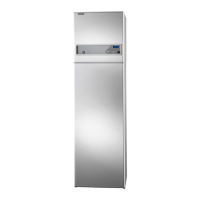
FIGHTER 360P
For the Installer
Centralised load control/Tariff
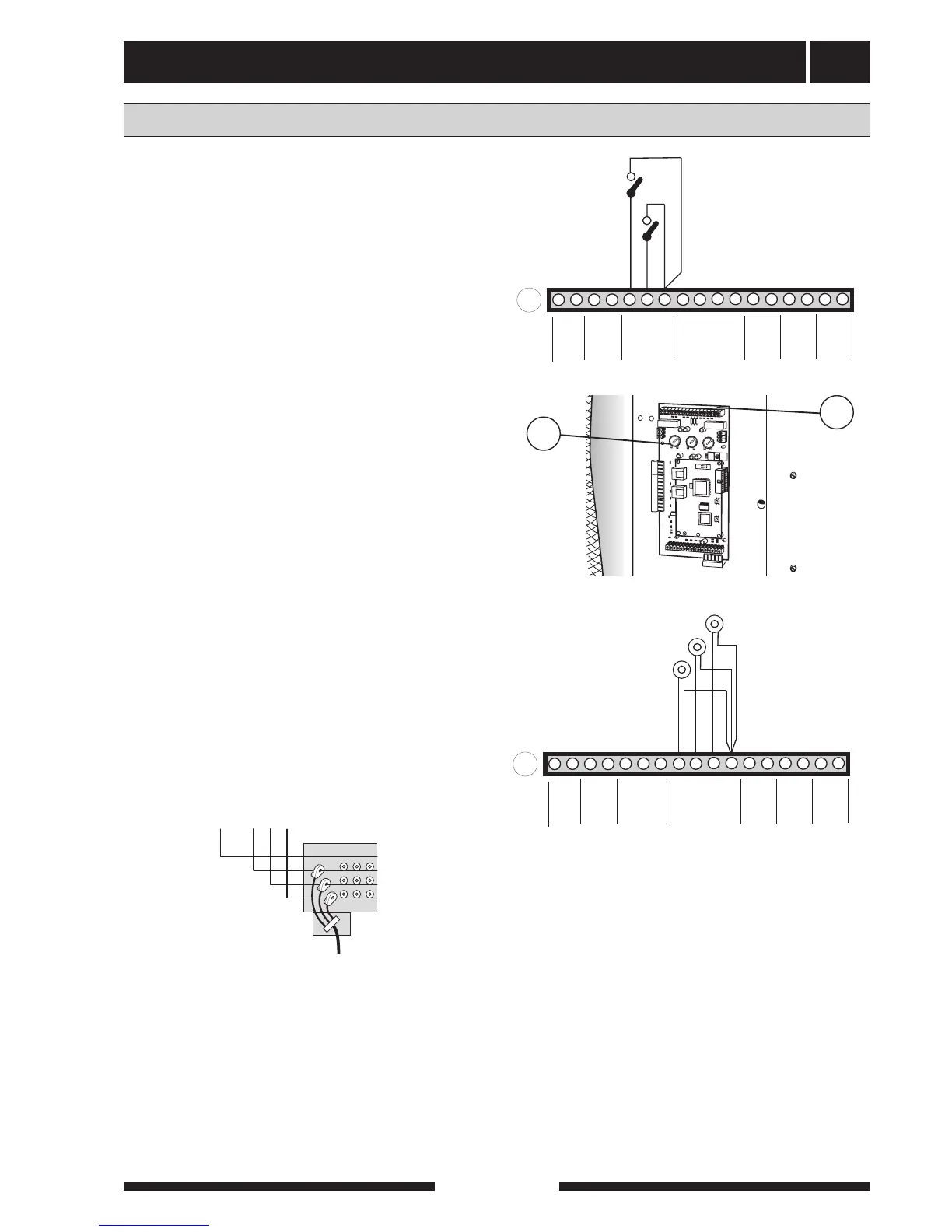
In those cases centralised load control or tariff control
is used this can be connected to the terminal block (14)
on the load monitor card (2), which is positioned behind
the centre front cover.
Tariff "A"
When parts of the electrical output (how much is deter-
mined by the max output) are to be disconnected, a
potential free contact function is connected between 5
and 7 on terminal block (14).
Tariff "B"
When the complete electrical output is to be discon-
nected, a potential free contact function is connected
between 6 and 7 on terminal block (14).
Load monitor
FIGHTER 360P is equipped with an internal load mon-
itor.
When the load monitor senses an overcurrent on one
of the phases, the immersion heater will step down the
output until it can be connected again.
The control system must be set for the installation’s
main fuse so that the load monitor can work correctly.
This is done using the knob (100), marked fuse on the
load monitor card (2), which is positioned behind the
centre front cover.
The supplied current sensor
is connected to the termi-
nal block’s (14) terminals marked 8 to
11. Terminal 11
is the common conductor for the three current sensors.
See figure.
Cable type: unscreened LiYY, screened LiYCY. Cable
cross section, at least 2 x 0.25 for cable lengths up to
50 m.
Centralised load control and load monitor



 To Next Page