51
Section 8 - How to obtain the best results
8.2 Sampling and sample preparation
Characteristics, preparation and size of the sample are all important contributing factors in increasing speed and the
quality of the measurement process.
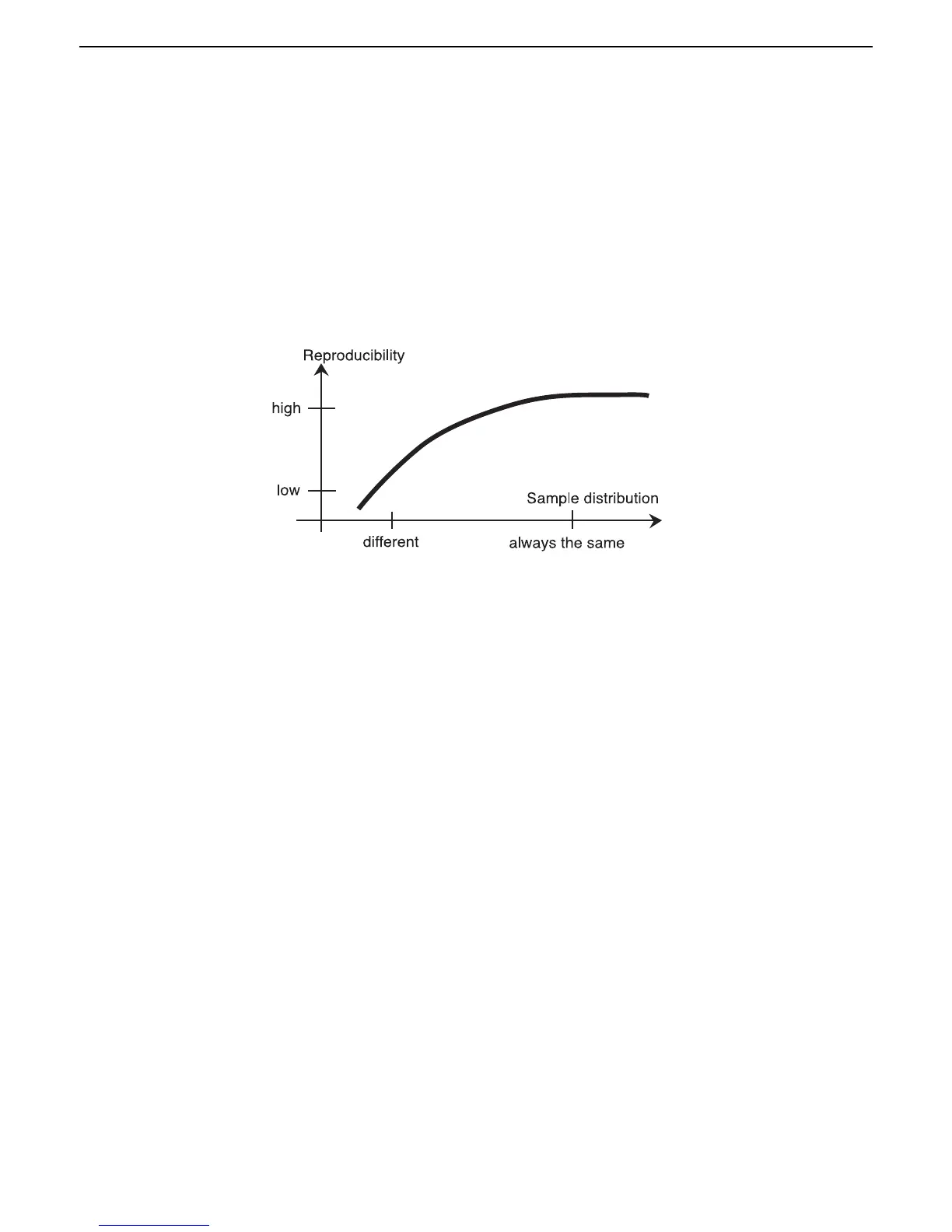
Sampling and the sample preparation have a great influence on the reproducibility of the measured results. It is also
important that the sample being investigated is a representative part of the total amount of the sample under test.
The final results of a moisture determination depends on a carefully thought out sample preparation. The part of the
sample used for analysis must always be representative of the total quantity. The sample preparation includes work
processes such as sampling, sample division, size reduction, homogenization and others. All of these processes
should be carried out as quickly as possible and without loss or uptake of moisture.
As with most products, the lab samples are not homogenous. As a result, random sampling will not lead to a repre-
sentative sample. The appropriate standards and directions must be consulted to determine the method of sampling
as this is dependent upon the product, consistency and the amount used.
Number of samples
An increase in the number of samples always lead to an improvement in the statistical reliability of the analysis
results. The size depends on the homogeneity of the test material, the accuracy of the test material, the accuracy of
the measurement method and the desired accuracy of the measurement result.
Mechanical size reduction
Sample division is usually accomplished by specific types of mills influenced by the sample characteristics. Hard,
brittle samples are mainly reduced in size by pressure, impact or friction action, whereas, soft and viscoplastic
substances can be comminuted only by shearing or cutting action. Whatever the operating principle of a mill may be,
for the subsequent moisture determination, there must be no loss of moisture during the milling operation. If this can
not be avoided, it should at least be calculable. The quantitative recovery of the mill chamber should also be simple
and complete.



 To Next Page