OpenText Tableau Forensic TX1 Imager
The Information Company 135
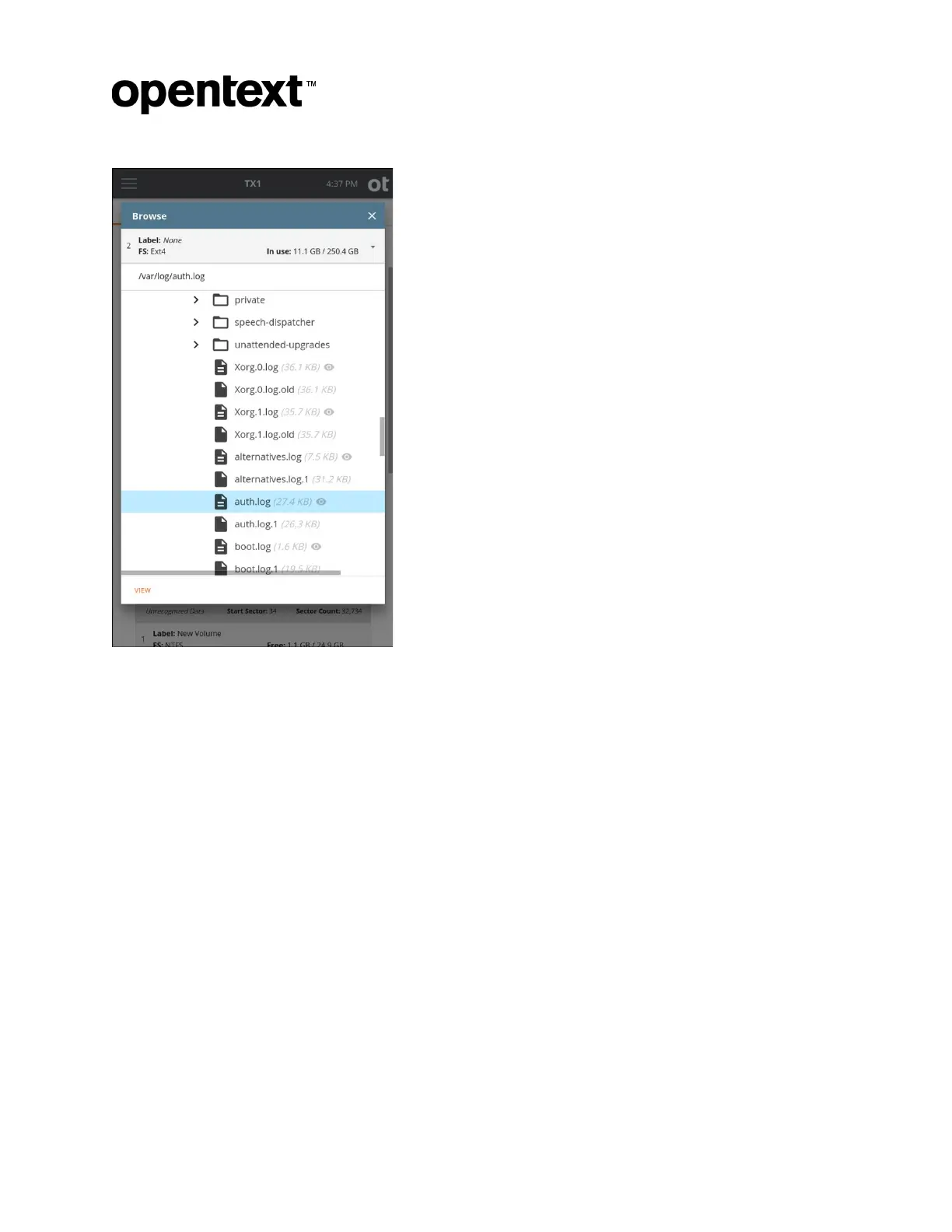
In the browser portion of the window, you can scroll up and down the list of folders/files
and tap individual folders to drill down to the desired level to expose the names of
individual files located on the drive. The size of each file is shown at the end of the
filename. Many users will find this utility helpful when attempting to triage a large
evidence set and determine the priority by which each drive should be imaged, or when
checking the contents of a destination drive to free up space by deleting unneeded
directories and files.
4.7.1 Viewing text and image files
TX1 provides the ability to view certain text and image file types. This is a valuable
feature that will allow for on-the-fly analysis/triage of supported file types which could help
home in on valuable evidence before deciding whether to acquire a given drive. Files that
can be viewed directly on TX1 are indicated on the Browse screen with an eye icon at
the end of the filename/size information. Additionally, viewable files show an alternate
leading icon before the filename, as follows: folded paper icon with lines on it for text files;
and a mountain range icon for image files, as can be seen in the sample filesystem
browse view above. Selecting the desired viewable file will activate the View button at the
bottom of the Browse screen. Simply tap the View button to see the text or image file
directly on TX1. The screenshot below shows a sample image file displayed on TX1.
Copyright © 2022 Open Text. All rights reserved. Trademarks owned by Open Text.


 To Next Page