
 Need help?
Do you have a question about the Quantum Systems VECTOR and is the answer not in the manual?
This document serves as the user manual for the Quantum-Systems Vector and Scorpion unmanned aerial vehicles (UAVs), providing comprehensive information on their operation, maintenance, and technical specifications. Both the Vector and Scorpion are professional-grade eVTOL (Electric Vertical Take-off and Landing) systems designed for surveillance missions.
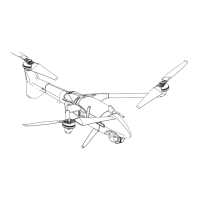
The Quantum-Systems Vector is an eVTOL fixed-wing UAV optimized for long-endurance surveillance missions. It features a main body and an eVTOL fixed-wing kit, allowing for efficient flight over extended periods. The Scorpion, on the other hand, is a tri-copter kit designed for smaller and stationary surveillance missions, sharing the same main body with the Vector. This 2-in-1 system offers versatility, allowing operators to switch between fixed-wing and multi-copter configurations depending on mission requirements.
Both UAVs integrate surveillance systems for live video feeds, transmitting video and data streams to a Ground Control Station (GCS). The GCS comprises a Skynav tablet or Toughbook running QBase Tactical software for mission planning and control, along with a Data Link Handheld or Data Link Station for communication with the UAV. A Tethering System is available as an option for the Scorpion, providing stationary power for unlimited flight time and continuous video and data streams.
The UAVs are equipped with various payloads, including the Nighthawk2 UZ, HD40-LV, and Raptor, with the HD40-XV being an exclusive option for the Scorpion. These payloads offer different optical and infrared zoom capabilities, resolutions, and data rates, supporting features like KLV-Stream, GeoLock, image stabilization, and object tracking for enhanced surveillance.
The manual details various flight operations, including take-off, transition, mission execution, retransition, and landing. Both manual and automatic take-off abort scenarios are covered, along with emergency commands like "Come Home" and "Hard Abort." The UAVs are equipped with safety features that initiate automatic coming home in case of emergencies such as battery critical, GPS lost, link lost, airspeed failure, or strong winds.
Mission planning is facilitated through the QBase Tactical software, allowing users to define waypoints, create paths, and set up zone elements (Working Zones and NoFly Zones) for situational awareness and flight restrictions. The software also supports terrain following, adjusting flight altitude based on terrain elevation.
Controlling the UAV and its sensor can be done through joysticks, map-based commands, mission plans, or sensor guidance. The sensor offers various control modes, including joystick control, FPV mode, Geo-Lock, and tracking, enabling precise targeting and image acquisition. Points of Interest (POIs) can be added, edited, and filtered to mark objects or events during missions, with automatic saving and export functionalities.
The manual provides instructions for battery setup, including converting the Smart Battery Pack from transport configuration to operational mode by assembling bridges and using new self-locking nuts. It emphasizes the importance of cleaning contacts and pressing the reset and program buttons for proper battery function. Battery charging procedures are detailed, highlighting the use of original chargers and specific ambient temperature ranges for safe charging.
Firmware updates for QBase, UAV, ESC, PDB, PMBV, and Smart Battery Pack are outlined, ensuring the system remains up-to-date for optimal performance and safety. Calibration procedures for the magnetometer and accelerometer are also provided, crucial for maintaining accurate heading and flight stability.
Data link handling is extensively covered, including information on antennas, sources of interference (Fresnel Zone, geographical influence, weather, noise, isolators), and signal parameters (RSSI, SNR, Signal Bandwidth). Best practices for maximizing data link stability and performance, especially in high-distance scenarios, are also included.
The system supports after-action reports, allowing users to download FlyLogs (including KML and CSV tagging files), LOG files from the autopilot SD card, and on-board video recordings for post-mission analysis and troubleshooting. The QBase replay function enables reviewing recorded missions, including video timelines and POIs.
 General
| Brand | Quantum Systems |
|---|---|
| Model | VECTOR |
| Category | Toy |
| Language | English |

 To Next Page