Operating the Atlantic 85
Engine pre-start checks
Before starting the engines, do the following:
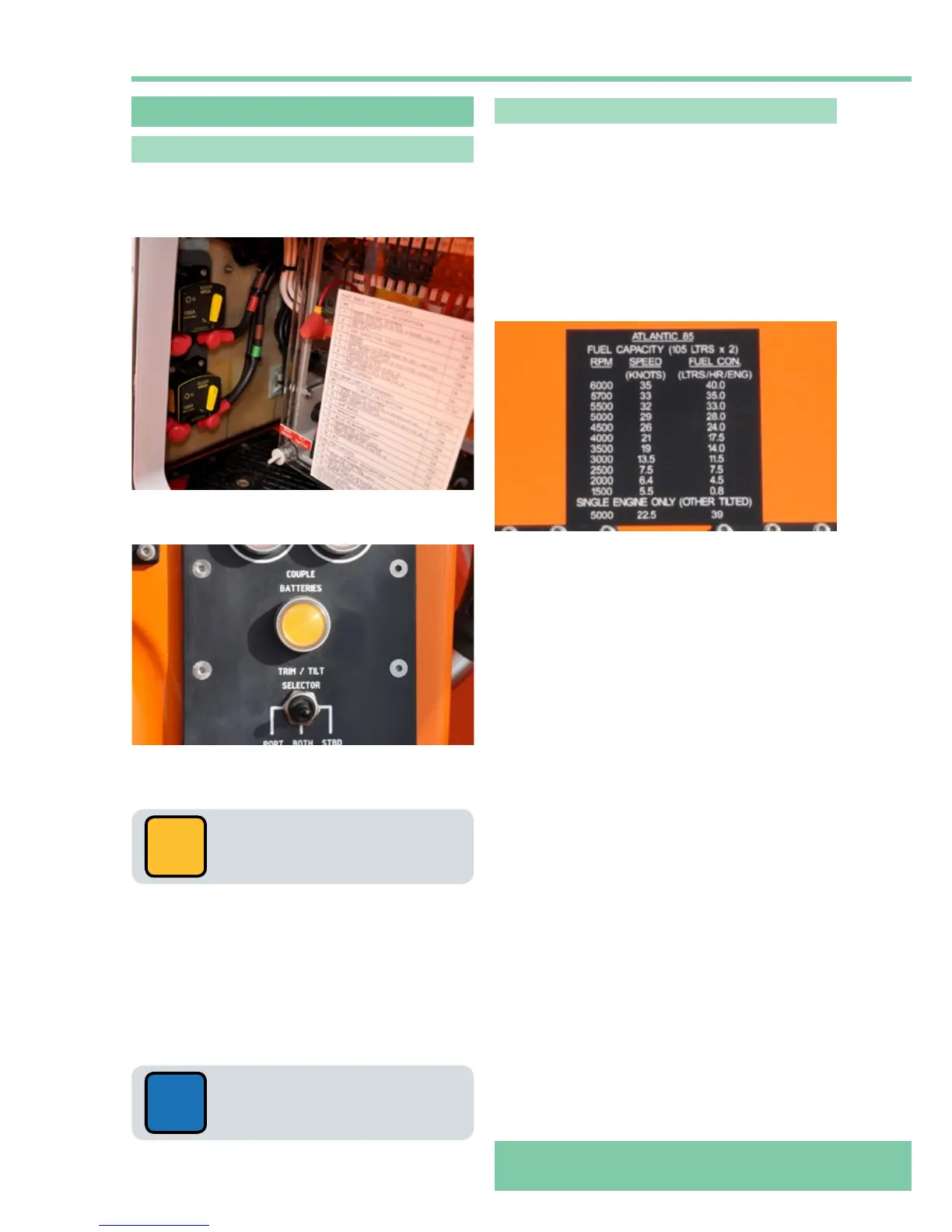
• Turn both isolator switches on – these can be found
under the helm seat in the console.
• If full voltage is not met (12.6V or more), press the
coupling batteries button.
• Check the engine cowling (hood) is secure.
• Trim down the engines.
Refer to the relevant LOP appropriate
to your launch and recovery system.
LOP
• Use priming bulbs to prime both port and starboard
engines with fuel
• Ensure engines are immersed in water or have water
muffs attached to the water inlets on the gearbox before
starting engines.
• Engine must be in neutral
Once all pre start checks have been carried out, the engines
may be started. Refer to:
Starting and Stopping.
SOP
Monitoring the engines
• Check the rpm on the helm position tachometer for
warning lights.
• The rpm speed should be approximately between 800
and 900 rpm in neutral.
Refer to Tachometer image on page 103.
• The engine can now be monitored throughout by
checking the rpm verses speed (refer to the rpm/speed/
fuel consumption plaque found on the helm console)
Confirm against speed on data reader.
Recognising changes in engine performance
The changes you may identify are:
• power loss
• reduction of engine revs
• full speed cannot be obtained
• engine stalling
• inability to restart engine if power is lost
• cavitation/vibration.
Engine parameters
By monitoring normal operating parameters of the
outboard engines, any abnormal parameters will be
identified quicker, preventing engine failure. To help with
understanding the engine history, you also log the engine
hours and fuel used.



 To Next Page